




Fall migration is on —action arrives for local anglers
Fall fishing is heating up for migratory species as temperatures cool down.
Fishing around Anna Maria Island beaches is now host to a number of migratory species — Spanish mackerel, kingfish, hogfish and shark. The macks and kings are feeding heavily on the large bait schools that are within a mile of the beach. As for the shark, they’re following the macks and kings, both tasty morsels for them.
On my recent charters, I’m concentrating on the migratory fish. Both the kings and Spanish mackerel are very accommodating for my clients. Hard hits and drag-screaming runs entertain even the most seasoned anglers.
For rigging, I’m using a 4-foot section of 20-pound fluorocarbon with a 2/0 extra-long shank hook from Eagle Claw. This combined with a lively little shiner is a perfect rig for the Spanish mackerel.
As for the kings, I’m upping the fluorocarbons leader to 40-pound and instead of the 2/0 extra long for the hook, I’m using a 4/0. I also like to use wire when targeting kings, although with the water as clear as it is now, I’m having to leave the wire alone to attract a bite. The straight fluoro tied to the hook results in frequent cut offs, but some bites are better than none.
Capt. Warren Girle is fishing along the beaches of Anna Maria Island in search of the same trio — macks, kingfish and shark. All three species are being found around bait schools, which are moving up and down the island within a mile of shore. Diving birds are a good indicator to locate these fish. Once Girle picks a spot, he anchors and chums with live shiners to attract the macks and kings. Free-lined shiners on a long shank hook are resulting in macks up to 24 inches, as well as kingfish up to 36 inches.
Moving inshore, Girle is finding snook, redfish and trout — all are responding to live shiners for bait. For the snook and reds, shallow grass flats combined with mangrove shorelines and oyster beds are proving prosperous. For the trout, deeper grass flats of 4-6 feet are producing good numbers of slot-size fish for Girle’s clients.
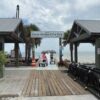
Jim Malfese at the Rod & Reel Pier says that despite the wind, pier fishers are producing some nice catches. Pier fishers braving the strong north east winds and choppy waters are being rewarded with a variety of species. Using live shrimp as bait is resulting in mangrove snapper, flounder and black drum. All three species are being caught during morning out-going tides. Keeper-sizes of drum and flounder are consistent, while the mangrove snapper are running small. That doesn’t mean there aren’t any keeper snapper, they’re just not as consistent as the flounder and drum.
Silver spoons or jigs are resulting in Spanish mackerel, ladyfish and jack crevalle. While using jigs, it’s smart to tip the jig with a small piece of fresh-cut shrimp. This added scent will also attract pompano.
Finally, due to the chop in Tampa Bay, the snook bite has been a little sporadic. Snook are still being caught, although mostly by determined fishers who are willing to wait extended periods of time for a bite.
Capt. Rick Gross of Fishy Business Charters is finding rallies of snook in southern Tampa Bay and its surrounding waters. On one morning, Gross recorded 43 snook to the boat. Not bad for a recovering population of fish. Live shiners free-lined or fished under a cork are getting results. Keeper-size snook are being caught at random, with most of these rallies producing fish of 24-27 inches.
Spotted seatrout are being caught on deeper grass areas from Terra Ceia Bay north to the Sunshine Skyway Bridge. Sizes are varying, although limits of trout are attainable for determined anglers. Live shiners free-lined or under a popping cork are resulting in catches.
Finally, mangrove snapper are being caught around residential docks. By casting live shiners — weighted with a split shot under docks, Gross’ clients are reeling up keeper-size mangrove snapper. While targeting snapper, flounder and an occasional redfish are being caught.
Send high-resolution photos and fishing reports to fish@islander.org.