




A record-breaking season for Anna Maria Island Turtle Watch and Shorebird Monitoring will end Oct. 31.
More sea turtle nests — 435 loggerhead nests and one green sea turtle nest — were laid as of Oct. 16 on Anna Maria Island beaches than any previous year.
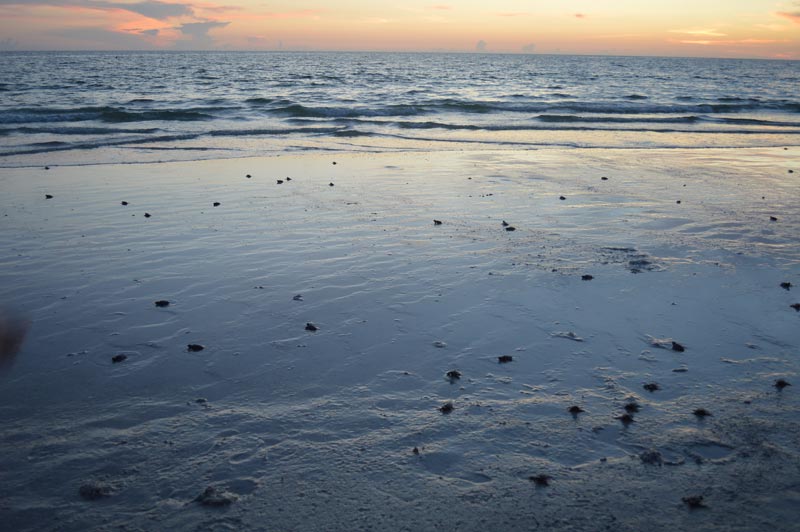
During sea turtle nesting and hatchling season, May 1-Oct. 31, adult female sea turtles — mostly loggerheads — return to Anna Maria Island beaches to lay their eggs. Following a six- to eight-week incubation period, tiny hatchlings emerge from nests on the shore — usually at night — and follow the reflection of the moon and stars on the surface of the water to their home in the Gulf of Mexico.
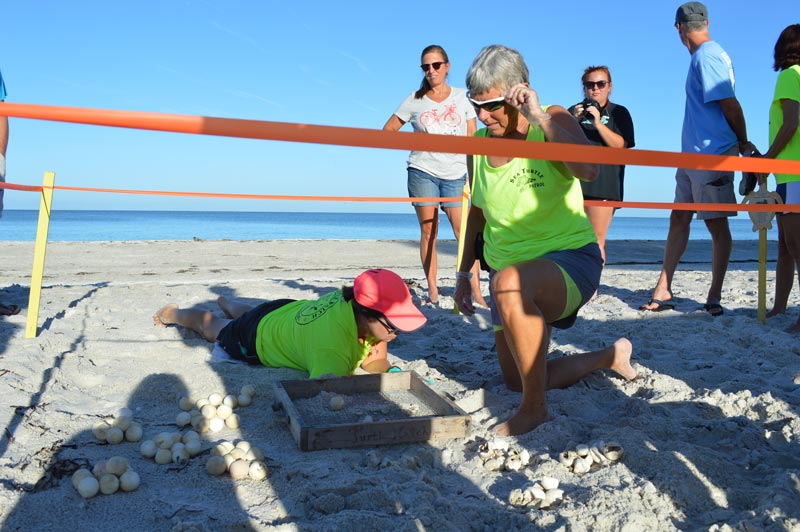
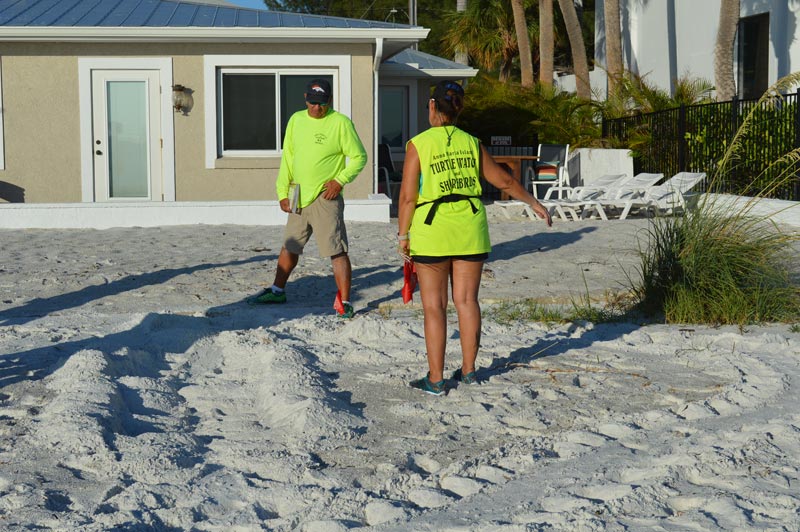
On May 1, a team of 86 AMITW volunteers embarked upon the first sunrise beach survey of the season. Volunteers are tasked with walking the shoreline one day a week just after dawn breaks to look for new nests and, later in the season, to look for signs of hatched nests.
When a nest is discovered, it is staked off for protection from predators and people, and so AMITW volunteers can collect data.
The first nest of the season was found May 8 — Mother’s Day — on the beach near Spring Avenue in Anna Maria.
Within two weeks, 20 more nests had been laid on island beaches.
Because sea turtle season on the island coincides with hurricane season, nesting and hatchling sea turtles are faced with the challenges of rough surf on the shoreline and waves that can wash high on the beach into the dunes.
This year was no exception.
When the first storm of the season — Tropical Storm Colin — passed through the Gulf June 7, AMITW was prepared.
For safety reasons, volunteers do not survey the beach during storm events but, in preparation, they reinforce stakes surrounding the nests and hope for the best.
AMITW saw 52 nests — some eggs and markers — washed out by flooding and high surf from Colin.
However, within three days, 50 new nests replaced those lost — all high and dry in or near the dunes.
By June 19, there were 165 nests.
The first hatchlings of sea turtle season on Anna Maria Island emerged early morning July 8 on the beach behind the Nautilus condominiums, 7100 Gulf Drive, Holmes Beach.
Upon emergence from the nest, the majority of the hatchlings in the clutch of eggs progressed to the water. However, nine turtles became disoriented and crawled toward the dunes. They were found, collected and released to the Gulf in the evening, when there are fewer predators.
Upon hatching, a sea turtle is guided by instincts to the reflections of the moon and stars on the Gulf waters. However, in some circumstances, hatchlings can become disoriented by artificial lights.
Throughout the year, AMITW executive director Suzi Fox and her team of volunteers educate the public about the importance of turtle-friendly lighting — low and shielded — and closing blinds and curtains at night in beachfront units.
AMITW creates handouts, including door-hangers and leaflets, and distributes them to the public at informational “Turtle Talks.” They also work with code enforcement in the three island municipalities to ensure compliance.
Educational outreach has been a major factor in the recent sea turtle population resurgence, according to Fox.
“If people know what they are supposed to do, they are usually happy to do it,” Fox said.
Throughout July and August, hatch rates increased as new nesting activity tapered off.
On July 31, AMITW volunteer and “stat guy” Pete Gross reported “an all-time record for number of nests on AMI for any one season — 380 — and they are still nesting.”
Also, as of July 31, 35 nests had hatched, 295 nests remained viable and approximately 1,566 hatchlings had made their way to the sea.
By Aug. 28, 207 nests had hatched, 173 remained unhatched and approximately 14,997 hatchlings had emerged from their nests.
The next big storm event affecting AMI — Hurricane Hermine — passed through the Gulf of Mexico Aug. 31 and Sept. 1, causing more problems for sea turtles.
Following Hermine, new nests and hatch rates dropped and it was questionable how many nests remained viable. The flooded nests were unlikely to produce hatchlings, according to Fox.
As of Oct. 20, there were nine unhatched nests that are expected to hatch early in November.
“It’s been an amazing season,” Fox said. “Everyone on the island — not just AMITW — has helped save our turtles.”
For more information about AMITW, contact Fox at suzilfox@gmail.com or 941-778-5638.