







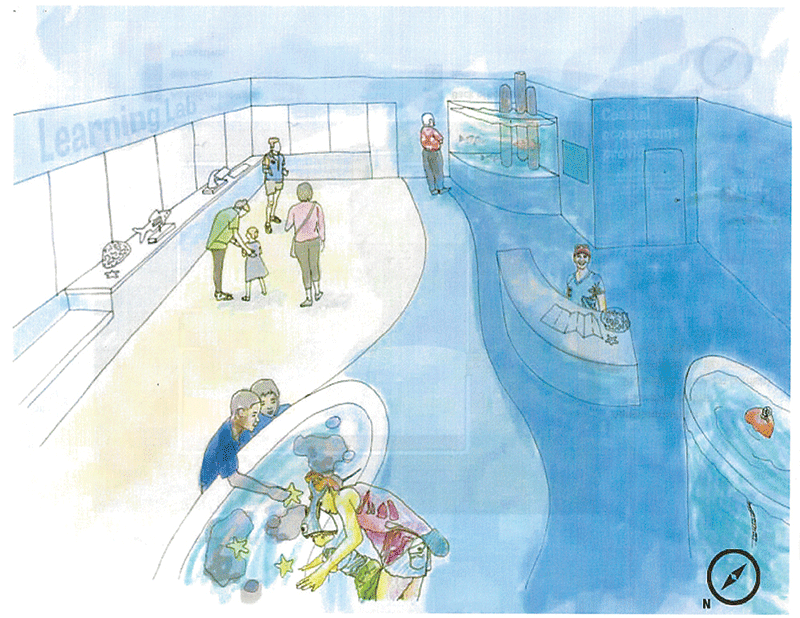
Mote Marine Laboratory’s proposed education center suits the Anna Maria City Pier to a T — the T-end.
Voting 4-1 Feb. 17, Anna Maria commissioners directed Mayor Dan Murphy to “proceed with haste to contact Mote Marine and get the final proposal from them” for use of a vacant 1,800-square-foot building on the T-end of the pier at 100 N. Bay Blvd., Anna Maria.
The dissenting vote came from Commissioner Mark Short. “It’s still too soon to narrow this down,” he said.
The motion in favor of Mote’s plan was made by Commissioner Joe Muscatello and seconded by Commissioner Jonathan Crane.
The vote came at the second commission meeting in eight days after Murphy reviewed five options from the previous meeting and outlined a sixth: A “cantina.”
The “cantina” would require removing three walls to provide an “open-air shelter” for a bar and seating for the existing City Pier Grill & Bait Shop on the north side of the T-end.
However, City Pier Grill & Bait Shop owners Brian Seymour, Nick Graham and Vic Mattay were granted the first right of refusal for the operation of a business in the larger space in their contract with the city.
Seymour said Feb. 17 that the only way he could see a “cantina” complementing his business would be if he and his partners operated the concession. Otherwise, he said, the cantina vendors would be competing.
Seymour and Graham previously declared their support for the Mote project at the Feb. 10 workshop on the pier.
Also, said Murphy, the Mote project is “the only option that would not cost city taxpayers money.”
When Mote representatives presented their plan Feb. 10, they said the city would be responsible for securing $500,000 for a build-out but that money could come from a host of sources.
One potential funding source is the Manatee County Tourist Development Council, which advises county commissioners regarding the use of revenue from the bed tax, 5% tax charged on rentals of six months or less collected by the government monthly.
Other potential sources include nonprofit donations and philanthropic funding, Commission Chair Carol Carter suggested Feb. 17.
But the bottom line, when it comes to the $500,000 cost for the Mote build-out, is Anna Maria property taxpayers won’t foot the bill, Murphy said.
He estimated the build-out for a special event venue could cost taxpayers about $275,000, while a retail shop would run $175,000-$200,000 and an open-air cantina $225,000-$250,000.
The most expensive build-out option for taxpayers is $375,000 for a sit-down restaurant.
The build-out costs are estimates based on research into similar projects, Murphy said.
He said these options would not be funded with tourist development tax funds or by donations because they would be “privately owned commercial entities,” while Mote’s proposal would be dependent on TDC funding, donations and philanthropic entities.
“All (options) require some level of investment from the city,” but the Mote plan doesn’t require funding from ad valorem taxes” and, Murphy said Feb. 20 in a phone interview with The Islander, he would not proceed with it if that were the case.
“It’s easy to get contributions for Mote because they have so much to offer everyone,” Murphy said.
Included in the estimates are what the city must provide as permanent, fixed installations, including finish work and plumbing and electrical.
When it comes to the Mote option, because there would not be an admission charge to the center, the city’s revenue would be negligible.
Murphy said the city could earn $10,000 or so from annual sales if Mote operates a gift shop, while a commercial lease could produce annual revenue of $60,000-$75,000 for event space, $70,000 from a retail store or $100,000 from a restaurant.
Other business
The first “consideration” Murphy noted for the range of options is the need for increased parking.
In the past, former restaurant leaseholder Mario Schoenfelder was repeatedly denied requests for additional parking and the city opted for a park rather than parking after it acquired six vacant lots across Bay Boulevard from the pier.
But, Murphy said, any of the options for the new pier would have its draw and each would require additional parking for patrons.
The Mote center “will promote environmental awareness” through live and interactive exhibits, provide field trip and tour options and capitalize on the use of the pier as a fishing spot by providing education, Murphy said.
Field trips to the Mote center would be popular, especially in light of the Mote-backed dolphin listening station to be installed at Anna Maria Elementary, AME principal Jackie Featherston said Feb. 18 in a phone interview with The Islander.
On the other hand, the Mote project requires the city to secure build-out money, provides little to no municipal revenue and will take six to seven months to open after funding is secured, Murphy said.
Using the space for special events would be less intense than a restaurant.
But the event option could compete with other businesses, Carter said.
Murphy said retail space would attract people to the pier, have a low-intensity use, and be operational within three to four months.
But considerations include “long-term stability concerns” and, again, competition with local businesses.
As for a mixed-use space, Murphy said a cost analysis and benefit-to-consideration comparison would be difficult to do without more details.
What happened to the restaurant?
A restaurant was planned for the space when the new pier was built after the city’s insurer determined the historic pier had suffered more than 50% damage from Hurricane Irma in September 2017.
The former pier housed an outdoor bar, bait shop and restrooms in one building and another housed the restaurant.
Plans to again house a restaurant in the larger building were scrapped after one of three vendors eyeing the space withdrew its application and two others sought extensive funding from the city for the buildout and guaranteed parking for more than 100 seats, among other demands, all while low-balling the proposed rent, Murphy said.
He estimated the 1,800 square-foot space could seat 50-60 diners along with a small kitchen.
The mayor said he’s heard from people who want the space returned to a restaurant.
“A sentimental option,” he said, but not accurate.
Murphy recalled visiting the pier as a boy in 1949, when it housed an arcade and a small hot dog and beverage counter.
Another consideration would be the labor pool.
Murphy said Ed Chiles, owner of the Sandbar Restaurant in Anna Maria, told him hiring employees is a struggle.
And Seymour said his grill operation also has problems hiring people because housing on Anna Maria Island is often too expensive for young people in the service industry.
Anna Maria resident John Dix said the pier is “truly a community treasure” but his access would be limited by most options.
The Mote center and cantina would be the only options allowing “unfettered access” to the pier for all, as the others require money, Dix said.
Now what?
Murphy said he would connect with Mote representatives and solicit a formal proposal.
Commissioners were eager to learn more, including operating hours and other details.
Murphy anticipated receiving a proposal before the next commission meeting at 6 p.m. Thursday, Feb. 25, at Anna Maria City Hall, 10005 Gulf Drive, Anna Maria.