




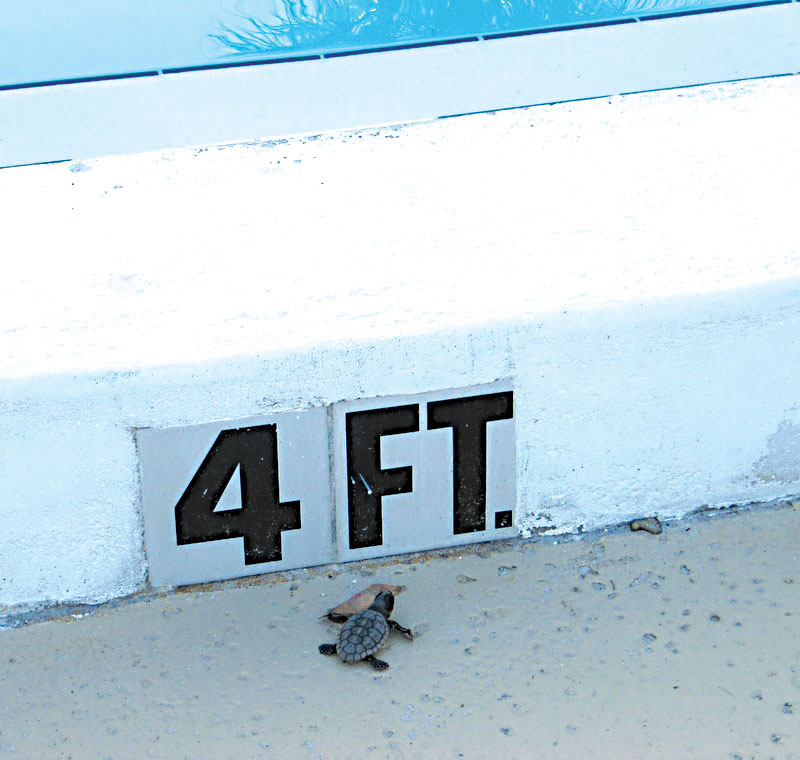
Sea turtles are multiplying by the hundreds on island beaches.
Yes, phase 2 of sea turtle nesting season is underway on Anna Maria Island, with hatchlings emerging from the earliest of the season’s loggerhead nests.
Anna Maria Island Turtle Watch volunteer Pete Gross described what the hatching process looks like — for turtles and volunteers — via a phone interview on July 21.
Nesting season runs May 1-Oct. 31.
Female turtles lay eggs May-August and hatchlings emerge July-October.
As of July 21, eight sea turtle nests on the island hatched, with the first hatchlings emerging July 6.
Loggerhead females lay about 100 eggs per nest about 21 inches deep in the sand, according to Gross.
The incubation period is about two months and then, when sea turtles hatch, they take about three to five days to emerge from nests, Gross said.
Hatchlings emerge from nests mostly at night to avoid predators.
They scurry down the beach and swim for about 24 hours, until they reach grassy beds in the Gulf of Mexico, where they feed and rest.
Gross said about 60% of turtles make it to those grassy beds but only one in 1,000 survive to adulthood.
Turtles at least 25-30 years old qualify as adults.
A loggerhead hatchling only measures about two inches and weighs less than an ounce, while they can grow to a shell length of 27-37 inches and weigh more than 400 pounds.
Signs that a nest has hatched include a hole in the sand mound where a nest is located and hatchling tracks.
AMITW volunteers check the nests daily and mark the hatched nests with a red flag.
They excavate nests three days after seeing signs of hatchlings or 70 days after marking a nest if there were no signs of hatchlings.
Excavating a nest involves removing all eggs from the cavity and determining the number of hatched, non-hatched and pipped eggs.
A pipped egg is an egg that a turtle has cracked but not exited and can contain either a live or dead sea turtle.
Each shell that is over 50% intact counts as a hatched egg.
Gross said volunteers find hatchlings that have not left the nest about 30%-40% of the time. Volunteers release some hatchlings into the Gulf and put others in buckets with water and sand until they are strong enough to be released, depending on the circumstance.
Hatchlings that need extra care are sent to Mote Marine Laboratory and Aquarium in Sarasota.
The best season for hatchlings on the island was 2018, culminating in 447 hatched nests 35,788 hatchlings. The low season was 2005, ending with 97 hatched nests and 2,698 hatchlings.
Gross said it is nearly impossible to guess how many hatchlings the island will welcome this season. About 75 nests were washed away by Tropical Storm Elsa but 284 nests remain and female turtles continue to nest.
Beachgoers can help hatchlings by picking up trash and covering holes in the sand, while beach neighbors can help by turning out or shielding their night lights and using turtle-friendly lighting.
Artificial lighting can cause disorientations among baby sea turtles and furniture and holes left on the beach can cause turtles to get stuck, both preventing turtles from reaching the Gulf.
For more information on AMITW, go to islandturtlewatch.com or call executive director Suzi Fox at 941-778-5638.