





With strong winds and rough seas arriving around Anna Maria Island, many local anglers are staying off the water until conditions improve.
In the back country, the waters are mostly cloudy from being stirred up by the wind and chop on the water, which can make fishing challenging.
In areas that remain clear, species such as snook and redfish are being caught. Fishing sheltered areas out of the wind is essential to produce the best action.
Spotted seatrout are being caught on the deeper sheltered flats, and many are large, which we typically see from trout in April. The large spawning fish are a great opportunity to achieve the goal of catching your all-time biggest trout. Just remember to let them go, as they are key to the future of our fishery. And, with the slot being 15-19 inches, most of the larger fish will be saved.
April is known for ushering in an abundance of migratory species — kingfish, Spanish mackerel, cobia and an assortment of sharks.
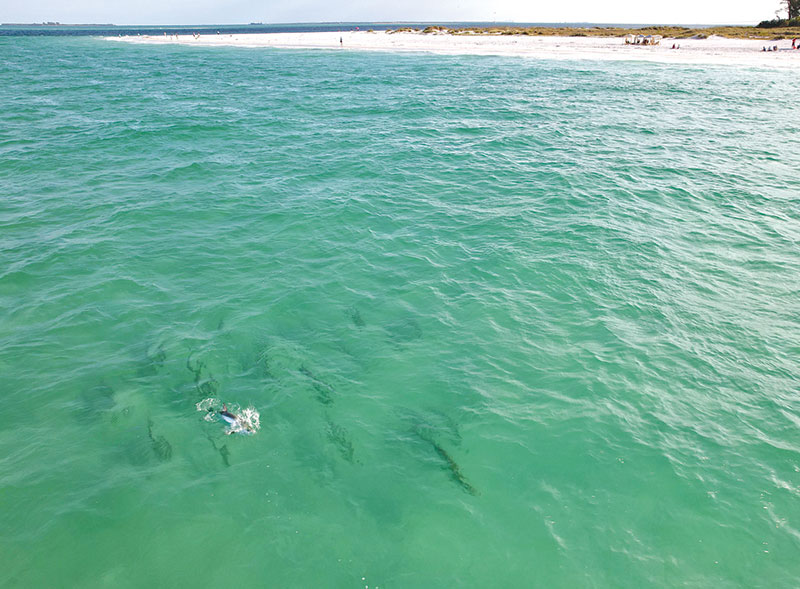
Fishing along the beaches and out to around the 7-mile mark can be advantageous for anglers looking to hook into some strong-fighting fish, and there’s evidence that tarpon are schooling along the beaches. All the species mentioned can put up quite a battle when hooked on the proper tackle.
Anchoring and chumming with live baits is a great way to get in on the action. If you’re having trouble locating the fish, you can try slow-trolling live bait to cover more area and increase your chances of a hookup.
On my Just Reel charters, we’re catching many large spotted seatrout while working the deep grass flats. In fact, most trout are being released due to being over the maximum slot-size of 19 inches. You are allowed one trout over 19 inches on the boat, although I encourage anglers to release those fish so they can lay eggs and ensure we have a trout fishery in the future.
Meanwhile, on shallower flats, I’m seeing some catches of snook and redfish. Both are being found around the mangrove-sheltered shorelines where oyster bars are present.
Capt. Warren Girle is finding nearshore action on a variety of species. He reports fishing around nearshore structure is leading to Spanish mackerel, sharks and kingfish. Most kings are 15-20 pounds, with bigger fish mixed in. As for the sharks, blacktip and spinner sharks are common up to 5 feet.
Moving to the flats, Girle is finding action for clients on spotted seatrout in the deep grass. Snook and redfish are available on the shallower flats close to the mangrove shorelines.
Jim Malfese at the Rod & Reel Pier says he’s seeing the beginning of the mangrove snapper bite. Pier fishers using live shrimp as bait are catching snapper on casts under the pier. The bite is still in its early stages, so limits of snapper are not being caught, although Malfese anticipates the bite to increase in May.
Other species being caught at the R&R on live shrimp include snook, redfish and some random black drum. Macks also are being caught by anglers casting small jigs or silver spoons.
Capt. David White of Anna Maria Charters is finding kingfish around 7 miles offshore of Anna Maria Island. Slow-trolling live threadfin herring around bait schools is working well to get a bite. Most catches are in the 20-pound range.
Closer in along the beaches, White is finding Spanish mackerel to be accommodating to his clients. Anchoring and chumming is working best for these fish and bonito are mixed in with the bite.
In the backcountry, snook, reds and trout are tops for action on White’s boat. He’s putting anglers on the inshore trio thanks to live shiners on the hook.
Send high-resolution photos and fishing reports to fish@islander.org.