




Some sea turtle scientific study takes place on the shore.
Some scientists work in the sea.
And some in the lab.
Just about anyone can track the research using sites such as EurekaAlert.org and ScienceDaily.com, where a search will turn up a trove of studies:
- Picky green sea turtle traveled to the same place for generations;
- Hotter sand from microplastics could affect sea turtle development;
- Sea level rises could threaten sea turtle breeding grounds;
- Surprises in sea turtle genes could help them adapt to rapidly changing world;
- More than 1 million sea turtles poached over last three decades;
- Instagram can support sea turtle conservation;
- Forty Years of Monitoring Increasing Sea Turtle Abundance in the Gulf of Mexico.
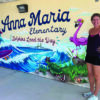
Such work usually involves a team of researchers at more than one institute and a coauthor named on that last study is Kristen Mazzarella, formerly of Mote Marine and now the executive director of Anna Maria Island Turtle Watch.
The Islander, this week, asked Mazzarella about her interest in the science of sea turtles.
The Islander: From time to time, we check a couple of aggregation sites for the latest science on sea turtles and a recent search turned up a study that includes your name. How do you apply your science background to AMITW?
Kristen Mazzarella: I use my science background all the time at AMITW.
Whether it has to do with making decisions about protocols, answering questions from the volunteers and the public handling a hatchling in distress or determining why hatchlings disoriented, I base my answers on what I know from experience and the science behind it.
I also enjoy conducting and participating in scientific research and collaborating with other scientific institutions and hope to continue to do so with AMITW.
The more we learn about sea turtles from science, the better decisions we can make for protecting and conserving the turtles.
The Islander: Does the information that AMITW collects and reports during a nesting season get used in science, in research?
KM: The information that AMITW collects gets used in many ways.
It contributes to the Statewide Nesting Beach Survey, which determines trends in sea turtle nesting and the density and distribution of nesting along Florida’s coast.
The data are also used to inform stakeholders on the impacts to sea turtles from things like coastal construction and local ordinances.
Some of our data are also used in research projects. This year we are collecting samples as part of a pilot study on sex ratio in sea turtle nests.
The Islander: How often do you get the opportunity to check up on the science on sea turtles?
KM: I try to read about the latest science whenever I get a chance, which is usually at least weekly but sometimes less during sea turtle nesting season.
When I get questions from the public that I don’t know the answer to, I often research that topic so I can learn more about it for the nest time I get that question.
The Islander: Do you have a favorite resource on marine science or conservation science that you can share with readers?
KM: There are lots of good resources out there.
I like www.conserveturtles.org and www.seaturtle.org because they have nice resources for educating people.
Government websites — fisheries.noaa.gov and myfwc.com — have important information on protections of wildlife.
One of my favorite books is “Florida’s Living Beaches” by Blair and Dawn Witherington — it’s easy to look up just about anything you find or see on the beach.
And when I have a topic I want to learn more about in the scientific literature, I usually search it in Google Scholar.
For more information about AMITW, call the nonprofit at 941-301-8434, email info@islandturtlewatch.com or go online to islandturtlewatch.com.