






Despite days of strong winds blowing from the East-Northeast, springtime fishing is a good bet in the waters surrounding Anna Maria Island.
Most fishing has been limited to the inshore bite and within a mile of shore in the Gulf due to the wind, but there is plenty of good fishing to be had.
Spotted seatrout are showing in good numbers throughout local waters, with limits of fish being caught on most days. Sizes vary depending on which flat you’re working.
Deeper flats hold exceptional numbers of fish 14-16 inches, while shallower flats in 2 feet of water are home to “gator” trout exceeding 22 inches. And don’t forget, you’re only allowed one over-slot trout on the boat, which is anything over 19 inches in our region.
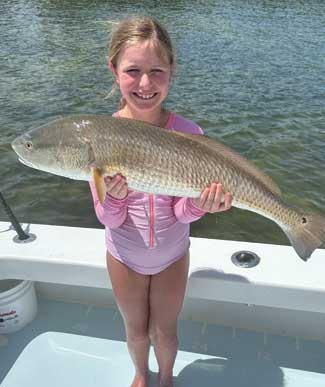
Redfish are hanging around if you know where to look. Spoil islands, oyster bars and mangrove edges are good places to start. Keep your eyes peeled on the approach to the spot because there have been schools of reds popping up randomly on some flats.
Along the Gulf beaches, finding areas where clean, clear water exists is key to finding action. Cobia are trolling these waters, so keep a heavy spinning rod handy in case you have an opportunity to sight-cast to one of the brown bombers.
Fishing structures like reefs and wrecks is producing cobia. So again, have that heavy rod handy even if you just soak a large bait over the reefs. Spanish mackerel and ladyfish are being found along the beaches in the same areas. Finally, if you fish in the surf, keep a pompano jig handy, just in case.
On a side note, be aware that there is no fish cleaning table at the Kingfish Boat Ramp. You may want to take your fish home to fillet or use a different ramp.
Remember, according to the Florida Fish and Wildlife Conservation Commission, your fish need to be brought ashore in whole condition.
On my Just Reel charters, I’m seeing the snook bite improving. Numerous days of strong winds and slow tides make the bite slightly harder, but we are falling back into a normal pattern, which will prove to be good for snook fishing.
Spotted seatrout are lurking in deeper grass flats and are responding to live shiners as bait. Slot and over-slot fish are being caught, depending on location. Ladyfish and an occasional mackerel are mixed in to add variety to the bite. I’m also seeing some flounder being caught, especially while hunting for big trout. Many of the flounder, always a welcome catch, are 18-20 inches.
Bonnethead and blacktip sharks are frequenting shallow flats, providing good action on medium spinning gear.
Capt. Johnny Mattay of Anna Maria Charters is impressed with the number of redfish he’s finding on the grass flats from Tampa Bay south to Sarasota Bay. Whether he’s finding schools of redfish or just putting anglers on random fish along the mangroves, Mattay says the numbers are good.
Casting live shiners on a flat line or under a cork is leading to redfish in all size ranges. Most of the schooling reds are over-slot, while fish along the mangroves are in the slot of 18-27 inches.
While targeting reds along the mangroves, Mattay is finding action on snook for his clients. On many mangrove shorelines, snook are dominating the bite while striking free-lined shiners.
Spotted seatrout are being caught on deeper flats, with good numbers being reeled to the boat during incoming tides.
Mackerel, ladyfish and jacks are present on some of the flats, adding a good variety to the bite.
Moving offshore when the wind dies, Mattay says red grouper are plentiful when using live or frozen baits and mangrove snapper are being caught in good numbers.
Capt. David White is spending most mornings putting anglers on snook along mangrove shorelines, spoil islands and channel edges. Free-lined live shiners are working best for bait. Numerous catches are 24-26 inches, with some 28- to 33-inch slot-sized fish making it to the boat.
Spotted seatrout are biting well, especially on deep grass flats where good tidal flow exists. And, as far as redfish go, White says he’s finding his share on the flats during incoming tides in the afternoon.
Pelagics like kingfish and cobia are being found along the beaches from less than a mile out up to 7 miles. For the cobia, artificial reefs are showing prospects and some larger specimens have been caught. Patrolling the beaches for rogue fish on the surface is also yielding results. As for the kings, finding bait schools is key to finding the bite.
Send high-resolution photos and fishing reports to fish@islander.org.