






A coyote has dealt a blow to nesting shorebirds in Bradenton Beach.
Anna Maria Island Turtle Watch and Shorebird Monitoring volunteers discovered the coyote’s presence the morning of June 4, after two least tern chicks that hatched June 2 and 3 were missing.
A coyote was spotted that evening and June 5.
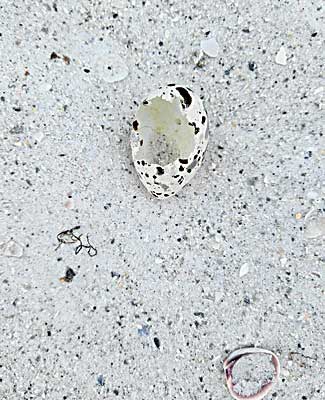
In the same period, black skimmer eggs were abandoned or damaged.
The skimmer colony began AMITW’s reporting week of May 30-June 5 with 126 birds on 44 nests but dropped to 59 birds on just 21 nests as of June 4.
The least tern colony, which opened the week with 80 birds on 39 nests, had 38 birds incubating on 26 nests as of June 5.
AMITW volunteers have expanded the least tern area to accommodate additional nesting.
Also, AMITW contacted the Florida Fish and Wildlife Conservation Commission shorebird team for guidance on protecting the colonies.
Coyotes are among several primary predators that threaten nesting shorebirds, alongside fish crows, gulls and domestic cats, according to AMITW.
With the colonies destabilized, even minor disturbances can cost birds their nests, AMITW said.
Beachgoers can help by staying at least 300 feet from posted shorebird areas.
During the same week, AMITW said sea turtle nesting season was gaining momentum.
According to AMITW executive director Kristen Mazzarella, “Nesting numbers … are starting to increase daily, so we should see nesting pick up over the next few weeks.”
Mazzarella asked that beach visitors to be more mindful of what they leave behind.
“We have been noting a lot of trash and holes left on the beach overnight,” she said. “Trash can entangle nesting turtles and they can get trapped inside holes. Please remember to leave the beach clean, flat and dark so that mother sea turtles can safely nest on the island.”
Tips include removing gear from the beach at night, filling in holes, checking for turtle crawls before setting up chairs and canopies and keeping lights off at night.