




Mild winter weather keeps fishers in the action
Inshore fishing around Anna Maria Island remains steady throughout the grass flats, bays and nearshore structures. A variety of species are being caught, some typical, some not so common this time of year.
Surprisingly, Spanish mackerel and bonito are still being caught around the Sunshine Skyway Bridge structure and from beaches. Spanish mackerel in February is a real treat to catch. To get in on this action, rig up a spoon or Gotcha plug. If you’re in a boat, look for diving birds. If you’re not, head to the south pier on the Sunshine Skyway Bridge and wet your line.
Sheepshead are gradually growing in numbers around docks, piers and near shore structure. Live shrimp, crabs, sand fleas or tubeworms are all worthy choices to get the nibblers to bite the hook.
Spotted seatrout are making a presence on the deeper grass flats of Sarasota, Palma Sola and Terra Ceia bays. A live shrimp under a popping cork or a soft plastic on a 1/4-ounce jig head will help locate these fish.
Pompano are being caught along the beaches and in the bays on live shrimp or sand fleas. Pompano jigs in all styles and colors are producing the bite, although it’s been sporadic at best.
Good luck and enjoy what the warm winter weather has to offer local fishers.
Capt. Warren Girle is fishing nearshore structure when the winds are down. By traveling to the nearshore manmade reefs, Girle’s clients are hooking up flounder up to 18 inches on live shrimp and shiners. Also on the reefs, Girle’s clients are catching Key West Grunts and keeper-size mangrove snapper up to 16 inches.
Moving inshore, Girle is producing good numbers of pompano, although he believes they are becoming less abundant on the flats. “We were averaging five or six fish per drift,” says Girle, “but now we’re averaging three or four.”
In spite of fewer pompano, Girle’s clients are reeling in plenty of Spanish mackerel, bluefish and ladyfish. “They’re all mixed together on the flats we’re fishing,” says Girle. “It’s non-stop action.”
On the flats of upper Sarasota Bay, Girle is having good results with spotted seatrout. By fishing water depths of 3-5 feet, he’s averaging 20 trout per trip. Most of the trout being caught are schoolies, although bigger fish are mixed in. Girle suggests a popping cork with a live shrimp to hook up your catch.
Girle’s clients are finishing on slot-size redfish along the edges of Sarasota Bay on low tides. By fishing deeper potholes along the shoreline, Girle’s clients are catching two to three reds per hole on Exude darts with a 1/8-ounce jig head.
Capt. Rick Gross of Fishy Business charters is targeting sheepshead on small rock piles out in the Gulf of Mexico. Using live shrimp fished on the bottom, Gross’ clients are catching sheepies in the 12- to 15-inch range. Along with sheepshead, Gross is catching Key West grunts, flounder and a few mangrove snapper.
Moving in closer to the beach, his charters are reeling pompano to the boat using either live shrimp or pompano jigs tipped with a small piece of fresh-cut shrimp. Most fish are running small, although Gross is managing to put some keepers in the cooler.
On the grass flats, Gross is targeting spotted seatrout using live shrimp under a paradise popper. “If you haven’t tried one of these paradise poppers,” says Gross, “you need to. They’re deadly on trout.” Spotted seatrout in the 15-inch range were the norm, as well as a few bigger fish.
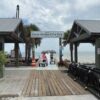
Jeff Medley at the Sunshine Skyway Bridge South Fishing Pier says bonito are dominating the bite. Pier fishers using silver spoons, Gotcha plugs or live greenbacks are catching bonito up to 7 pounds. “We had one guy catch 10 in an hour and a half,” says Medley.
Spanish mackerel are being caught around the piers using the same tactics as for the bonito. Most catches are in the 10- to 15-inch range, although bigger fish are mixed in the bag.
“If you want to catch mackerel,” says Medley, “move away from the schools of bonito. The mackerel are schooling on their own away from the bonito.”
Pompano are making a showing in the shallower waters near the landside of the pier. Try using live sand fleas or shrimp to get the bite. You can also use Love’s lures pompano jigs, although better results are coming from live bait.
If it’s sheepshead you’re looking for, look no further. Pier fishers using live shrimp, fiddler crabs or sea fleas are catching near limits of the convict fish. The bigger fish have not moved in yet, although the catches are averaging 1 to 1 1/2 pounds. You may want to carry ample bait due to an abundance of spotted pinfish inhabiting the same areas as the sheepshead. When the spot tails are plentiful, it’s harder to get bait to the sheepshead before it’s nibbled off by bait-stealers.
Last but not least, flounder are still being caught on live shrimp under the pier. Remember to use enough weight to get your bait to the bottom where the flounder feed. As the tide gets stronger, you’ll need to add lead accordingly to stay in the strike zone.
Capt. Mark Howard of SumoTime charters says the past week resulted in a variety of fish on his charters. Howard reports big gator trout lying in the shallow waters of the Intracoastal Waterway and the adjacent flats during low morning tides. “A well-placed select shrimp thrown into the potholes and slowly worked on the bottom will result in some exciting winter-time action,” Howard says.
Howard has had good results on black drum by tossing select shrimp and crabs under deepwater docks. Howard reports black drum are ranging in size from 15-30 inches in length. “Look for structure that has heavy barnacle growth and some depth under them,” Howard suggests.
Redfish also are showing around the docks. “Use the smaller shrimp in your bait bucket for chum bits and spice up the area. This has been a help in getting the fish to chew,” Howard says.
The week ahead should provide some good tides and favorable weather for fishing, Howard says. He plans to concentrate on sheepshead, seatrout and redfish and maybe look for pompano.
Jonny Keyes at Island Discount Tackle is hearing of good beach action occurring at both Coquina Beach and Bean Point. Fishers using live shrimp are catching flounder in the 14-inch range. Whiting are feeding on live shrimp in these same areas. Pompano are being reported, although catches are sporadic. Keyes suggests using pompano jigs rigged with a pink stringer fly to entice these high-activity fish to bite. You can catch pompano on either live sand fleas or live shrimp.
On the grass flats, Keyes is hearing of good numbers of spotted seatrout caught on artificials, such as soft plastics and suspending jerk baits. For soft plastics, flats fishers are using Berkeley Gulp shrimp or Exude darts on a 1/4-ounce red jig head. For suspending jerk bait, flats fishers are finding success on the smallest size MirrOlure mirrodine. And live shrimp under a popping cork is effective to hook up wintertime trout.
Around docks and in canals, fishers are catching both redfish and sheepshead by putting live shrimp on the bottom. Under docks and along seawalls are great places to target sheepies and reds. They tend to like the warmer water against the seawalls. Plus there’s ample oysters and barnacles, which provide wintertime nourishment for these species.
Jim Malfese at the Rod & Reel Pier is seeing daily catches of sheepshead. Most fish are in the 12-inch range, although a few bigger fish are being reeled up to the deck. Oyster crabs or fiddlers are the baits of choice among the pier regulars.
Pier fishers opting to use live shrimp are catching an occasional flounder and a few black drum. Black drum in the 20-inch range are the norm, although most of the flounder being caught are less than 12 inches. Remember, the black drum will eat oyster crabs, so don’t be surprised to catch a few while targeting sheepshead.
Send fishing reports to fish@islander.org.