







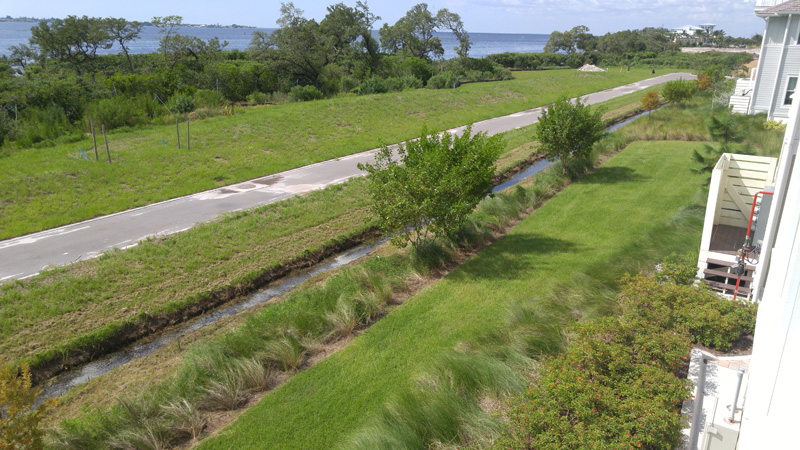
A line has been drawn on the shoreline of Perico Island.
It’s a jurisdictional line for developer Pat Neal that separates federal wetlands from uplands.
And while Neal has not yet won the prize — the U.S. Army Corps of Engineers permit to build in the wetlands and destroy about 1 acre of mangroves on the 3.46 acre building site — he’s won this battle.
The determination puts the federal wetlands line “precisely where we said it was a year ago,” Neal said, contrary to objections from former Manatee County Commissioner Joe McClash and some environmental groups.
Neal, a developer and head of Neal Communities, submitted a map to the Corps designating wetlands and uplands and, in September 2015, began site work for a four-home compound adjacent to Harbour Isle.
Called to the site after residents and others complained of a wetlands intrusion, the Corps enforcement division, along with other federal agencies, visited a year ago.
In a Sept. 22 email, Corps public information officer Nakeir Nobles wrote that the determination informs Neal of the federal wetlands to “assess possible impacts.”
“At the applicant’s request, we finalized an approved jurisdictional determination … we asserted enforcement discretion, resulting in no action taken,” she added.
Between September 2015 and March, Neal cleared the site, removed dredged material, installed a stormdrain system, brought in fill, built a road and made other improvements. Work stopped in April after turf grass was added.
If Neal had crossed the line with the work, he would have faced Corps enforcement action.
Instead, he’s awaiting the Corps wetlands permit before furthering his plans to build on the mangrove-lined shoreline across Anna Maria Sound from Anna Maria Island.
Still needed before the federal permit is issued, however, is the Corps decision on whether there is a practical alternative to building in wetlands.
McClash identified 10 such alternatives sites, each without wetland impacts. He sent his list to the Corps Sept. 20.
Neal also weighed in with the Corps about why 22 alternatives, including Robinson Preserve, are not practical.
McClash claims Neal’s data is false and says the Corps “can flat out deny him the permit” if there is another site without wetland impacts.
When Neal broke ground, he had a Southwest Florida Water Management District wetlands permit and insisted his site work was in the uplands only.
Both the Swiftmud and Corps permits are needed before work can begin in wetlands.
McClash and environmentalists have since disputed Neal’s assertion — pointing to black muck dredged from the site and assessments from wetland experts. McClash is now pursuing the case in the 5th District Court of Appeal, fighting Neal’s Swiftmud permit.
Neal called the efforts against his project — protests, lawsuits and claims by environmentalists — “violations of due process” and “attempts to stop a lawful activity.”
An initial Corps permit was noticed in April 2014, and a June 23, 2015, public notice announced modifications to reduce the project’s encroachment into the wetlands and mangroves from 1.12 acres to 0.72 acres.
The modification also included plans to replace a retention pond with a subsurface retention system.
McClash said the revised proposal is worse in terms of environmental impact.
The developer plans to pay Tampa Bay Mitigation Bank to offset the destruction — as directed by Swiftmud. Environmentalists claim local impacts are not addressed by the proposed mitigation.