







When temperatures drop in the Gulf of Mexico, sea turtles can show signs of distress.
On Dec. 12, Anna Maria Island Turtle Watch and Shorebird Monitoring executive director Suzi Fox received a call that a sea turtle had been spotted in the shallow water near the 28th Street beach in Holmes Beach.
According to Fox, the turtle appeared lethargic.
“The turtle was stuck in the flats waving a flipper like she was calling for help,” Fox said.
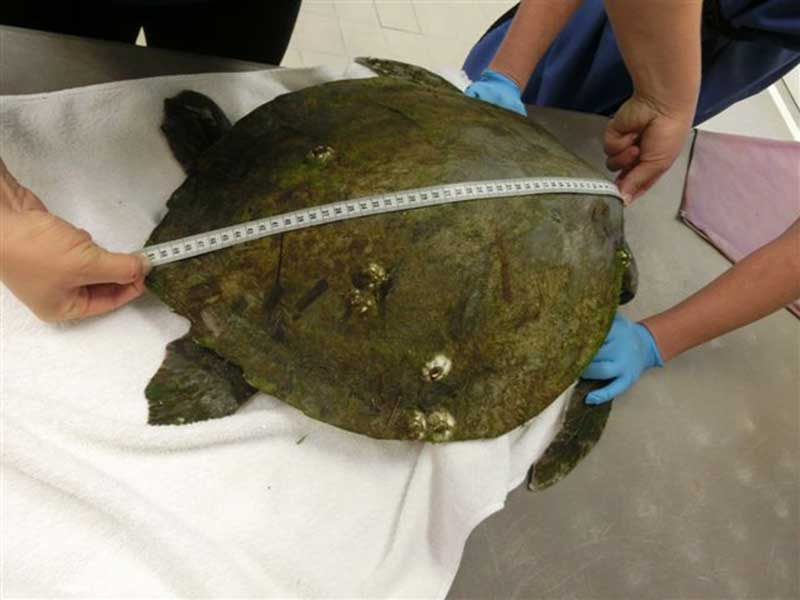
Holmes Beach resident Jim Cardan waded into the water and pulled the turtle to shore. Following Fox’s instruction, AMITW volunteers Uwe Duerr and Birgit Kremer transported the sea turtle — identified by AMITW as a juvenile green sea turtle — to Mote Marine Laboratory in Sarasota. There, the animal was named “Summer” and placed in a rehabilitation tank.
Representatives at Mote confirmed the turtle was suffering the effects of a rapid drop in water temperature, known as “cold-stunning.”
Sea turtles, mostly loggerheads, nest on Anna Maria Island beaches May-October — female adults only come ashore to nest, then return to the Gulf and its bays and estuaries. Hatchlings follow suit and scamper away from their nests to the Gulf, with only females returning some 35 years later to nest on the beaches where they were born.
Because sea turtles are reptiles, their body temperature varies with the surrounding water. A very rapid drop in the air and water temperature can cause sea turtles to become inactive and settle close to the bottom, where they could drown.
A cold-stunned turtle is not able to move very well, if at all, according to the Florida Fish and Wildlife Conservation Commission.
“If you see a turtle floating or bobbing in the water, it could be cold-stunned, especially as temperatures start to drop,” Fox said.
To report a cold-stunned or stranded turtle, please contact Fox at 941-778-5638, or call the FWC Wildlife Alert Hotline at 888-404-3922.
Pre-adopt a sea turtle nest this holiday season
Sea turtles aren’t expected to nest on Anna Maria Island until mid-spring, but now is the season to pre-adopt a nest in support of Anna Maria Island Turtle Watch and Shorebird Monitoring.
“What a great idea for the holidays — a sweet gift you can be sure they don’t already have in another size or color,” said Suzi Fox, AMITW executive director.
For more than 10 years, AMITW has had an “adopt-a-nest” program that provides locals and visitors to Anna Maria Island with the opportunity to sponsor a sea turtle nest.
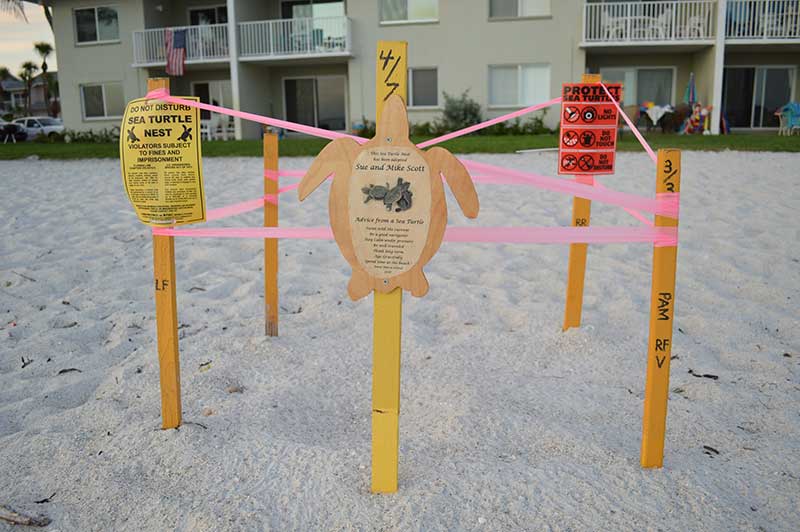
For a tax-deductible donation of $100, AMITW places a handmade plaque at the nesting site. The adoption fee includes a letter of appreciation, a certificate and data updates on the nest.
When the nest has hatched and the data collected, the plaque is delivered to the donor.
AMITW executive director Suzi Fox said the program has been met with enthusiasm, with donations commemorating a variety of events, including holidays, birthdays, weddings and memorials.
Adopt-a-nest money goes toward AMITW’s community outreach expenses.
“Last year, all of our nests were adopted, so it’s a good idea to sign up early,” Fox said.
For more information, visit the AMITW website at islandturtlewatch.com and follow the link to adopt a nest.