






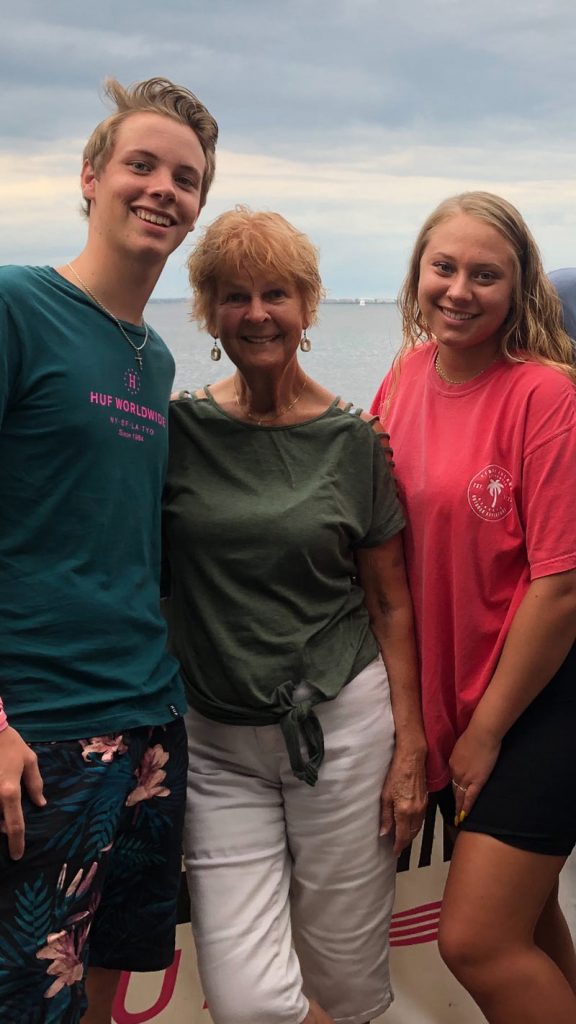
An Ellenton woman’s family says a swim at her favorite beach on Anna Maria Island resulted in her death.
Lynn Fleming’s family reported she died from a case of flesh-eating bacteria — necrotizing fasciitis.
Fleming, 77, of Ellenton, was walking in shallow water at Coquina Beach in Bradenton Beach about two weeks ago when she fell into a depression in the sand, according to her son.
The fall resulted in a small cut and a bump. The bleeding was difficult to stop, according to her son, Wade Fleming.
Several days later, while still nursing the cut, Fleming received a tetanus shot and an antibiotic from her doctor.
The following day, friends found Fleming unconscious and she was taken to the hospital.
She never left.
She died June 26.
The family said doctors told them Fleming had contracted a flesh-eating bacteria and, despite surgeries and treatment, she suffered two strokes and sepsis.
Wade Fleming wants first responders to be knowledgeable about the bacteria.
“The lifeguards should tell people the signs to look for if they are injured at the beach. They should make people aware of what can happen,” he said.
Fleming said he will continue to visit the beaches on Anna Maria Island.
“I’m here taking care of my mom’s estate now,” he told The Islander July 1. “But when I need to clear my head, I head for the beach. I will most certainly continue to swim in the ocean.”
Necrotizing fasciitis is rare — fewer than 20,000 cases are reported each year, according to the Mayo Clinic. Infection can occur when bacteria enters the body through a skin break.
The condition is treatable if caught early, but it spreads quickly through connecting tissues. Symptoms include blisters, fever, fatigue and pain worse than expected from a cut or wound.
Fleming’s case was not the first for the flesh-eating bacteria in the Tampa Bay area in recent months.
In April, fisherman Mike Walton pricked his hand with a fishing hook, as he said he had done hundreds of times, while fishing in the Gulf of Mexico.
According to other news sources, after antibiotics failed to help his hand, which had swelled and developed black blisters, Walton was diagnosed at the emergency room as having necrotizing fasciitis.
Doctors removed the bacteria from the skin tissue to save his arm.
According to the U.S. Centers for Disease Control and Prevention, people with open cuts or scrapes should avoid swimming in natural bodies of water, pool and hot tubs.