





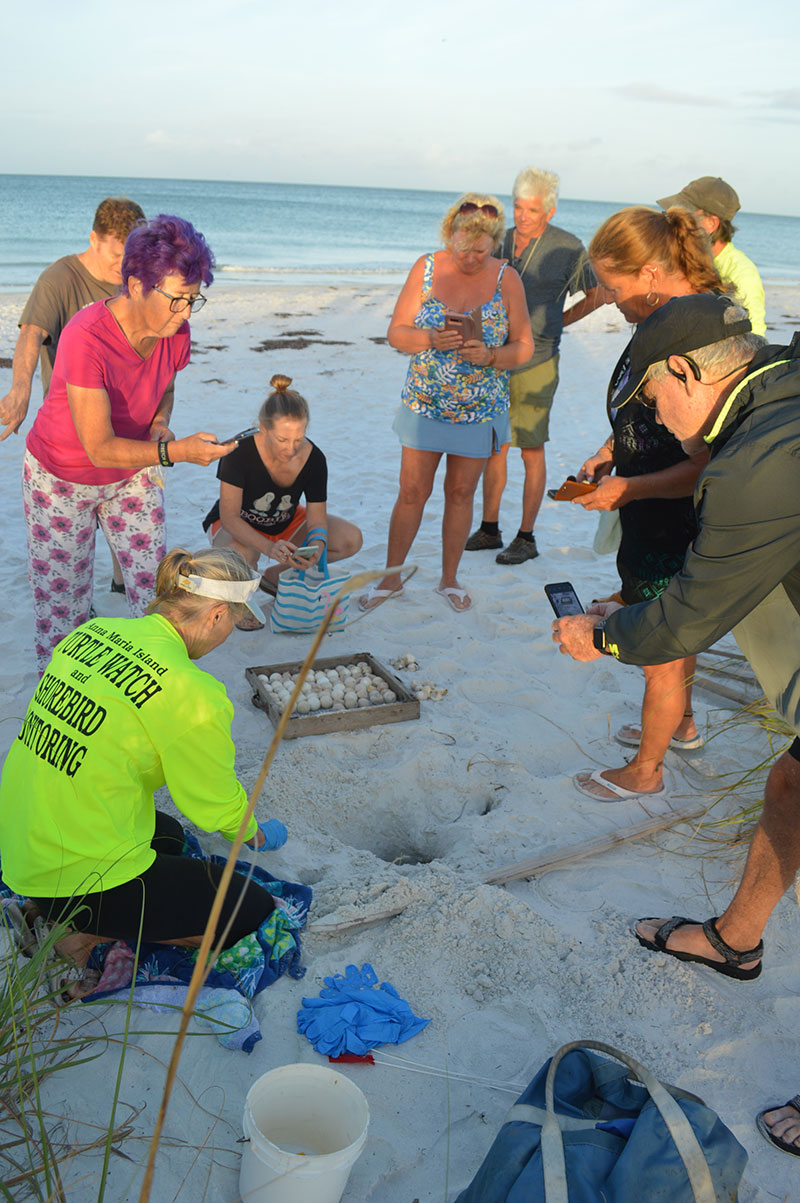
The north end of Anna Maria Island is seeing an unusually active sea turtle nesting season.
“The numbers are just astronomical compared to what it was,” Deb Haynes, Anna Maria Turtle Watch and Shorebird Monitoring volunteer, said Sept. 20 of the number of sea turtle nests in her section of the beach in Anna Maria.
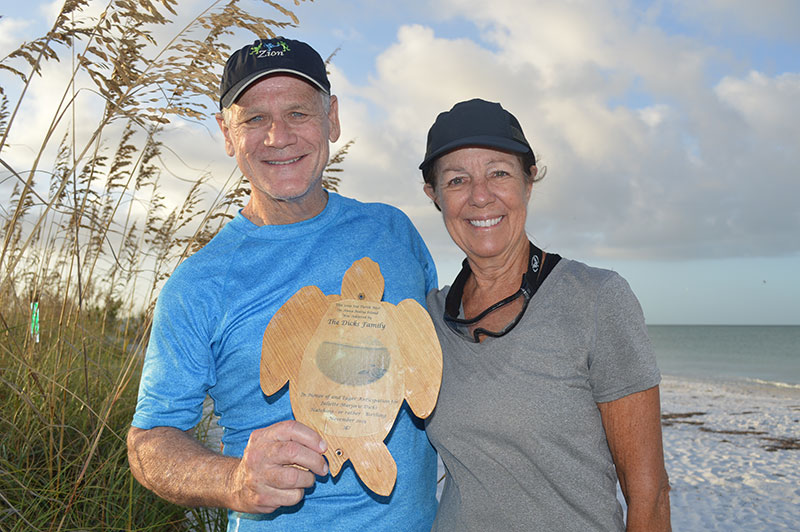
Haynes and her husband Bob, also a turtle watch volunteer, coordinate walkers and data collection for the 1-mile stretch of beach from North Bay Boulevard to Willow Avenue in Anna Maria, referred to by AMITW as section 2.
Deb Haynes said 2018 was their first year coordinating section 2. Last year, there were 46 nests documented in the section by end of the season, Oct. 31, compared with 94 so far in 2019.
Bob Haynes said last year a trough on the beach near the wrack-line might have deterred turtles from nesting after they crawled ashore.
“We had double the false crawl-to-nest ratio last year, compared with this year,” Deb Haynes said. “This year, we have about the same number of nests as false crawls, which is kind of normal.”
A false crawl occurs when a female sea turtle attempts to nest, but returns to the water instead.
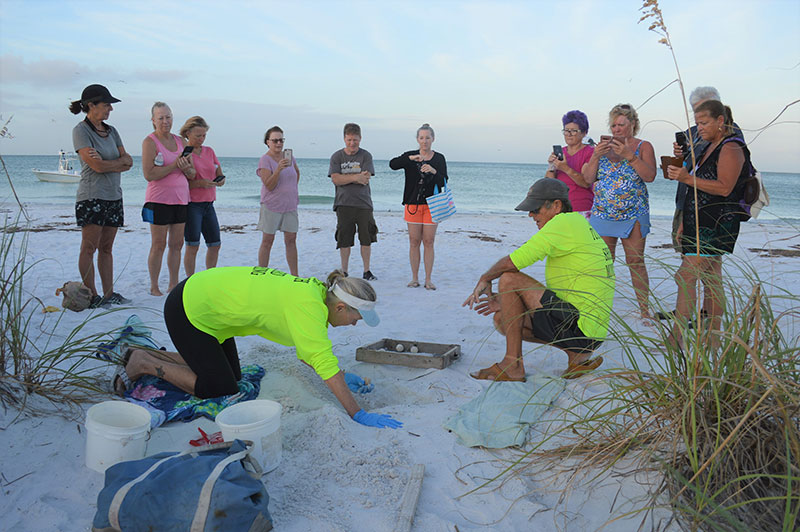
Bob Haynes said there have been twice as many nests but the hatch rate has been significantly lower this year, likely due to heavy rains shortly after the nests were laid in June.
He said the beach in the area is very flat and water there does not drain. Therefore, the eggs could be in standing water for extended periods.
Sea turtle eggs absorb water if rain or surf fill the cavity and hatchlings can drown before they emerge.
“It’s unfortunate that something stopped the incubation,” Bob Haynes said of the findings in a recent excavation. “But, I could tell that many of the eggs near the bottom of the nests had been sitting in water.”
But loggerheads weren’t the only nesters in section 2. While loggerheads are the most common species to nest on the island, AMITW in 2019 has documented nine green sea turtle nests — the most they’ve seen since data collection began in 1992.
Two green nests were spotted in section 2.
Additionally, there were two green false crawls in the section.
The last time a green nest was spotted there was 2015, and there has never been more than one such nest documented in that area in a season.
“We’re very excited to have that happen,” Deb Haynes said. “We are not sure why they are coming this far north, but it is amazing.”
As of Sept. 20, 45 nests remained to hatch on the island out of 540 laid since May 1, and about 25,066 hatchlings had made their way to the Gulf of Mexico — adding up to another record-breaking season for the organization.