






The mysterious illness plaguing Southwest Florida laughing gulls has garnered the attention of federal investigators.
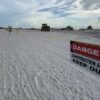
Jim Valade, assistant refuge manager with the Crystal River National Wildlife Complex in Crystal River, confirmed federal authorities picked up the dead gulls from Passage Key after they were found Oct. 8 following a tip to wildlife rescuers.
“We were finally to go this past weekend (Oct. 12-13) and retrieve several dead birds,” Valade told The Islander Oct. 15. His “we” referred to staff with the U.S. Fish and Wildlife Service, including biologists.
“Given the tides, the time passed and the shorelines of Passage Key, we suspect there may be more dead birds we didn’t see or that have swept out,” he said.
The feds verified 30 dead birds — all laughing gulls — present on Passage Key at the time of their trip and collected two of the “freshest specimens” for testing.
Theories have abounded as to the cause of the laughing gull deaths from Siesta Key northward to Passage Key since the beginning of October, but so far, no definitive cause has been identified.
“We really don’t have any idea what is going on with these birds,” Valade said. “We won’t know until we get some turnaround from the testing.”
The testing will take place at the U.S. Geological Survey National Wildlife Center in Madison, Wisconsin.
Anne Ballman, a field epidemiologist with the center, said no specimens had arrived as of Oct. 17.
She said test results may not be available for weeks, not until after the necropsies are completed.
Numbers of reported sick and dead laughing gulls slowed, but continued to occur the week of Oct. 14.
“A couple more have trickled in today,” Save Our Seabirds hospital technician Jonathan Hande told The Islander Oct. 16 of the 20 sick and dying seabirds the facility had received to date.
Meanwhile, Ed Straight with Bradenton Beach’s Wildlife Inc., said he received another laughing gull Oct. 15 that was pulled from a canal in Anna Maria near South Bay Boulevard.
Straight observed that the majority of sick and the few dead birds from Anna Maria Island seem to be clustered on the north end.
“The feds are finally asking us questions,” he told The Islander Oct. 15.
Save Our Seabirds confirmed several of the dead gulls from its facility were being tested under the auspices of the Florida Fish and Wildlife Conservation Commission.
Hande said two laughing gulls from SOS were shipped Oct. 15 to Georgia for testing by the FWC.
About laughing gulls
The laughing gull may be seen often on Anna Maria Island beaches, but the National Audubon Society considers the species “climate endangered.”
Laughing gull numbers were seriously depleted during the 19th century by hunting for the feather trade. The species recovered well in the early 20th century, then declined in northern colonies owing to competition with larger gulls.
Currently, some colonies face threats, but overall the population appears abundant and widespread.
Laughing gulls can be found at salt marshes, coastal bays, piers, beaches and the oceans, but also several miles inland at rivers, fields and landfills.
Climate-related threats include drought, heatwaves and urbanization.
— Lisa Neff