







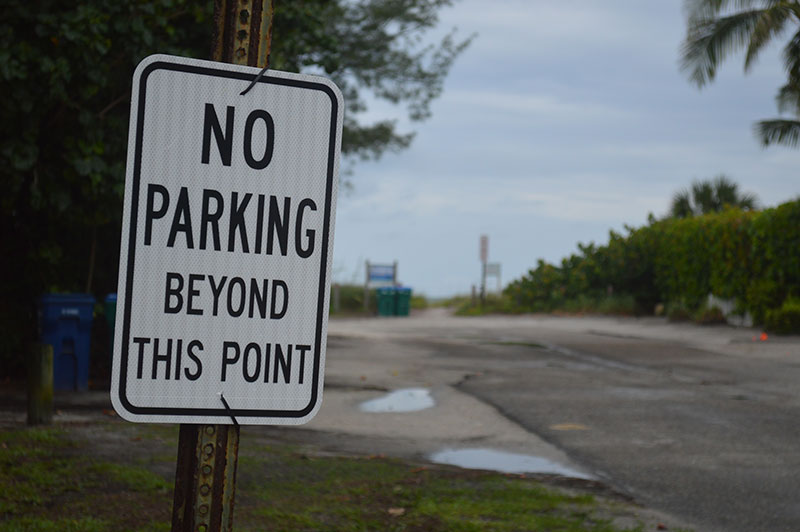
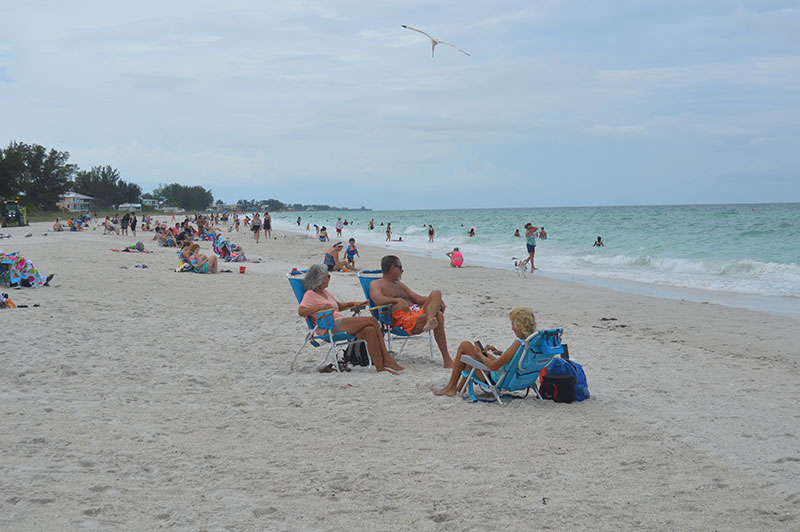
As the state has phased in more activities, Holmes Beach has phased out parking.
And some people are concerned with how the reduction of about 1,100 parking spaces will impact Anna Maria Island.
In late April, Holmes Beach commissioners agreed to a plan proposed by Police Chief Bill Tokajer that removed parking spaces from city rights of way once the city reopened parking.
The city closed nearly all of its beach access, right of way and on-street parking April 10 due to concerns over the spread of the virus.
In her June 4 COVID-19 report, Mayor Judy Titsworth said the city would reopen under the new parking plan June 5.
A letter opposing the plan from former Commissioner Rick Hurst was posted to social media June 2, prompting a flurry of comments from people on and off the island.
The letter led to an online petition that asks Holmes Beach to reinstate parking as it had been in the city before the closures.
In addition, a parking protest was announced to take place outside city hall, 5801 Marina Drive, at 5 p.m. Tuesday, June 9, after press time for The Islander.
A teleconferenced city commission meeting was to start at 6 p.m. June 9, and protestors posted on social media that they would dial into the meeting during public comment.
In his letter, Hurst said the city “decided to permanently eliminate close to 2,000 parking spots, which will reduce street parking from approximately 2,500 spots down to 479 spots plus 120 golf cart spots.”
Tokajer responded in a June 4 email that the city previously offered 2,405 on-street parking spaces within a quarter-mile of the beach, but the new restrictions would allow 1,303 parking spots within that area, including two spots near each beach access for golf cart/LSV parking.
“This is a reduction in on-street parking of 1,102 spots or approximately 45%,” the chief wrote.
He said the 479 spots Hurst referred to are the parking spaces the city reports to the state for beach renourishment. He said 364 parking spots are required to maintain funding for renourishment projects.
Hurst also wrote in his letter that he is worried about how the parking reduction will impact businesses, visitors and traffic.
Tokajer responded that businesses have their own parking and can tow those who illegally park at their establishments.
“We have never said neighbors are not wanted. We are only saying that we need to take control of how many people park in our residential neighborhoods,” he said.
Regarding traffic, Tokajer said 18,000-26,000 motorists pass through the city each day
“So what difference is it whether we have 16,000 or 17,500 vehicles without spots? We will always have people driving in circles looking for parking as we have every weekend — even when we had 2,000-2,500 parking places permitted.”
Hurst also wrote that it appears the plan was implemented “very quickly, with little input and in the vacuum of COVID-19 restrictions.”
Tokajer responded that the proposal was approved unanimously by commission consensus after being reviewed by the mayor and discussed at three public meetings.
County Commissioner Carol Whitmore, a former Holmes Beach mayor, told The Islander June 3 that she is distressed the city chose to limit long-established parking areas.
“I don’t think the cities are looking at it from a 30,000-foot level,” she said.
Whitmore also said she spoke with people who live off-island, who, after visiting the same beach for more than 40 years, will not be able to park.
“So this is more than just tourism, it is county people and islanders that will have to go where the city tells us to go,” she said. “They should have discussed this at a public meeting when the city opens up.”
Ten-year Holmes Beach resident Dave Welch said he is worried the change will make it difficult for people who live in the city but not close to the beach, to access the shore.
He also was alarmed that the parking decision wasn’t held for a meeting with the public present.
“I can understand during the peak of COVID-19 they wanted to limit people in the city. It made me feel safe,” Welch said. “But the way they implemented this was sneaky and I was surprised, to say the least.”