





Sea turtle nesting season is well underway on Anna Maria Island.
Anna Maria Island Turtle Watch and Shorebird Monitoring volunteers spotted 75 new nests June 7-11, bringing the total to 183 as of June 11 — about 30 more nests than on the same date in 2019.
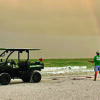
Turtle watch volunteers this year are patrolling the beach on ATVs in the morning in search of tracks leading from the Gulf of Mexico to sandy nests and other signs of sea turtle activity. Volunteers also monitor the nests until they hatch to collect data on hatchlings during the May-October season.
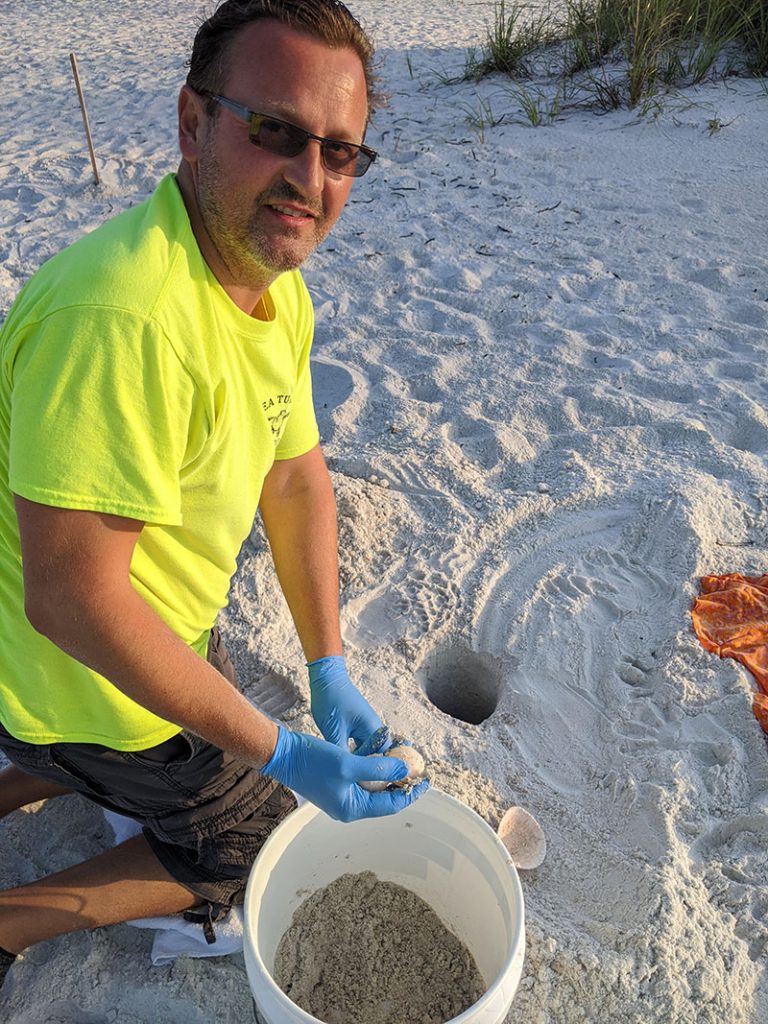
Nests laid on beaches in Bradenton Beach and Holmes Beach are being relocated to human-made nests out of the path of a projected Manatee County beach renourishment project — 78th Street in Holmes Beach south to Longboat Pass — but without a start date.
Nests laid on the Gulf of Mexico in Anna Maria are recorded but left undisturbed, although data is being collected outside the project zone.
Also, this year, nests laid on the Tampa Bay shoreline in Anna Maria, which usually has minimal numbers, are not being documented.
Suzi Fox, AMITW executive director, said June 11 that nesting patterns have been different this season. She said areas that usually have many nests — such as Coquina Beach, a Manatee County-run park in Bradenton Beach — are seeing lower numbers, while the north end of the island has more nests than usual.
“The difference is significant,” Fox said, adding that nesting numbers on the south end of the island could be lower because the beach there has diminished and the beach on the north end of the island has expanded, both due to storms and tide patterns.
Fox said about 50 nests in the relocation zone were washed over by rain and tidal surge generated as Tropical Storm Cristobal moved through the Gulf of Mexico June 5-7.
She said the eggs were “inundated” and likely would not hatch.
Sea turtle eggs are permeable — they absorb water — and the hatchlings can drown in the clutch before they emerge.
Fox said, since the storm tides flooded the beach, turtle watch is relocating nests as landward on the beach as possible, to avoid similar problems in the future.
However, the island saw a surge in nesting after the storm passed.
“Even with the washed over nests, our numbers are really good,” Fox said. “We are powering through another successful season.”
For more information about turtle watch, people can visit the AMITW website at islandturtlewatch.com or contact Fox at 941-778-5638 or suzilfox@gmail.com.
Report sick, injured, entangled or dead sea turtles or birds to the FWC Wildlife Alert Hotline at 1-888-404-3922, #FWC or *FWC on a cell phone or text tip@myfwc.com.