







It was a strange, but successful season for sea turtles nesting and hatching on Anna Maria Island.
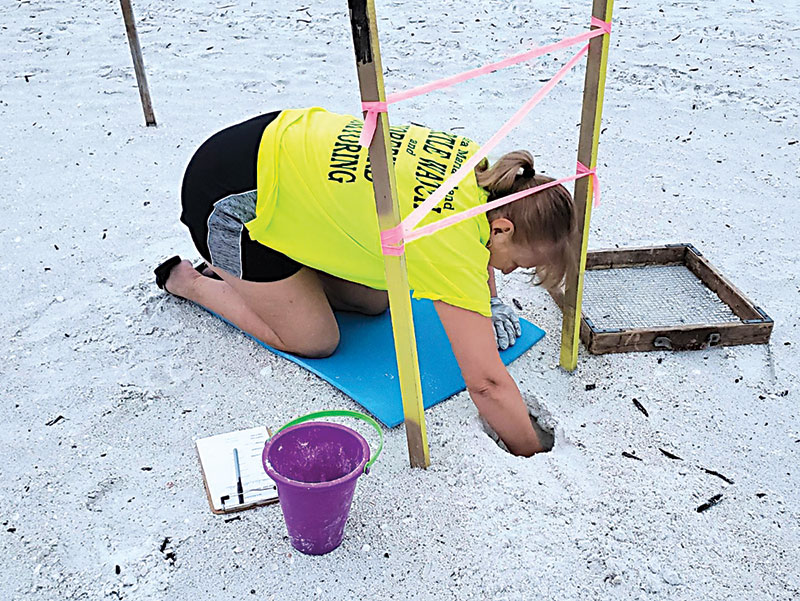
Anna Maria Island Turtle Watch collected data Oct. 20 from the last reported loggerhead nest on island beaches.
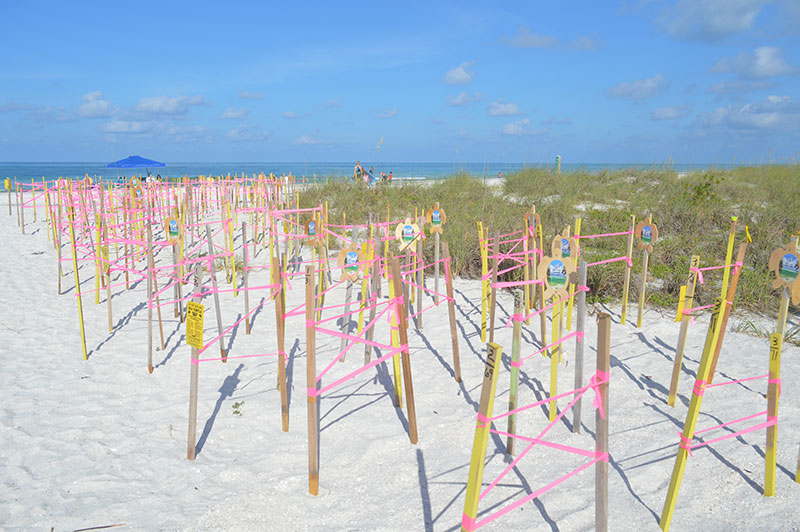
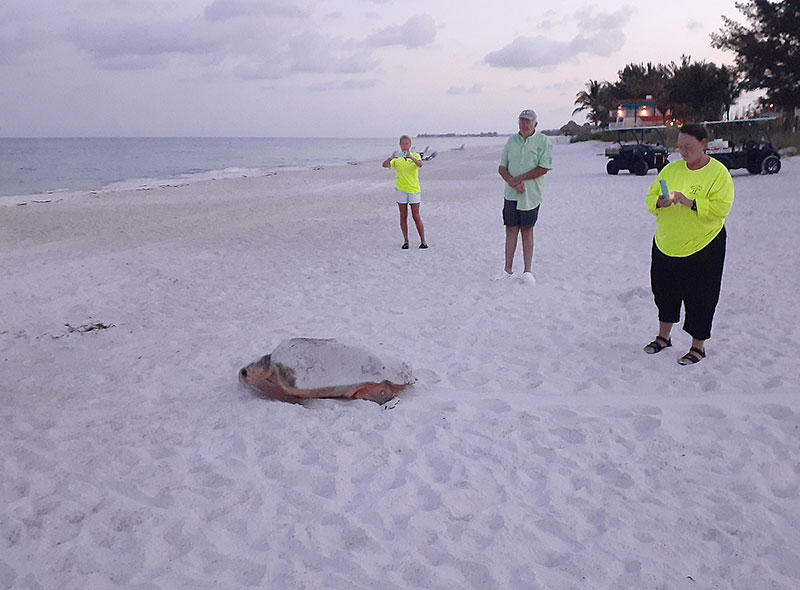
The nest was one of 349 laid since May, relocated by AMITW volunteers to a “nursery” on the beach near the border between Anna Maria and Holmes Beach, out of the way of a sand replenishment project spanning 5.5 miles of nesting beaches and slated to start about the same time loggerheads began crawling ashore to nest.
A team of about 14 volunteers worked around the clock to locate new nests, dig up the clutch, transport and place eggs in newly hand-dug nests and mark the nests for data collection later in season.
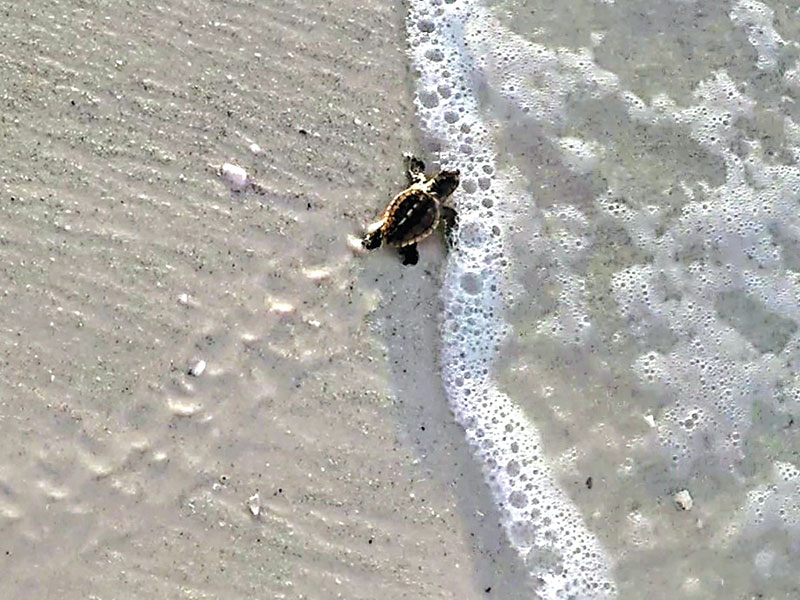
From the relocated nests, 20,174 hatchlings emerged July-October and crawled to the Gulf of Mexico, according to AMITW.
In 2019, turtle watch reported nearly 36,000 hatchling emergences — a record-breaking number.
However, 2020 was different.
Usually, AMITW documents every nest spotted on the island beaches. This year, nests laid outside of the project area north of 77th Street in Holmes Beach and in Anna Maria, were unmarked and hatch data was not collected, although turtle watch recorded the dates nests were laid and the location.
On the Tampa Bay side of the island, where nesting tends to be scant, turtle watch did no tracking.
“Considering that we weren’t monitoring nests outside of the project area, our numbers were consistent with recent years,” Suzi Fox, AMITW executive director, said Oct. 22.
The relocated nests were placed on higher ground, leading to a hatch rate of about 70 live hatchlings per nest, compared with the 2019 hatch rate of 66 live turtles per nest, when heavy rain and occasional high tides contributed to the lower rate.
Also, previously, about 92 turtle watch volunteers took turns conducting daily beach walks May-October on one of nine 1-mile sections of beach to look for the tractor-like tracks indicating a newly laid sea turtle nest or, later in the season, tiny tracks made by hatchlings headed to the Gulf of Mexico.
Nine people served as volunteer coordinators for each section and most mornings, data collection after nests hatched.
However, due to concerns over the spread of the novel coronavirus, as well as procedural changes for renourishment, which required a more experienced team of people surveying the beach by ATV day and night, ahead of the renourishment equipment, the team was consolidated and everyone was “cross-trained” for all tasks throughout season.
Fox said decreasing the volunteers was one of the biggest changes in the organization’s 38 years.
And the smaller group meant more accurate data collection through daily experience, including recognizing the difference between false crawls — a failed nesting attempt — and the tracks that lead to nests.
“Everyone that sees us on the beach wants to be part of the group,” she said. “So I realized we had too many people not walking frequently enough to really get the experience we need to collect the data, which is our main responsibility.”
She said, while nesting has increased since 1982, it does not require nearly 100 volunteer walkers.
“We’ve learned not to split up sections, but to all be one team that can do everything,” she said. “I wish we had done this earlier in the game.”
Additionally, Turtle Talks, an educational lecture, video presentation and Q&A session held weekly during past seasons, was canceled this year due to COVID-19.
But Fox said she plans to apply for grants to record a series of educational videos about sea turtle nesting on the island, to be shared online in lieu of live meets, even after the pandemic.
“We don’t have to be live to share the information,” Fox said.
She added that the organization also will cease providing printed handouts, as they could end up as beach pollution.
“We’ve learned this year that there could be better ways to do things,” she said. “Lasting changes that could truly benefit the sea turtles nesting on our island, as well as our organization.”
Turtle watch warns: Keep lights turtle-friendly
Everyone loves surprises.
Sea turtle nesting season on Anna Maria Island officially ended when the last known nest was excavated Oct. 20, but some unexpected hatches could occur, according to Suzi Fox, Anna Maria Island Turtle Watch and Shorebird Monitoring executive director.
Additionally, green sea turtles, that typically nest late in the sea turtle season and a less common species on AMI beaches, were still nesting south of AMI as of Oct. 22.
So Fox asked that people keep the beaches dark and free of beach gear — and maintain use of Florida Fish and Wildlife Conservation Commission-approved exterior lighting — through the first week in November and remember to turn off interior lights or shut curtains or blinds at night.
— ChrisAnn Allen