






The jury is still out on a future Cortez megabridge.
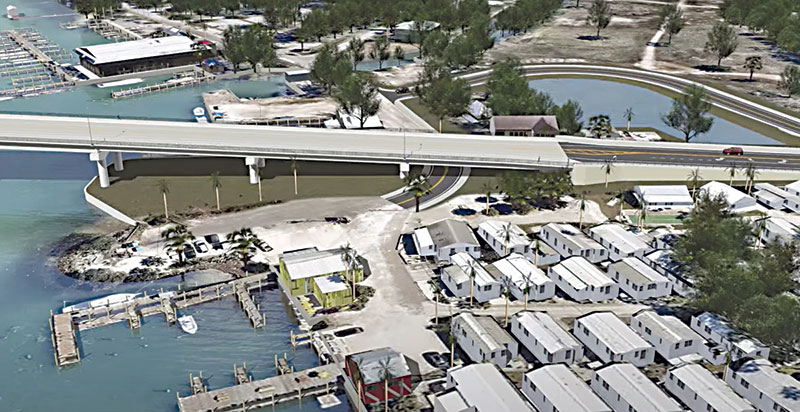
Construction of a 65-foot clearance, fixed span bridge to replace the Cortez draw is programmed for 2026-27 in a five-year tentative work plan from the Florida Department of Transportation.
However, a coalition of people who have been fighting the high bridge has taken another step toward a possible compromise on the structure’s size.
The DOT announced megabridge construction has been scheduled for 2026-27 in the distribution Jan. 8 of the draft five-year work program to the Sarasota/Manatee Metropolitan Planning Organization.
The work plan — for July 1, 2021-June 30, 2026 — provides a snapshot of DOT District 1 funding for road improvements, transportation alternatives and bridge and safety projects. The document requires approval by the Florida Legislature and the budget is subject to signature by the governor.
Meanwhile, representatives from the DOT and an opposition group that filed a complaint have attended a teleconference and agreed to file an amended case management report with the U.S. District Court for the Middle District of Florida.
The report, filed Feb. 1, is the first step toward mediation, a legal process in which a third-party helps two groups resolve a dispute.
Former Manatee County Commissioner Joe McClash is spearheading the lawsuit and the group challenging the high, fixed-span bridge. McClash and his allies, including three Cortez residents and three nonprofit groups, engaged the DOT in the legal battle in 2019.
They want to meet the DOT in the middle by compromising on replacing the 17-foot drawbridge with a 35-foot-clearance drawbridge.
“As long as we’re still in this process, we’re hopeful that the right decision will be made to reject the 65-foot bridge,” McClash said Feb 4.
The DOT has maintained the larger, fixed-span bridge is the best financial investment for taxpayers because it would have a 75-year lifespan and require less maintenance than a smaller bascule bridge.
The DOT built the current bridge in the late 1950s. It underwent major repairs in 1996, 2010 and 2015.
Located on Cortez Road, the bridge spans the Intracoastal Waterway between Cortez on the mainland and Bradenton Beach on the island.
The area south of the bridge’s eastern terminus is the Cortez Historic District, a fishing village listed on the National Register of Historic Places since 1995.
McClash and company contend the megabridge will permanently damage the historic character of the village.
The group laid out their case in a 47-page complaint filed in U.S. District court March 9, 2020.
One criticism is the high bridge’s terminus. It would extend beyond Sarasota Bay, the terminus of the current bridge, continuing several blocks into Cortez.
“The massive structure will divide an intact community … alter existing traffic patterns, change noise levels from the existing ground roads requiring noise walls,” the complaint said.
The new bridge’s terminus also would impact businesses that would lose a direct connection to the main roadway, the complaint said.
Other grievances include the steep rise and fall of the high bridge, which the plaintiffs said would make crossing difficult for some pedestrians and bicyclists, and increased wave action due to the structure’s size, which could damage waterfront properties.
According to DOT spokesman Brian Rick, with inflation, construction costs will be $76 million by 2026.
Despite opposition from McClash and company, the DOT has been preparing for construction since Oct. 10, 2019, when the department released a project development and environment study and announced plans to move forward with right-of-way acquisition and bridge design.
At that time, ROW acquisition — the process of acquiring property for the bridge — had a price tag of $8 million with a scheduled completion date of 2025.
Design is ongoing and the DOT will be submitting Phase II plans by about August, Rick wrote in a Feb. 1 email to The Islander.
The design cost is about $7 million.
According to McClash, the DOT is acting irresponsibly by funding the design while facing a legal challenge.
“It would not be a good use of taxpayer dollars to design something that you would then eventually throw out the plans for,” he said.
The DOT formed a bridge aesthetics committee of 11 local citizens who have had three meetings to date.
At a Jan. 20 meeting, the group discussed nine concepts drawn up by DOT consultants, said committee member Jeff Vey, a resident of Bradenton Beach.
They’ve also had preliminary discussions on pier overlooks with historical markers, beautification in the form of concrete molds of native wildlife and colored lighting beneath the bridge.
None of the eight people at the design meeting were from the Cortez village side, Vey said.
Not all Cortezians are against the high bridge. One notable example is A.P. Bell Fish Co. owner Karen Bell. She is on the design committee but missed the January meeting due to illness.
“The lower bridges require the draw to open. During hurricanes, they usually lock the bridges down to evacuate the island, which I totally understand. But that poses a problem to move our boats to safe ground because we can’t get through the bridge,” Bell said.
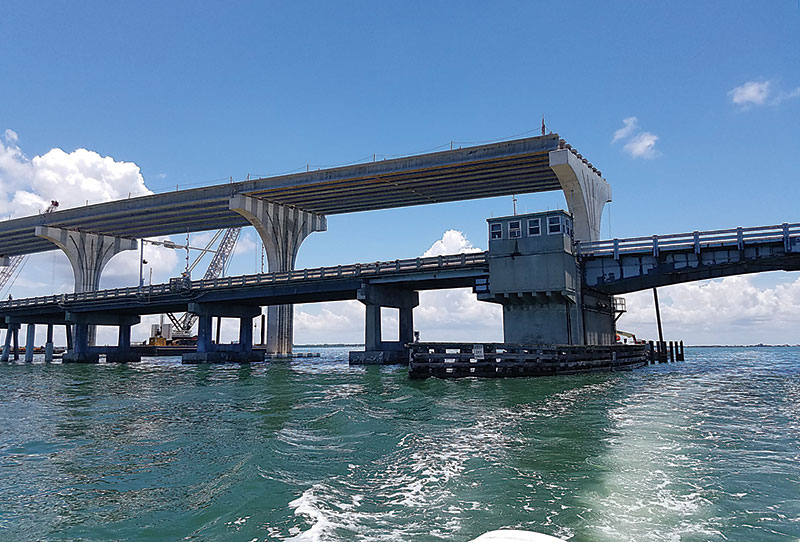
People who want to see what the high bridge will look like should observe the Tierra Verde megabridge in Pinellas County, McClash said.
“It’s almost a perfect example that you can see right now of an existing drawbridge being replaced by a 65-foot bridge,” he said.
McClash said he estimates that resolving the dispute in federal court will take at least a year.
“Until that judge rules, then there’s no decision that is final,” he said.