





The global pandemic changed how Anna Maria Island Turtle Watch and Shorebird Monitoring operated in 2020 and will do so again in 2021 — though not necessarily in a bad way.
From spring through early fall, AMITW monitors island beaches for the activity of nesting and hatching sea turtles, mostly loggerheads.
For the nesting season beginning May 1, AMITW’s operations will be similar to those in 2020, which was altered by the coronavirus pandemic and a large beach renourishment project.
Many changes enacted last year are here to stay, said AMITW executive director Suzi Fox.
Last year, AMITW had 14 volunteers and this year expects to field a team of 16.
Before the pandemic, AMITW assembled nearly 100 volunteers for a season.
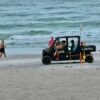
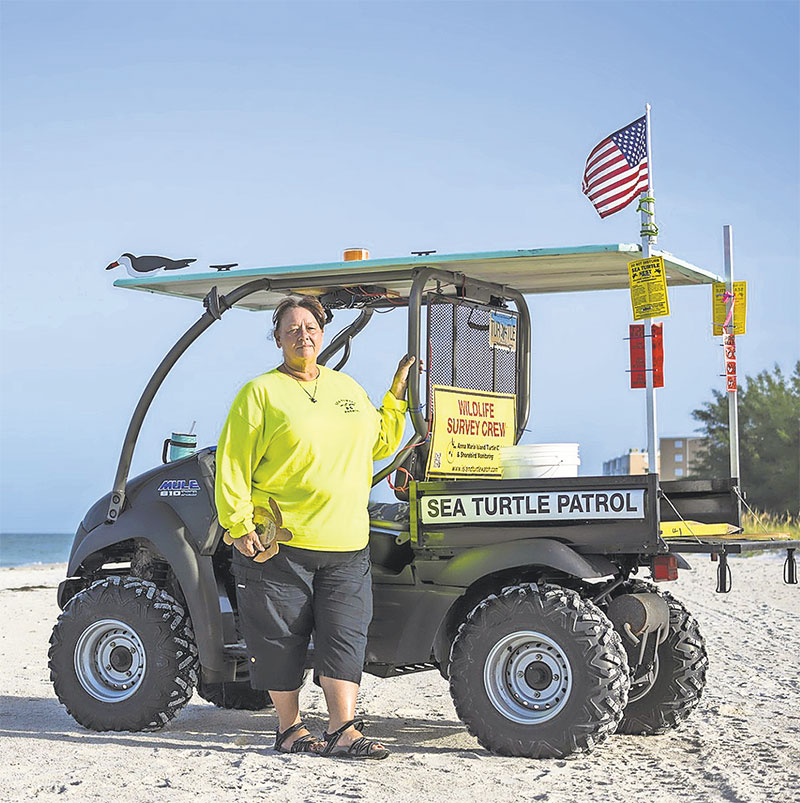
Like in 2020, volunteers will use ATVs on the beach for data collection instead of walking. The ATVs allow volunteers to maintain a social distance from beachgoers and also cover more ground.
“I don’t want (the volunteers) interacting with a lot of people yet,” Fox told The Islander March 17. “We still want people to keep a safe distance.”
And, also like last year, AMITW has canceled its Turtle Talk educational program.
But a main difference between the two seasons will be that turtle nests will not be moved. In the past, nests were moved if they were too close to the waterline and, in 2020, some nests were required to be moved to make way for the layers of sand from the beach renourishment on the shore in Bradenton Beach and Holmes Beach.
Now the state and county need to know from AMITW how nesting goes in the wake of that renourishment.
“It’s part of nature,” said Fox. “In the real world, many do not hatch.”
Fewer volunteers required changes to AMITW’s organization structure: Volunteers will work in two sections, potentially three during the busy season. Also, each volunteer will work at least three mornings a week.
Previously, AMITW divided the island shoreline into nine sections that were observed daily by volunteers at sunrise. Often the same volunteers walked in pairs on the same day weekly.
AMITW found that fewer volunteers on ATVs allowed for better-trained observers and more accurate data collection.
Most of the volunteers from 2020 are returning but AMITW has five newer recruits. Fox said she plans to educate them by pairing them on ATVs with more experienced volunteers.
“I need to have these people fine-tuned,” she said.
Volunteers’ tasks include recognizing the difference between false crawls, which are failed nesting attempts, and tracks that lead to nests, as well as marking nests and collecting data on nest locations and hatch dates.
“We’re collecting data to save an endangered species. The most important thing we do is get this data correct,” Fox said.
In 1982, the earliest days of a turtle watch program on AMI beaches, there were 42 documented nests. Last year, there were more than 500 documented nests.
“We are making some huge progress here. These numbers are showing that this is the way,” Fox said.
Fox said she would begin conducting surveys on the shore April 15, and her volunteers will start May 1.
For more information about AMITW, go online to www.islandturtlewatch.com.
Did you know?
The loggerhead turtle is the most common sea turtle to nest on Anna Maria Island and elsewhere in Florida.
The loggerhead has a reddish-brown shell and is named for its large head.
Adults can weigh 200-350 pounds and can reach 3-plus feet in length.
Loggerheads typically nest on the island May through September — when the water and sand temperature suits them — but nesting can begin as early as April.