







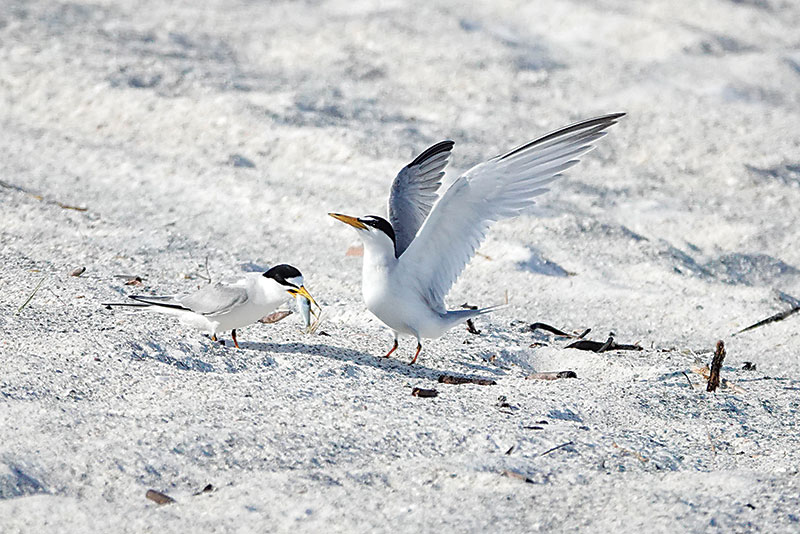
Anna Maria Island beach monitors turned their attention to least turns this month, as the first shorebird nests of the season were spotted.
A colony of least terns nested on Anna Maria Island the week of June 1.
The colony included 18 nests and more than 60 individual birds as of June 10 and was found by Anna Maria Island Turtle Watch and Shorebird Monitoring volunteer Kathy Doddridge.
The colony’s location was not disclosed because the area still must be marked off to protect the nests, Doddridge said.
The colony is the first on the island since 2015 or 2016, added Doddridge, also a member of the Manatee County Audubon Society.
Additionally, the colony is the largest least tern colony the island has seen in 15-20 years, executive director of AMITW Suzi Fox said June 9.
“You usually hear them before you see them,” Doddridge said June 9, referring to how she found the colony. When she first came across the nesting birds, there were four nests.
AMITW is a nonprofit that collects data on sea turtles and shorebirds.
The Audubon chapter aims to protect birds by creating an awareness of and a sense of appreciation for the birds.
Doddridge said the least terns possibly returned because of a beach renourishment project completed in 2020.
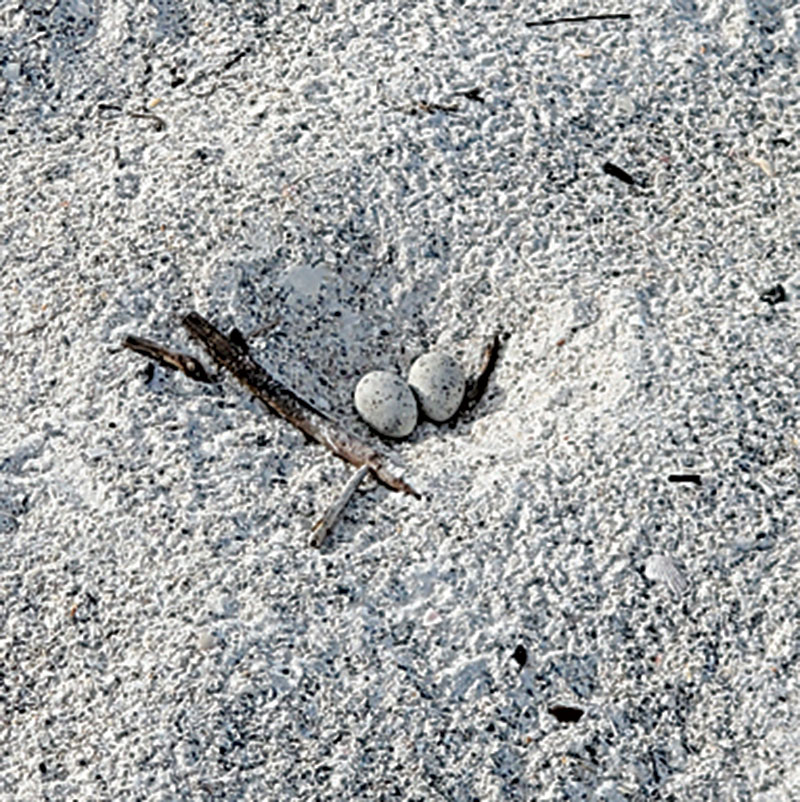
When sand is softer, it is easier for least terns to scrape and lay eggs, she said. Scrapes are shallow holes dug for nests.
“If you build, they will come,” Fox added.
Doddridge said a colony nested at Lido Key in Sarasota but was attacked by predators. She added that some of the birds on Anna Maria Island could be from that group.
Fox said a prior lack of nesting colonies was human-related, as cats and crows are predators of least terns and human behavior brings them to the beach.
Keeping cats indoors and covering garbage to keep away crows are important for keeping least terns safe, she said.
Fox also urged people to stay away from the nests to prevent a flush, when birds scatter from their nesting area. When a flush occurs, predators can more easily eat eggs.
“We need to make certain that we are protecting the very things that bring people to Anna Maria Island,” Fox said.
Additionally, because least terns lay their eggs near the top of the sand, eggs blend in with the sand.
Doddridge said volunteers would stake out the colony to prevent people from accidentally stepping on nests. Volunteers also will put up barriers for birds to hide from predators, as well as educate people on the beaches about least terns.
Least terns are an endangered species. According to the North American Bird Breeding Survey, least tern populations declined by 88% 1966-2015.
Doddridge said least tern eggs take about 21 days to hatch.
After hatching, hatchlings find hiding places. Least terns fly 19-20 days after hatching and remain in nests 2-3 months after that, according to the National Audubon Society website.
American oystercatchers, black skimmers and snowy plovers have nested Anna Maria Island but no nests have been spotted on the island this season.
“I would have expected all of these birds to have nested by now,” Doddridge said.
For more about shorebirds, go online to islandturtlewatch.com or manateeaudubon.org.