






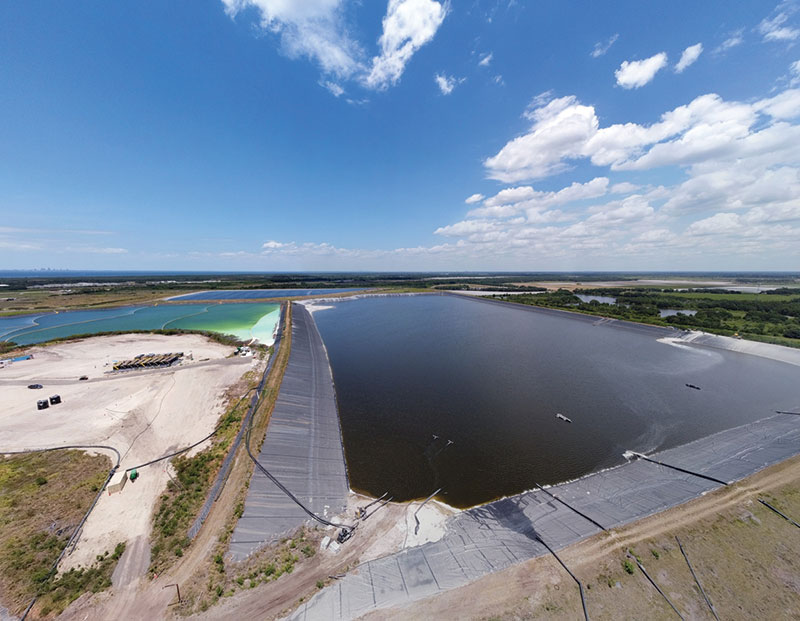
Exhibit A could be Tampa Bay.
Conservation groups went to federal court in Tampa June 24 to file their lawsuit over the release of 215 million gallons of pollutants from the defunct Piney Point phosphorus plant into Tampa Bay and Manatee County groundwater.
The Center for Biological Diversity, Tampa Bay Waterkeeper, Suncoast Waterkeeper, ManaSota-88 and Our Children’s Earth Foundation sued Gov. Ron DeSantis, the acting secretary of the Florida Department of Environmental Protection, HRK Holdings LLC and the Manatee County Port Authority in U.S. District Court in the Middle District of Florida.
The groups announced their intent to sue May 18, more than a month after Florida regulators authorized the discharge of up to 480 million gallons of wastewater from the Piney Point phosphogypsum stack into Tampa Bay and surrounding waterways.
The discharges — approved to avoid a larger catastrophe — ceased in April but the gypstack, a mountain of toxic waste that resulted from fertilizer production, remains and still holds millions of gallons of process wastewater, stormwater and dredged spoil.
“Piney Point was and still is a ticking timebomb,” Justin Bloom, Suncoast Waterkeeper founder and board member, said in a press statement June 24. “Rather than closing it when they had the chance, FDEP allowed the site to become even more dangerous, knowing full well the risk of collapse and catastrophic contamination. Now Manatee County is seeking to inject the hundreds of millions of gallons of remaining hazardous wastewater into our groundwater. We’re not confident in our regulators’ ability to manage this mess and this legal action is necessary to protect our communities and waterways from further harm.”
The lawsuit alleges that Piney Point is an ongoing threat to public health and the environment due to:
- The discharge of 215 million gallons of toxic wastewater into Tampa Bay, which is now experiencing harmful algae blooms and fish kills;
- The threat of catastrophic failure of its impoundments and/or stack system;
- The site’s failing liners;
- Violations of groundwater-quality standards and evidence that dangerous levels of pollution have migrated into the aquifer;
- The choice of a high-risk wastewater disposal method called deep-well injection to store hazardous waste.
“Recent events at the abandoned Piney Point phosphate plant clearly demonstrate that not enough is being done to safeguard the public or the environment from the devastating impacts that the phosphate industry is having on Florida,” said Glenn Compton, chairman of ManaSota-88, Inc. “Piney Point represents the true legacy the phosphate industry will leave behind.”
— Lisa Neff