





Something’s fishy.
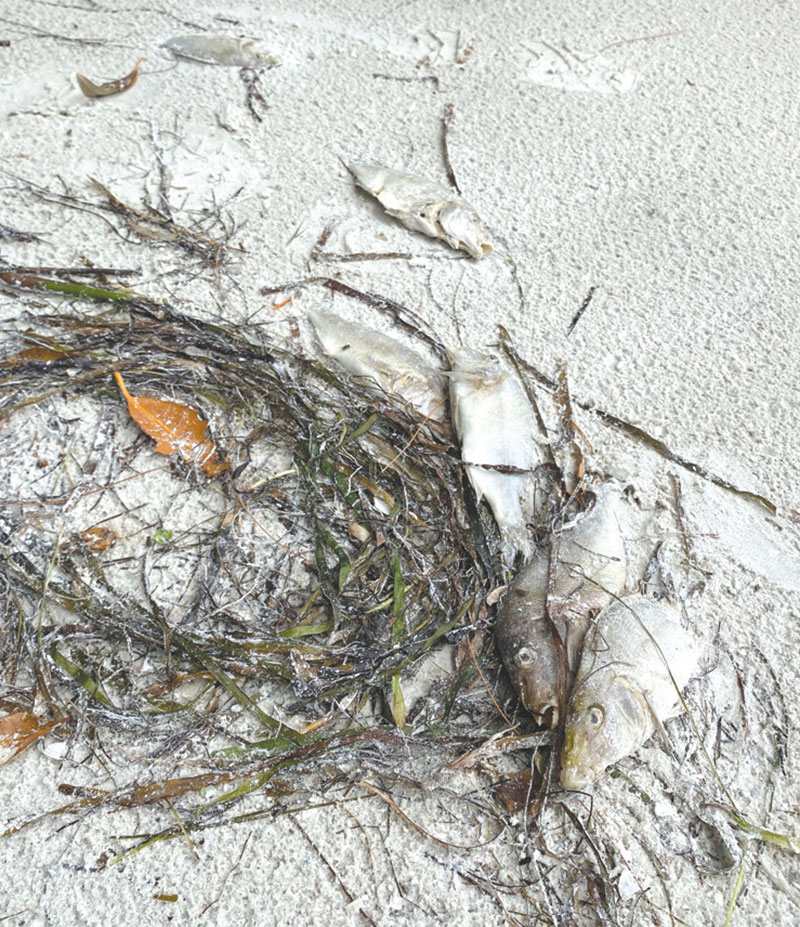
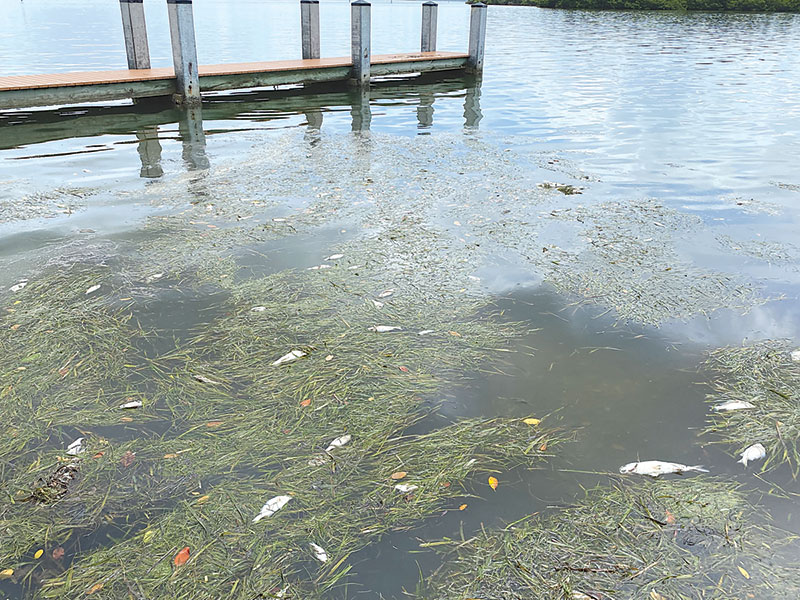
Dead fish were floating in the bay near Coquina Beach in Bradenton Beach the week ending July 18.
The fish kill, one of many reported in the region in the past two weeks, correlates to a broad outbreak of red tide, Justin Bloom, founder of the nonprofit environmental group Suncoast Waterkeeper, told The Islander July 15.
Red tide is a harmful algae bloom created when the oxygen-producing organisms grow out of control and create toxins, which can cause respiratory issues in humans and death among fish and other marine life.
In addition to the reports of dead fish at Coquina Bayside, the Florida Fish and Wildlife Conservation Commission received reports of fish kills at Longboat Pass, in the Manatee River and Terra Ceia Bay, as well as on Longboat Key beaches.
Robert Brown, Manatee County’s environmental protection division manager, said July 15 that county maintenance staff were removing dead fish daily from public facilities, including boat ramps.
The fish were trucked to landfills and about $500,000 of tourist tax revenue was being secured for the cleanups, according to the Manatee County Emergency Operations Center.
Brown said the midsummer red tide is unusually early on the calendar. Red tide blooms in the region generally occur in late summer or early fall.
“They’re all different,” Brown said, referring to outbreaks.
He said the outbreak is in its beginning stages and appears worse in the northern part of Tampa Bay than it is near Anna Maria Island.
Also, Bloom said that the outbreak is not as bad as the red tide of 2017-18.
Karenia Brevis, the red tide organism, was detected in 107 samples on Florida’s Gulf Coast, according to a July 14 report from the FWC.
Concentrations were observed in seven samples in Manatee County.
High levels — equaling 1,000,000 or more Karenia brevis cells per liter — were detected at the southern tip of Bradenton Beach.
Very low levels of K. brevis were found near the north end of Anna Maria Island and Palma Sola Bay, low to medium levels in Terra Ceia Bay and lower Tampa Bay area near the Sunshine Skyway Bridge and high levels at Longboat Pass and Manbirtee Key, west of Port Manatee.
As of July 15, some 50-75 dead fish had been reported at Coquina North and 50-75 at Coquina South boat ramps and 20-30 in Longboat Pass.
Some environmentalists pointed to a state-authorized release of polluted wastewater from the defunct Piney Point phosphate plant as the source of the outbreak but state and county officials have downplayed that theory.
Yet, officials don’t discount the theory that pollution is fueling the outbreak.
Brown said red tide responds to nutrients and the Piney Point wastewater contained a lot of nutrients.
Brown also said strong currents associated with Tropical Storm Elsa pushed algae and dead fish into mangroves and canals in Tampa Bay.
The FWC issued an order July 16 making snook, redfish and spotted seatrout catch-and-release only in Tampa Bay through Sept. 16.
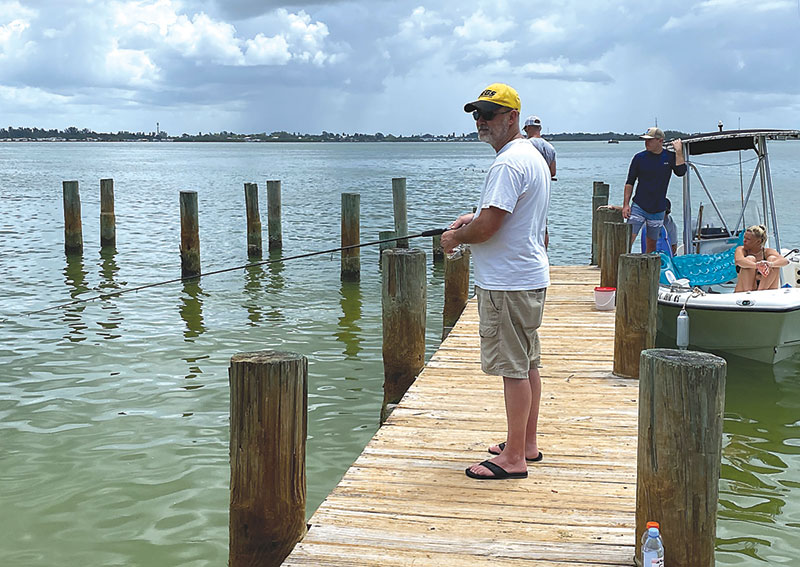
Joe Clous, vacationing in the area from Kentucky, fished at the Coquina Beach South Boat Ramp July 14 but noted he was catching fewer fish.
The week of July 5, Clous caught about 20 fish in two hours, but after an hour of fishing July 14, he had only hooked a couple of fish.
“I can tell the difference,” Clous said.
To report fish kills, call 800-636-0511.
For more information on red tide, go online to myfwc.com or call FWC at 866-300-9399.