







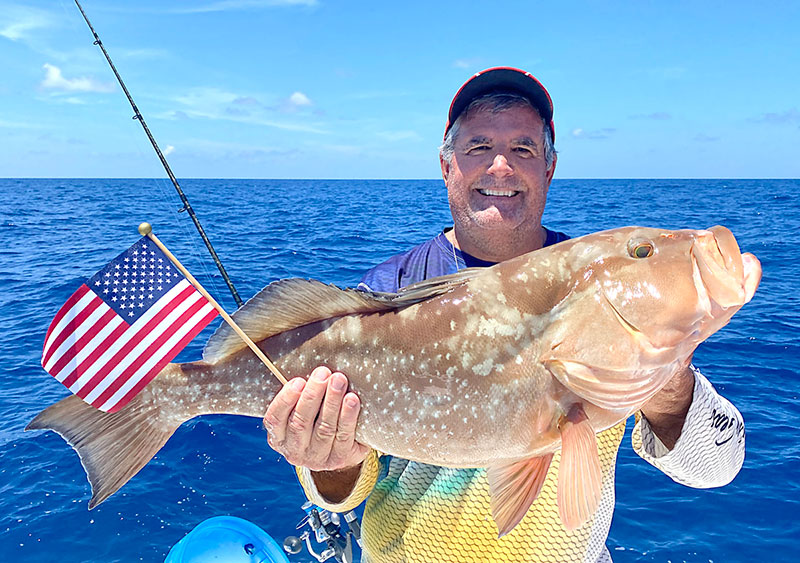
Although red tide lingers in Tampa Bay to the north and Sarasota Bay to the south, the waters in the immediate area of Anna Maria Island remain fishable.
The waters around Bean Point, Passage and Egmont keys are mostly clear, providing sanctuary for numerous fish fleeing red tide. The waters of Terra Ceia Bay and the mouth of the Manatee River seem to be tolerable to most species of fish, too.
As far as fishing goes, many anglers are opting to venture into the Gulf of Mexico in search of clean water and good fishing. Reports from offshore include catches of red grouper, as well as numerous red, mangrove and yellowtail snappers.
Migratory species — Spanish mackerel and bonito — also are being found frequently in the Gulf.
Fishing inshore waters can be challenging, although there are fish to be caught. For sport fishers, catch-and-release snook fishing is proving to be the best bite, especially during early morning tides when the water is slightly cooler than during the heat of the day. Spotted seatrout are taking a hook, as well as some keeper mangrove snapper and Spanish mackerel.
On my Southernaire charters, I’m following that same pattern. Catch-and-release snook fishing is producing the most action for my clients. I’m also seeing plenty of mangrove snapper coming to the boat while snook fishing. This adds variety to the bite and gives folks the option to take a couple of fish home for dinner.
Catch-and-release spotted seatrout are taking the hook, although most fish are small, just below 15 inches.
Lastly, fishing over wrecks and reefs in southern Tampa Bay provides action on Spanish mackerel and jack crevalle.
Capt. Warren Girle is working ledges and reefs in the Gulf of Mexico now that red tide has made fishing futile in Sarasota Bay around Longboat Key — his home port.
Ledges and hard bottom areas in depths of 35-45 feet of water are host to various species, including mangrove snapper, Key West grunts, juvenile grouper, Spanish mackerel and bonito. Girle says all of these species are responding well to live shiners as bait. For the snappers, grunts and grouper, a knocker rig — a 1-ounce egg sinker and a circle hook — is working well, as these species tend to inhabit the ledges close to the bottom. As for the bonito and mackerel, a free-lined shiner on a long shank hook works nicely.
Capt. David White is running clients offshore to find red grouper in the Gulf of Mexico. Live and frozen baits are attracting these bottom dwellers to taste, and White says hard bottom areas and offshore ledges hold good numbers of keeper-size red grouper. American red snapper are being caught in the same fashion. In fact, limits of these fish are easily attainable, he said.
Fishing over offshore wrecks produces action for White’s anglers — mangrove and yellowtail snapper the most predominant. Again, limits of each species are being caught.
Moving inshore, White says catch-and-release snook are producing the most action for his sport-fishing clients. Most catches are measuring 20-30 inches.
For other clients wanting to bring home fish for dinner, mangrove snapper are being caught with some frequency.
Lastly, soaking fresh-cut chunks of mackerel is attracting some blacktip sharks to take a hook, providing for a good fight.
Jim Malfese at the Rod & Reel Pier reports anglers are hooking into catch-and-release snook while fishing at the pier. Live shrimp as bait is working as well, as are other live baits — shrimp, pinfish and mojarras.
Anglers are catching mangrove snapper on live shrimp. Those opting to use artificials, such as small pink jigs or silver spoons, are cashing in on the bite from Spanish mackerel, jack crevalle and numerous skip jacks.
Send high-resolution photos and fishing reports to fish@islander.org.