






As the fall bait run begins in Tampa Bay, you can count on exceptional fishing to take place around Anna Maria Island.
Vast schools of bait will filter in and out of Tampa Bay the next few weeks, attracting many predatory species.
Spanish mackerel — the most predominant species you’ll encounter — are beginning to show in good numbers.
If you haven’t been part of a Spanish mackerel feeding frenzy, then you need to make a point of getting out there to target the fish.
There’s a certain energy that occurs when targeting macks. It consumes the senses.
The visual aspect is a thrill, just watch the high-speed predators slash through the bait schools, sometimes skyrocketing 5 feet out of the water in pursuit.
The sounds of the seagulls and terns and the whoosh of the pelicans overhead in preparation for a dive into the bait schools create a crescendo.
The blacktip sharks patrol the outer edges of the bait schools, biting the macks in half adds a level of urgency.
The explosions on the surface of the water surrounding the boat as you stand in awe of Mother Nature’s circle of life are awe-inspiring.
If you fancy high-adrenaline, light-tackle sport fishing, then the mack bite should more than satisfy.
If you’re going out to target the silver torpedoes, there are a few things to bear in mind.
For tackle, most anglers like using medium-light spinning gear consisting of a 7-7 1/2-foot rod with a reel size of 2500 to 4000 spooled with 15- or 20-pound braid. On the terminal end, you want to add at least a 4-foot leader of 30-40 pound fluorocarbon and finalize it with whatever tackle fits your purpose.
Spanish mackerel — when feeding — aren’t picky, so live bait and artificials work well.
If using live bait, a 2/0 Eagle Claw extra-long shank hook is a must. Mackerel have razor-sharp teeth, so you’ll need that long hook.
If using artificials, a range of choices are available. The Clark spoon and Gotcha plugs are favorites among mackerel fishers, although they will run you $4 or $5 each. And, keep in mind, when mackerel fishing, you’re going to get cut off — and frequently, too.
Taking that into consideration, a lot of mackerel fishers use small jigs, such as crappy or speck rigs. The lures are effective, more cost-efficient and come in a variety of colors. The most popular are white, chartreuse and hot pink. No matter your choice, carry an ample supply.
Now you’re geared up, you’re ready to go and the question is: Go where?
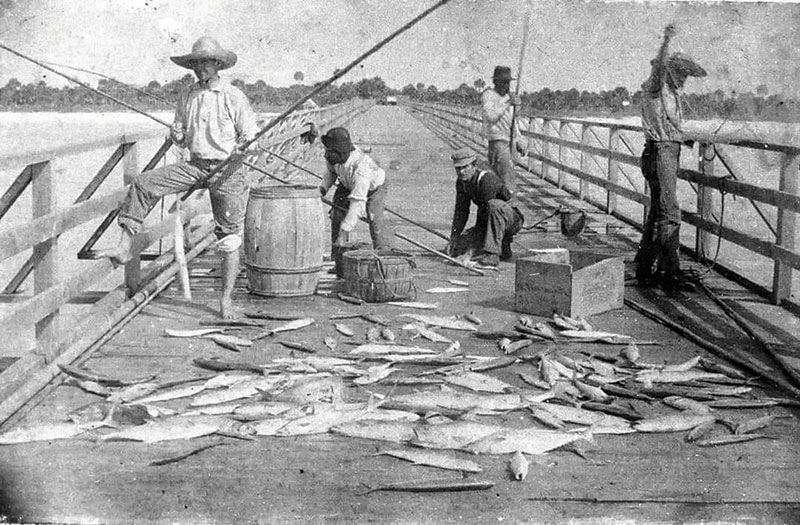
This time of year, mackerel should be found wherever you find bait schools. A great place to start is around the fishing piers, including the Rod & Reel and the Anna Maria City piers, which attract loads of bait and macks.
But if pier fishing isn’t your thing, you can try surfcasting along the beaches.
If you have a boat, your job is going to be to find the bait. Look for seagulls and terns — indicating bait is present. Structure, such as reefs and wrecks, are good checks, as they typically hold bait.
Now that you’re catching all these macks, what are you going to do with them?
The daily bag limit is 15 per person per day and the fish must measure at least 12 inches to the fork of the tail.
Here’s a little advice: You’re not going to get much meat off the ones that measure 12 inches to the fork, so try keeping fish 15 inches or bigger.
Also, mackerel meat is only good for up to 48 hours after it’s been filleted. So unless you’re feeding an army, keeping 15 macks per person is excessive.
It’s best to keep a couple of fish per person at most.
If you can, bleed the fish before you fillet them. Macks tend to be slightly oily and this technique ensures the meat is at its prime when you take up the fillet knife.
As far as cooking goes, blackened and grilled mackerel can be quite good. They also make an excellent smoked fish dip.
Reporting this week, Jim Malfese at the Rod & Reel Pier says they’re seeing plenty of catch-and-release redfish caught during the early morning tides. Pier fishers using live shrimp as bait are hooking into slot-size fish 18-22 inches. The reds require stout tackle, as the angler needs to maneuver them along the barnacle-encrusted pilings and under the pier.
Black drum are being caught by anglers using live shrimp as bait. When both reds and black drum are present, it’s a toss-up on which will get the bait first. Black drum are measuring 15-25 inches.
Another species, catch-and-release snook, are in on the action, although not as frequent as the drums.
Lastly, some mangrove snapper are lurking under the pier and some are going home with anglers for a dinner. Most are in the 12-inch range.
Johnny Mattay of Anna Maria Charters is finding plenty of action fishing in Tampa Bay.
On the flats, the catch-and-release trio — snook, redfish and spotted seatrout — are behaving nicely when tempted with live shiners as bait. On the right tides, the bite is consistent.
After catching and releasing plenty of the fish, Mattay is switching tactics and moving to deeper water to fish reefs, wrecks and rock piles.
In such areas, the mackerel are dominating the bite. As quickly as baits are cast into the water, they are being devoured by the macks. The fish are popular for their sheer strength and stamina when on the end of the line and, as a bonus, you can keep some for a fish dinner.
While free-lining shiners for mackerel, hungry mangrove snapper are venturing to the surface in search of a meal. The 12-15 inch snapper put on a heck of a fight for their size and make exceptional table fare.
Send high-resolution photos and fishing reports to fish@islander.org.