







Fishing in September around Anna Maria Island can be quite productive despite a variety of weather extremes. Anglers willing to toss the dice can be rewarded with some exceptional fishing.
It’s typically really hot and humid in September and, when it’s not, that means it’s raining. But, if you can find a window of opportunity you should try and seize the moment. In the extreme heat it’s best to fish in early morning. Usually the fish react best right after the sunrise until about noon. If there is cloud cover or even a light rain, you can stretch the bite a little longer.
Water temps will remain cooler throughout the day, which may keep the fish motivated to eat. This scenario plays primarily for anglers fishing the flats. The offshore anglers don’t have to deal with this as much, as they have the luxury of finding deeper water where temperatures remain moderate, which keeps fish comfortable and hungry.
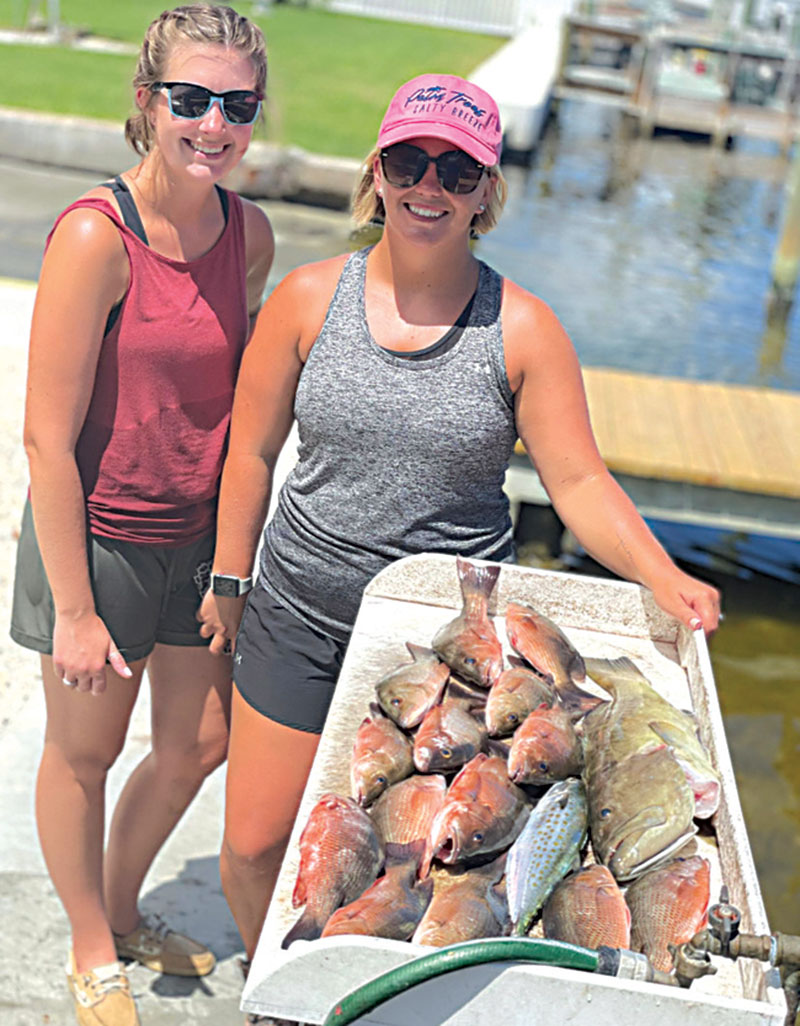
If you’re on the flats, catch-and-release snook action remains good during the morning hours. While targeting the linesiders, you can plan on some catch-and-release redfish in the mix. And there’s plenty of mangrove snapper on the flats, which creates a great opportunity to put a few fish in the cooler for dinner.
As the morning progresses and the shallow flats heat up, you may notice the bite slowing. If this happens, try moving to deeper grass flats, where a good tidal flow exists. These areas will remain slightly cooler, allowing you to find more action. Catch-and-release spotted seatrout will be the likely culprit on these deeper flats. You can find ladyfish, jack crevalle and even some Spanish mackerel in these areas. If you haven’t caught your limit of mangrove snapper, yet you’ll probably achieve that here.
As the day progresses and gets hotter you can move deeper in the bay to the artificial reefs, wrecks and rock piles. In these areas, flounder, snapper and juvenile gag grouper should keep you busy until finally the heat is too much for you to stand. Then it’s time to get the boat moving, cool off in the breeze and drink some cold water as you head back to the dock to fillet some snapper and hopefully flounder.
Jim Malfese at the Rod & Reel Pier is seeing numerous catch-and-release redfish being caught by pier fishers using live shrimp as bait. Casting live shrimp under the pier on a weighted rig is resulting in catch-and-release reds 25-30 inches.
Catch-and-release snook are being caught in this fashion, although other baits such as pinfish or mojarras are working, too. Opting to use large baits such as live ladyfish is attracting catch-and-release snook up to 35 inches.
Lastly, mangrove snapper are the targeted species for those looking to catch something to take home for dinner. Live shrimp or live shiners are the best bait when targeting these snappers.
Capt. Jason Stock says catching blackfin tuna around the full moon is an excellent bite. Free-lining live baits or casting lipped plugs is resulting in man hookups with these high-speed little tunas. Anglers using medium-heavy spinning gear have their hands full with these strong fishing fish on the end of their line. Stock also is finding action on nearshore structure. Permit and mangrove snapper are the two main species being caught. Flounder are in the mix while fishing in these areas. For the permit, live crabs are the “go to” bait. As for the snapper and flounder, live shiners or live pinfish are working well.
Finally, moving inshore, Stock is catching plenty of catch-and-release snook, as well as some juvenile tarpon.
Capt. David White is fishing inshore due to rough seas in the Gulf of Mexico. Targeting catch-and-release snook is consistently good for White. Free-lining live shiners around mangrove shorelines is working well. Most snook catches are 20-30 inches. Catch-and-release redfish are being found in the same areas. Schooling reds are also being found on the flats. These fish are measuring 28-36 inches.
For anglers wishing to hook up with dinner, White is turning them on to mangrove snapper. Fishing structure in Tampa Bay is producing good numbers of these tasty fish.
Send high-resolution photos and fishing reports to fish@islander.org.