






Our marine life is cold, too.
With the frequency and intensity of cold fronts sweeping over Anna Maria Island, inshore fishers are relying on live shrimp as bait to find success on the water.
Species such as sheepshead, black drum, redfish and pompano are becoming more apparent in the back country and readily taking live shrimp offerings as the water temperatures quickly cool down.
So you may want to go out and investigate options on where to buy bait shrimp.
Visiting the local bait shops and marinas where shrimp are sold is wise, as you want to find those that have the most consistent availability. There’s nothing worse than planning a day of fishing only to find out you can’t get bait.
And, as the winter progresses and shrimp become the primary bait, demand will go up.
Remember: You need to source your shrimp early to ensure you get bait for the day.
If you strike out on getting live shrimp, you can opt for artificials. Casting soft plastics around docks and canals can be productive. Just remember to slow your retrieve. As the water chills, most fish in our region tend to slow down a little — they’re trying to conserve energy.
Berkeley Gulp shrimp and a jig head is a great artificial option. Snook, redfish and flounder — when in the right mood — will react to these baits in a positive manner. Other species — trout, pompano, bluefish, ladyfish and jack crevalle — will readily take a Gulp shrimp if presented with the opportunity.
Lastly, picking days between the fronts — when temperatures are slightly warmer — will improve your chances of a hookup.
Fishing late morning and afternoon tides is another smart move, as this gives the sun a chance to warm the waters sufficiently for the fish to feel comfortable enough to feed.
On my Just Reel fishing charters, I’m starting to carry shrimp as well as live shiners in my bait well. On the warmer days, between cold fronts, shiners are doing the job to attract snook and spotted seatrout. Ladyfish, mackerel, snapper and flounder are liking shiners as bait, too.
On the cooler days, I’m switching to live shrimp on the hook, which is resulting in redfish being caught, as well as black drum and sheepshead.
Tipping jigs with small pieces of live shrimp is working — especially for pompano. Drifting and jigging over deep grass flats or along the beaches and passes is good for a pompano hookup.
Capt. Jason Stock is excited to see the arrival of large amberjack in the offshore waters west of Anna Maria Island. Schools of these large amberjack are dominating the bite over wrecks, reefs and springs 20-30 miles offshore in the Gulf of Mexico. Stout tackle and an ample amount of stamina are required to bring the fish to the boat, as some are in the 100-pound class.
Also while offshore, Stock is seeing an increase in the number of kingfish being caught. The kings are being found in the same areas as the amberjack and most catches are 20-30 pounds. Some of Stock’s luckier anglers are hooking into fish in the 40-pound class.
As a bonus, Stock is putting his clients on tripletail. These delicious fish are mostly being found while on route to the offshore fishing grounds. Stock sources the tripletail by keeping an eye out for floating debris, where the fish — up to 10 pounds — are being found.
Jim Malfese at the Rod & Reel Pier says despite the cooler weather and numerous windy days, the bite at the pier is quite good.
Live shrimp is the bait of choice for pier anglers and is resulting in catches of black drum, redfish and a few sheepshead. Malfese is even seeing under-slot snook being caught on shrimp. He anticipates the black drum and sheepshead bite to steadily improve as they settle into their winter-time pattern.
If you visit Anna Maria Island’s northern-most pier, you probably won’t see much more snook action, although the abundance of other species that inhabit the pier during the winter should make up for the void.
Expectations of pompano are on everyone’s mind while fishing at the R&R. So casting a shrimp-tipped jig is always advantageous as you never know when a school of these tasty fish are going to pass by the pier in Tampa Bay.
Capt. David White is finding action while fishing the inshore waters of Tampa Bay south to Sarasota Bay.
Along the beaches, black drum and sheepshead are being caught by White’s anglers who use live shrimp as bait.
The same bite is occurring around residential docks and canals.
Targeting pompano is another option on White’s backcountry charters. Casting small jigs tipped with shrimp is proving to be most effective for these elusive fish. Covering large areas of water is required when hunting pompano, as they enjoy a variety of habitats, including beaches, passes and the deeper grass flats.
Although a fair amount of time and energy can go into locating these fish, the reward is realized at supper after that first bite — the bite on the end of your fork that is. Many fishers say the delectable tender meat of pompano is unmatched in quality.
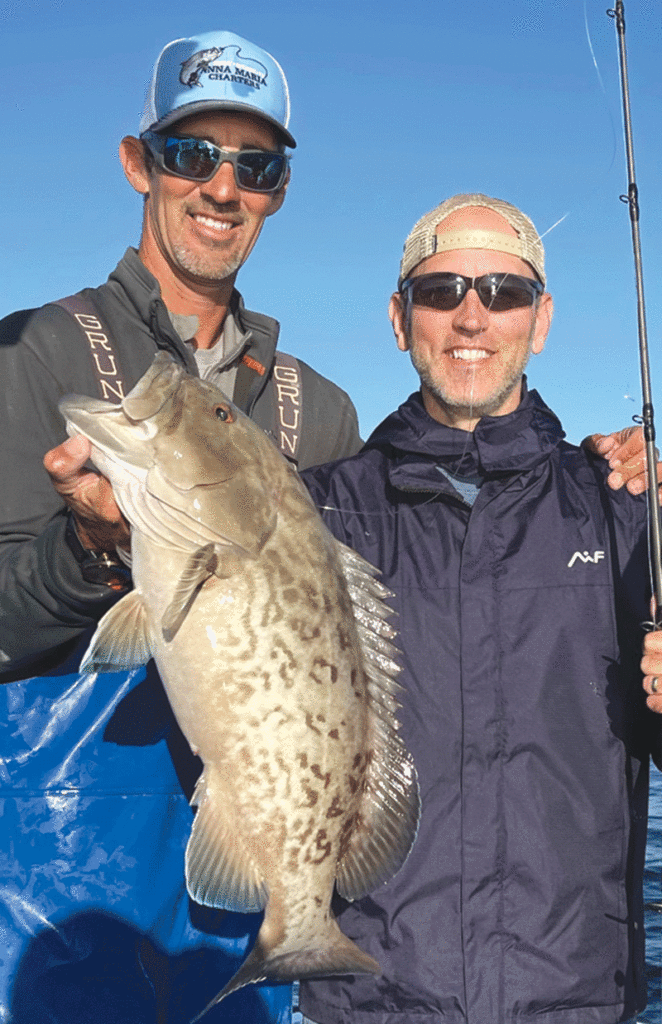
On a final note, White is catching keeper gag grouper while fishing structure in Tampa Bay. These big boys, also considered some of the best eating around, are taking live pinfish as bait.
Send high-resolution photos and fishing reports to fish@islander.org.