





As the temperatures fell to the mid-to low-60s, fishing turned unpredictable and challenging.
With the cold fronts, the water temperatures began dropping, which causes a lull in the action for inshore fishers as the inshore species take a week or two to acclimate to the cooler water before they begin to feed again. And, when they do feed, they may prefer a live offering of shrimp as opposed to a shiner.
Using live shrimp as bait also may present an opportunity to target different species — pompano, sheepshead and black drum. They won’t take a shiner but if you present a lively shrimp, there’s a good chance they’ll have a taste.
And don’t think you’re limited to catching those three species. Snook, redfish, trout and even mackerel will eat live shrimp when the water temps cool.
And with cooling water temps, you may want to adjust where you fish. Fishing docks and other structures, such as rock piles or seawalls in canals, can be advantageous. As the water temps drop, fish we target will seek the warmest water they can find — water close to a food source. So you’ll see large concentrations of fish in a small area, including creek mouths, back bays and deep holes adjacent to grass flats.
So as the water temp changes, we must do the same: Switch tactics and adapt to find success on the water.
I’m targeting and catching spotted seatrout on the deeper grass flats with my anglers on Just Reel fishing charters. The fish eat live shiners but only at the warmest parts of the day — the same applies when targeting snook.
My charters also are seeing action from ladyfish, mackerel and jack crevalle in the areas where glass minnows or shiners are present.
Capt. Jason Stock is finding big tripletail in the Gulf of Mexico for his offshore clients. By investigating floating debris, Stock is finding tripletail up to 15 pounds for his anglers to target and casting live shrimp or live shiners results in the bite.
Also offshore, Stock is finishing out the American red snapper season with catches up to 21 pounds. Mangrove snapper also are present and are being caught — weighing up to 7 pounds.
Stock stays closer to shore and fishes around the offshore reefs west of Anna Maria Island on windier days. While working near shore, he’s putting anglers on keeper-size snook that have taken up residence in the deeper refuges.
Capt. David White is adapting to the cooler temperatures by switching to live shrimp as bait. He’s targeting species such as black drum sheepshead and pompano. Fishing along sandy shorelines is producing the pompano action and he’s finding the black drum and sheepshead mixed in during the bite.
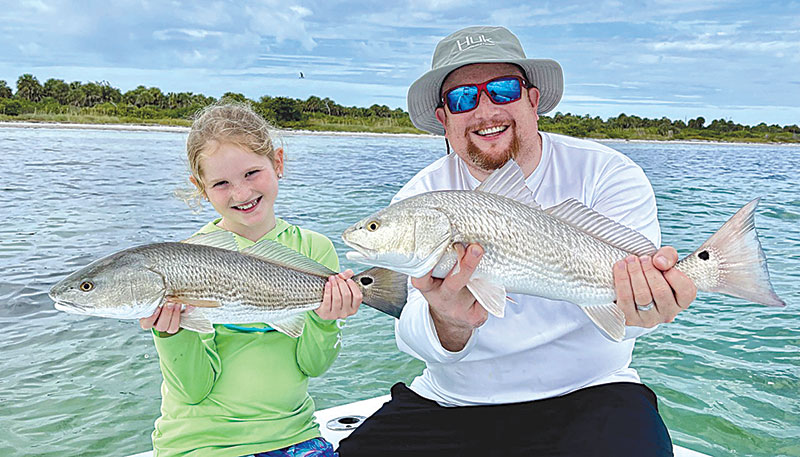
On warmer days, White uses live shiners as bait. Fishing the flats of Tampa Bay, he’s hooking into snook and redfish. He’s finding the fish along mangrove shorelines during the higher stages of the tide on any given day.
Jim Malfese at the Rod & Reel Pier in Anna Maria says he’s seeing mangrove snapper caught by pier anglers using live shrimp as bait. Redfish, black drum and snook also are eager to eat a live shrimp offering. Sheepshead are present at the pier, although they are far and few between as they await winter to set in. Pier fishers using small jigs are anticipating the pompano to move in but mostly catching ladyfish and jack crevalle, although an occasional pompano is being caught, Malfese reports.
Send high-resolution photos and fishing reports to fish@islander.org.