







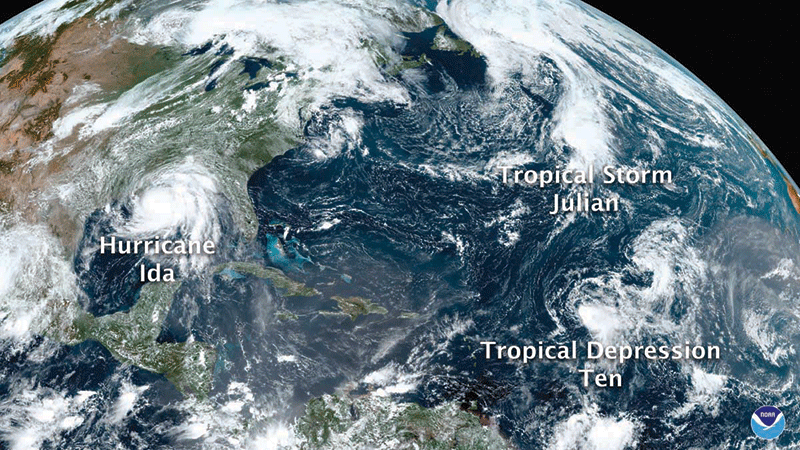
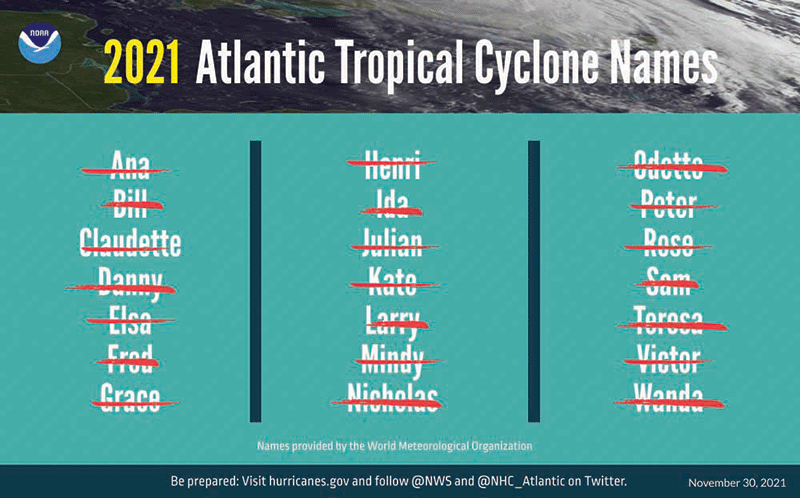
The 2021 Atlantic hurricane season concluded Nov. 30, producing 21 named storms with winds of 39 mph or greater.
Only one storm — Tropical Storm Elsa — directly impacted Anna Maria Island in 2021. The July storm prompted state of emergency declarations and produced rain, winds and some flooding to the island.
The season produced seven hurricanes in the Atlantic hurricane region, including four major hurricanes with winds of 111 mph or greater.
The National Oceanic Atmospheric Administration’s Climate Prediction Center accurately predicted the above-average season, which was the third most active on record in terms of named storms.
The season was the sixth consecutive above-normal Atlantic hurricane season and, for the first time on record, two consecutive hurricane seasons exhausted the list of 21 storm names.
In recent years, scientists attributed heightened hurricane activity to the warm phase of the Atlantic multidecadal oscillation that began in 1995 and favors more, stronger and longer-lasting storms.
Additionally, the Intergovernmental Panel on Climate Change’s Sixth Assessment Report, released in August, projected with high confidence that the global proportion of tropical cyclones that reach intense category 4-5 levels are expected to increase with climate warming at the global scale.
The 2021 season’s storm activity started early and quickly ramped up, as it was the seventh consecutive year with a named storm forming before the June 1 official start of the season.
Matthew Rosencrans, seasonal hurricane forecaster at NOAA’s Climate Prediction Center, said, “Climate factors, which include La Nina, above-normal sea surface temperatures earlier in the season and above-average West African monsoon rainfall were the primary contributors for this above-average hurricane season.”
Looking ahead
NOAA’s Climate Prediction Center will issue its initial seasonal outlook for the 2022 season in May.
— Lisa Neff