









And they’re off!
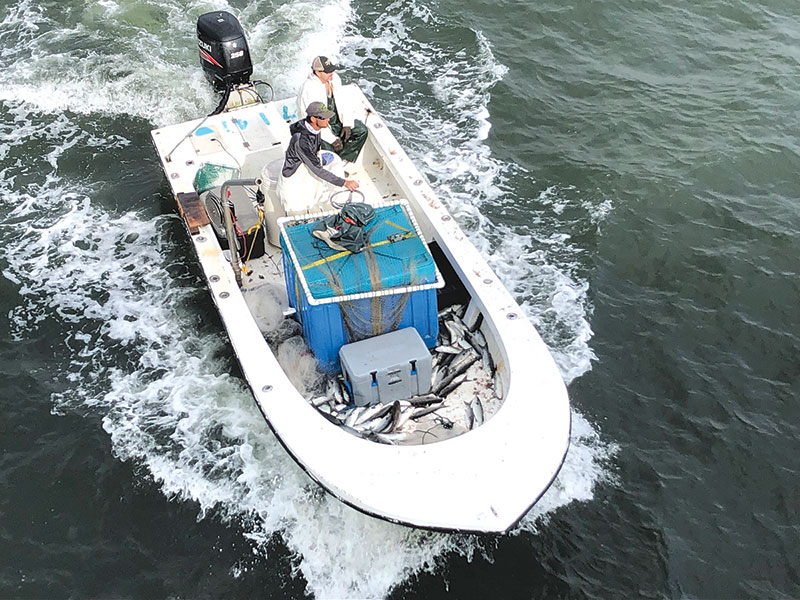
Wind, rain and cooler temperatures brought in by a cold front broke up a lingering stretch of warm, stable weather Dec. 21, prompting schools of mullet in estuarial waters to migrate toward the Gulf of Mexico and fishers to chase them.
It was the first substantial mullet run of the 2021-22 season and, by late morning, dozens of boats and anxious fishers were on the Intracoastal Waterway pursuing mullet near the Cortez Bridge.
Each year around the holiday season, the scaly, herbivorous fish school up in Sarasota and Tampa bay waters before heading offshore to spawn in the Gulf Stream.
Along the way, fishers race and jostle to net them and unload their catch at the Cortez fish houses, which pay higher prices for egg-bearing females.
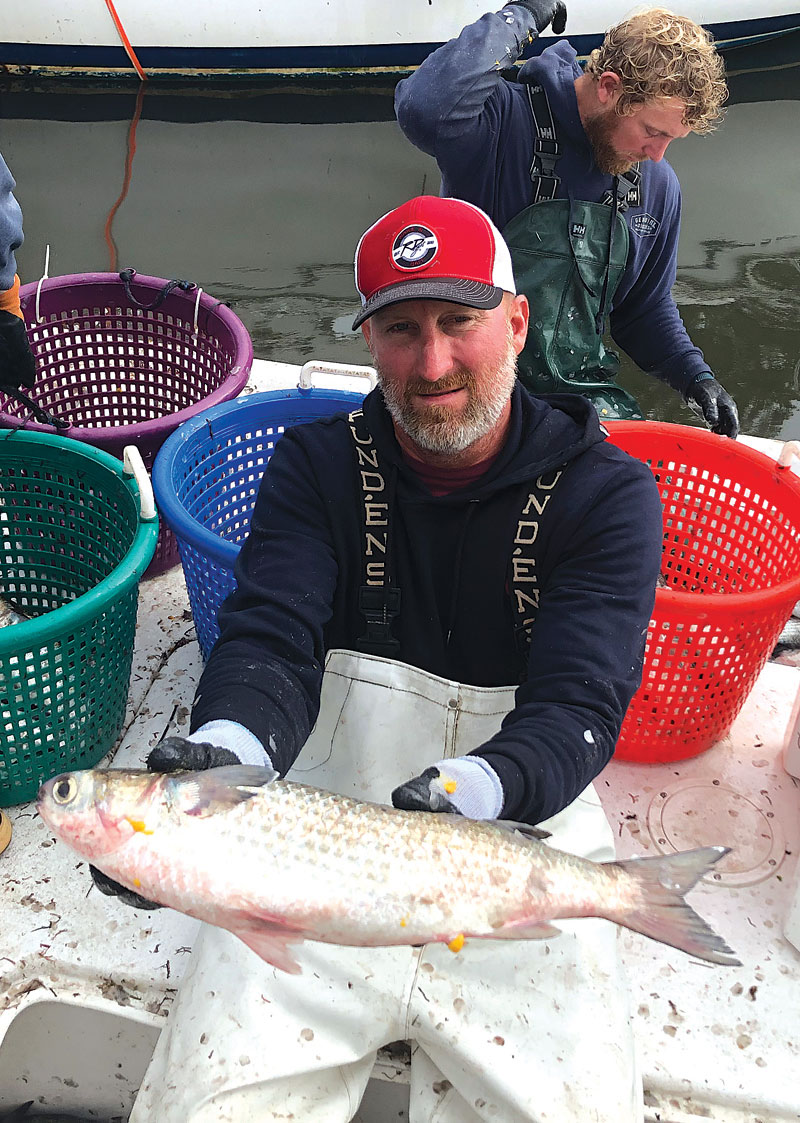
Around 11 a.m. Dec. 21, Brett Dowdy, Shawn Childers and Ryan Sloan — mullet fishers with about 39 years of combined experience — unloaded their first haul of the day at John Banyas’ fish processing plant, Cortez Bait and Seafood.
At it since midnight, the crew had netted approximately 3,000 pounds of the shiny, big-eyed species with a 60-40 split between males carrying sperm, or white roe, and females carrying dark orangish-red eggs, or red roe.
Just in the nick of time for a Christmas payday.
The fishers said they expected to get $0.40 per pound for male mullet and $1.35 for females — a more competitive price than in recent years but the middle of the road compared to a high of $1.70 over the past decade.
Childers and other Cortez fishers have said poor water quality and successive red tides led to poor mullet fishing the past several years.
“It’s not like the golden days, that is the last three or four years have been poor. But when I first started 15 years ago, we had three-boatload days,” Childers said.
Fish scarcity and fluctuating prices aside, mullet fishing is a tough business.
Dowdy, Childers and Sloan, competing in close confines with local fishers and fishers from the east coast, as well as out-of-state net-casters, opted not to fill their boat to capacity Dec. 21 due to rough, choppy water and winds.
The weather was foul but not rough enough to drive the mullet too far offshore, Childers said.
“And a lot of the fish aren’t ready to spawn yet, so they’ll come back,” he said. “If it’s really rough and really late in the season, they’ll just keep on going way out to spawn. And then it gets too rough to follow them and too deep to catch them.”
Cortez fish houses routinely process mullet for the international market. Asian and European consumers salt, press and dry the red roe sacs to produce specialty dishes.
The pandemic depressed international sales in 2020 and Childers speculated that higher prices this year result from renewed demand from overseas.
Mullet are unpredictable and Dowdy said he couldn’t guarantee a second haul Dec. 21.
“It’s hard to say, the fish have a mind of their own, you know? If there’s fish out there, we’ll go try,” he said.