





Fishing the inshore waters around Anna Maria Island may require a little persistence to accomplish a successful day on the water.
Finding concentrations of fish is attainable, although you may find yourself covering a vast amount of water to achieve this goal.
Don’t be discouraged.
December typically can be a transitional month in our area and winter only started Dec. 21. We experienced some early cold fronts in late October and it looked as if winter fishing was shaping up early and nicely. But now, with several weeks of warmer weather, the pattern has changed.
Fish that were settling into their winter-time haunts are moving back on the flats to feed. Triggered by warmer waters, these fish are spread out over large areas, which can make it challenging to locate them.
When this occurs, we need to cover a wide area to find a bite — and the best method is artificials.
Using lures enables anglers to drift and cast across a broad area instead of sitting at anchor in one spot and fishing with live bait. On some flats, you may be able to drift for several hundred yards. This greatly increases your chances of finding the fish. If you find a concentration of fish, then you may want to drop anchor and fish more thoroughly in that smaller area.
That’s when this method pays off.
It may be a sandy pothole, a creek mouth or a channel where you find a school of fish. And soon a flurry of bites occurs and you’re in the action.
There are a variety of lures to use in these situations. I found the best for me is soft plastics on a jig head. Most species we target on the flats will take a soft plastic. Redfish, snook and especially spotted sea trout will react positively to these lures.
Another method, especially when targeting trout, is to use a top-water plug. The MirrOlure 84 MR is a favorite of mine. The Rapala Skitterwalk is also a good choice. These lures are slightly larger and capable of being cast long distances. This comes in handy when you’re trying to cover a large area of water. And the sheer excitement you’ll feel when a large trout blasts your lure on the surface is unforgettable. Not only will the fish be hooked but you’ll be hooked, too.
And finally, subsurface lures, such as lipped plugs or twitch baits, also can be effective. The Yo-Zuri Crystal Minnow is a fine plug to use. This lure catches just about everything. And as far as twitch baits are concerned, the MirrOlure MirrOdine can be deadly when targeting fish on grass flats with depths of 5-6 feet.
So, when fishing is challenging in December, don’t hesitate to pull out the artificials and try your luck. Do some drifts over your favorite flats and cover some water to increase your chances of locating the fish. If you’re persistent, you can be rewarded with an excellent day’s fishing, while others are struggling to find a bite.
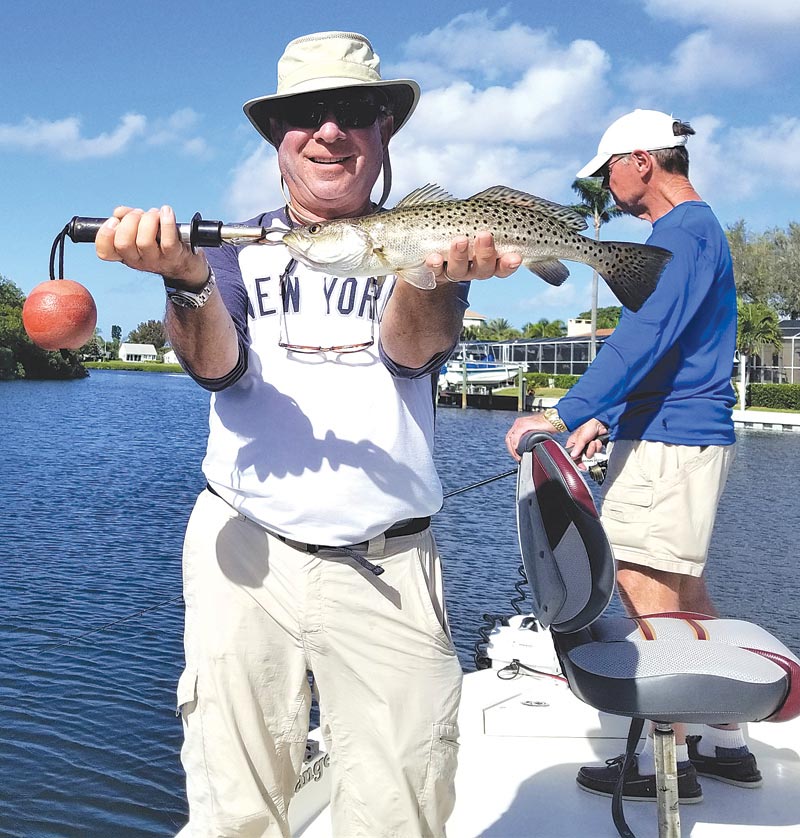
On my Just Reel charters, I’m seeing plenty of spotted seatrout. Finding the right area is key to finding schools of fish but, once found, we’re averaging 20-30 trout in a morning charter.
And snook and redfish are on the flats, too. Live shiners free-lined over shallow flats is working best.
Lastly, drifting and jigging with shrimp-tipped jigs is yielding pompano for my clients.
Capt. David White is enjoying a consistent bite on snook and redfish. With a lack of cold fronts and water temps back in the low 70s, this bite is keeping White’s clients busy. Free-lines live shiners are working nicely to attract both species to the hook.
Live shiners are attracting mangrove snapper and fishing structures — reefs and wrecks in Tampa Bay — is yielding the best results for these fish.
Switching tactics and drifting over deeper grass flats with shrimp-tipped jigs is proving to be effective for pompano. While targeting the pompano, White is encountering schools of jack crevalle — with jacks averaging 10 pounds. They’re adding some great excitement to the day’s experience.
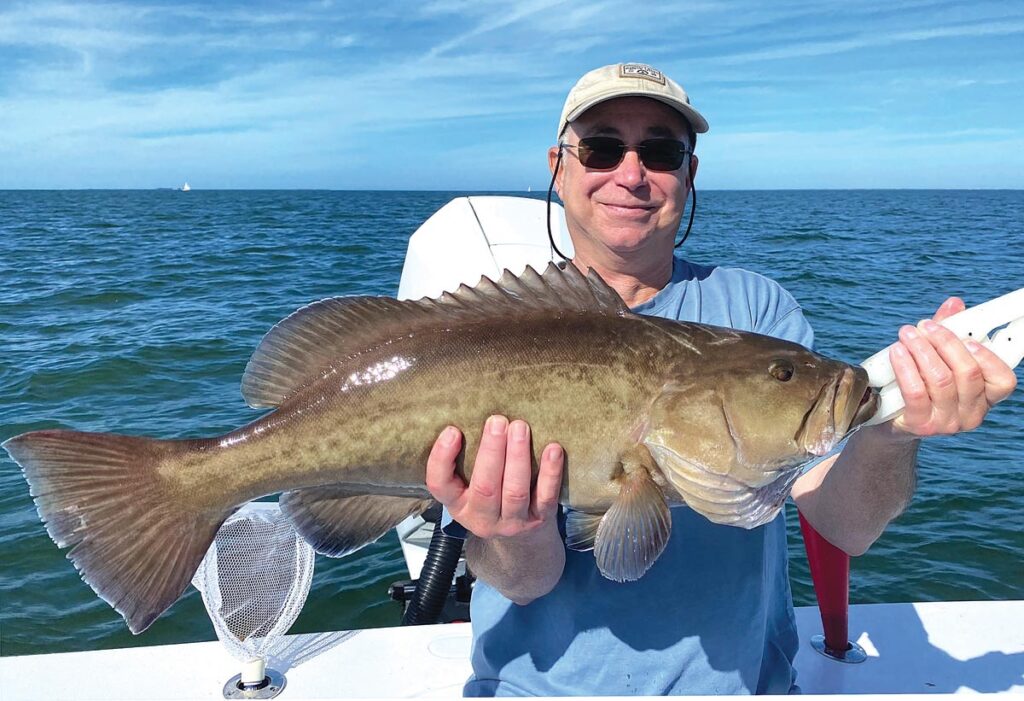
Capt. Jason Stock is finding a mixed bag of a species while working offshore in the Gulf of Mexico, where big American red snapper are being caught in depths of 100 feet or more. Bottom fishing with live pinfish is resulting in numerous hookups for Stock’s clients on these aggressive snappers. Gag grouper also are being caught in the same fashion.
Mangrove snapper are being found in slightly shallower waters and are responding to live shiners as bait, according to Stock.
Migratory species are being caught frequently. Kingfish, cobia and amberjack are the predominant bite. Stock is most excited to hook up an amberjack on surface plugs. Skipping these lures across the surface of the water and seeing them get crushed by a large amberjack is a sight anglers will cherish for quite some time. And then the battle ensues. Numerous drag-screaming runs and a fight to the bitter end is what is in store for the angler holding the rod.
Capt. Warren Girle is finding success while fishing hard-bottom areas and ledges in the Gulf of Mexico. Using live shrimp as bait on a bottom rig is allowing Girle and his clients to see a variety of species being reeled up — mangrove snapper, Key West grunts, juvenile grouper and some hogfish.
While venturing in the Gulf waters, Girle is seeing an occasional tripletail around floating debris — a good bet for the supper table.
Moving inshore, Girle is focusing on pompano. Drifting and jigging over deep grass areas is yielding some hookups on these sought-after fish.
Lastly, fishing in shallow grass areas is producing some snook and redfish for Girle’s clients.
Jim Malfese at the Rod & Reel Pier says determined anglers are being rewarded with catches of redfish, black drum and a few snook. This bite is occurring for anglers using live shrimp as bait.
Using a bottom rig to keep the shrimp under the pier and on the sandy bottom among the pilings is working best. Malfese says he’s seeing a fair number of sheepshead showing up, although the wintertime fish seem to be eluding the hook.
Other catches at the island’s northern-most pier include mangrove snapper, jack crevalle and ladyfish.
Send high-resolution photos and fishing reports to fish@islander.org.