






With water temperature settling in around the mid to upper 50s, many species we target in the back country are becoming slightly harder to target.
Snook and trout are retreating to deeper water, making them difficult to find. And even the redfish seem to be far and few between at the moment.
But, don’t be discouraged.
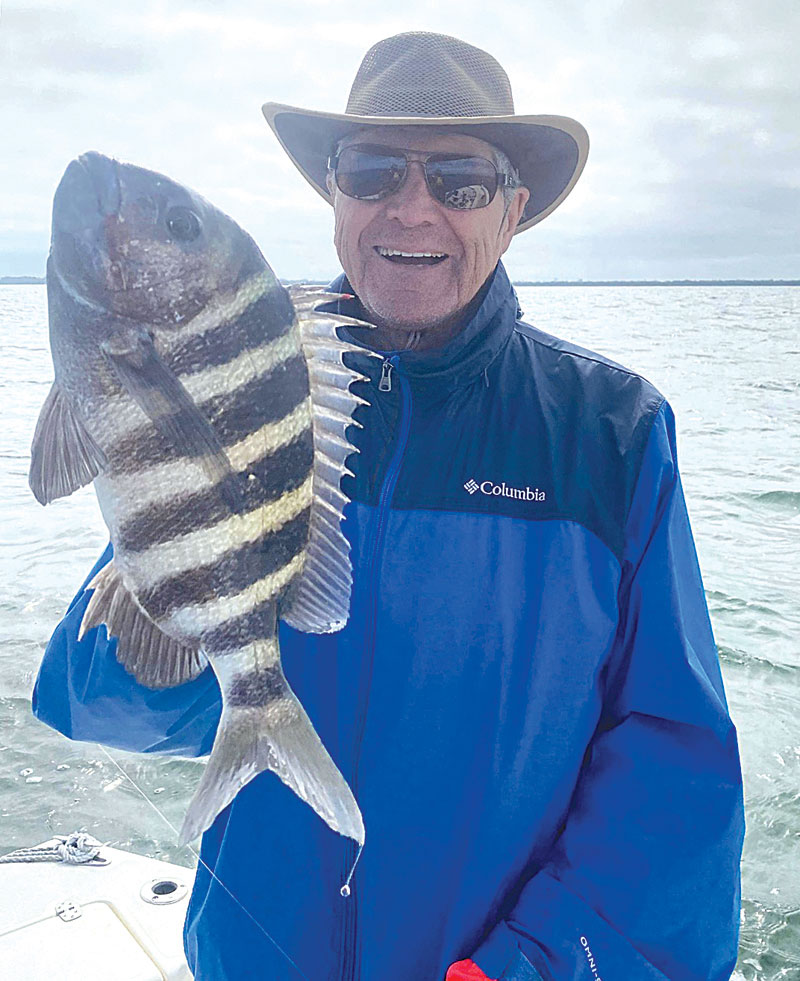
Now is the time to target sheepshead, which seem to thrive in the cooler water temps, making them a winter-time favorite throughout our local waters. The fish also put up quite a battle when on the end of your line. And, when beer-battered and fried, they are one of the best eating fish I’ve found.
There is a slight learning curve to catching sheepies but, once you’ve got the basics, you should be able to find success. The first thing you need to know is sheepshead love crustaceans. This means you can put the cast net away — you won’t need to find shiners for bait.
Gathering bait for sheepshead can be as easy as going to your local bait shop and grabbing a bucket of live shrimp. If you prefer catching your own bait, you can look for fiddler crabs, oyster crabs or sand fleas. Catching them can be labor-intensive but, if the sheepies are being picky, carrying an assortment of baits may be in your best interest.
Now that you have bait, the next step is to locate the fish. Sheepshead tend to gather around structure — rocks, reefs, bridges and piers. And they love nibbling on barnacles. So finding areas where their favorite food proliferates is advantageous.
Fishing bridges, piers and docks can be productive for sheepies, which makes them attainable to every angler. For anglers with a boat, reefs, wrecks and rock piles are great spots.
Rigging? A simple bottom rig will suffice in most scenarios. I like using a 1/2-ounce egg sinker that rests on top of a 2/0 circle hook — known as knocker rig. You can use a fish finder rig, which consists of a small piece of fluorocarbon leader with a swivel on one end and a hook on the terminal end. For this rig, slide an egg sinker onto your main line and then tie your line to the swivel with the leader and hook attached. And, if you want to take it a step further, you can try a long shank hook as opposed to a regular hook. Some say this makes the hook easier to remove from the sheepshead’s bony mouth.
The last thing you need to know is that sheepshead must be 12 inches from the nose to the tip of the tail. The daily bag limit is eight per person per day. And, if you’re looking to have a fish fry of sheepshead, you’ll want to take home your limit.
On my Just Reel charters, we’re absolutely targeting sheepshead. Fishing around wrecks and reefs along the Gulf beaches is producing good numbers of keeper-size fish for my clients. Mixed in with the sheepshead are mangrove snapper, Key West grunts and an occasional gag grouper — all good stuff.
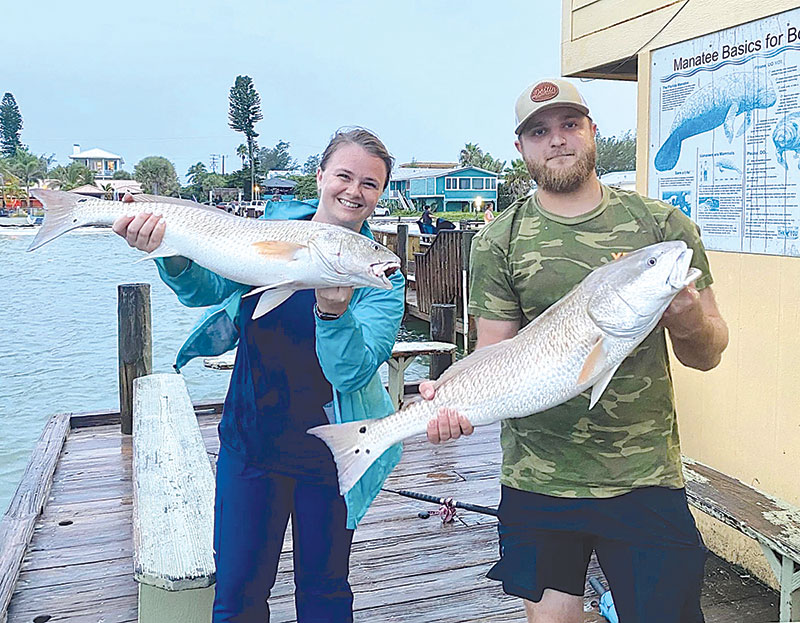
On days when the Gulf is unattainable due to wind, I’m staying in the back country to target pompano and spotted seatrout. We also are hooking into redfish and black drum while fishing around residential docks and canals.
Capt. David White also is targeting sheepshead over wrecks and reefs in Tampa Bay and in the Gulf of Mexico. Using live shrimp as bait is working well, reports White. While targeting sheepies, White is encountering mangrove snapper and Key West grunts. Fishing along the Gulf beaches is yielding action for White, too. He reports catching pompano, black drum and redfish in these areas.
Capt. Warren Girl is working nearshore structures such as ledges and hard bottom areas, where using a bottom rig combined with live shrimp for bait is resulting in sheepshead, mangrove snapper, lane snapper and plenty of Key West grunts.
On windier days, Girle is finding action in residential canals by casting shrimp under and around docks, pilings and seawalls. In these areas, redfish, black drum, sheepshead and mangrove snapper are being caught, as well as an occasional catch-and-release snook.
Jim Malfese at the Rod & Reel Piers reports that due to frequent cold fronts and rough seas, most anglers visiting the pier are targeting sheepshead. Live shrimp is the bait of choice, although sand fleas and fiddler crabs also work on the pier nibblers. While in search of sheepshead, anglers are reeling up an occasional black drum or redfish.
Send high-resolution photos and fishing reports to fish@islander.org.