




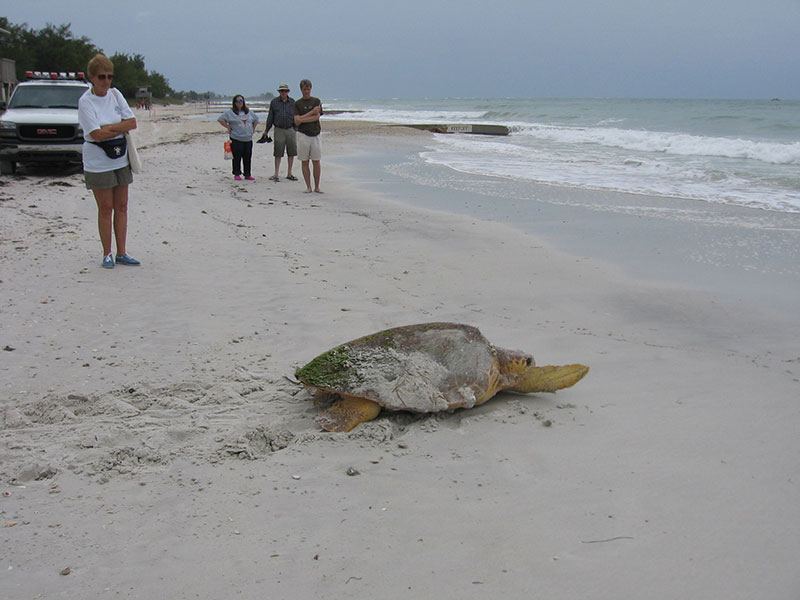
Island code officers are on their marks for the start of the sea turtle nesting season.
A meeting April 12 hosted by Holmes Beach code enforcement kicked off the season for the officers, who urge compliance and seek to enforce ordinances intended to protect endangered sea turtle species on island beaches.
The ordinances, published on the Municipal Code Corp. website at library.municode.com/fl.in, differ by city, as do enforcement practices.
The focus is on artificial lighting, which can disorient nesting females and also hatchlings, and obstacles such as beach furniture, which can disorient and trap sea turtles.
Bradenton Beach
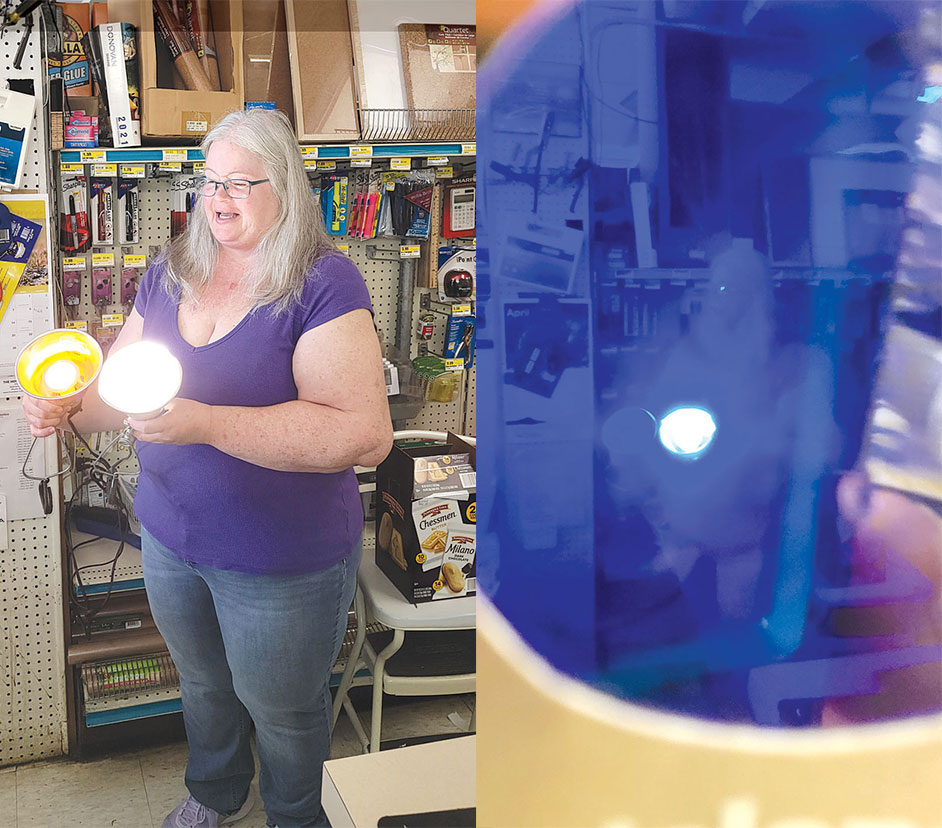
Acceptable lighting is 560 nanometers or higher, typically amber, red or yellow color, Bradenton Beach code enforcement officer Ronald Peterson said April 20.
Peterson said in-person assessments to ensure proper turtle lighting are conducted weekly and based on reviews of Florida Fish and Wildlife Conservation Commission disorientation reports.
Nighttime beach assessments are done once per week in the southernmost island city by code enforcement.
Meanwhile, Peterson also is distributing educational material to resorts, hotels and businesses, and Florida Power and Light is addressing some streetlight issues.
Holmes Beach
Patrolling the beach daily is part of a regular schedule for Holmes Beach code compliance officer Jayson Clayton.
Daytime patrols involve speaking with beachgoers about the importance of filling in holes before they leave the beach so sea turtles don’t become trapped.
People are receptive as soon as they learn their actions are for the benefit of sea turtles. Still, Clayton carries a shovel and often fills in holes.
Beachgoers can call the Holmes Beach code department at 941-778-0331 if they identify a hole that needs to be filled.
Also, night patrols — lighting assessments — are about to start to identify businesses or residences that might not have proper sea turtle lighting.
“At night the beach goes back to the turtles,” said Clayton.
Items found on the beach after dusk — chairs, umbrellas, toys and beach gear — should be moved away from the shore toward the dunes if no one is around, as these can disturb nesting sea turtles and hatchlings.
Anna Maria
Anna Maria code enforcement also enforces measures to protect sea turtles May 1-Oct. 31.
Officials in the city did not respond April 19 to an email and a phone call from The Islander.
About AMITW
AMITW is a nonprofit focused on protecting sea turtles and collecting nest and hatch data related to beach renourishment on the sea turtles that are listed as threatened or endangered species in Florida.
AMITW is funded through a beach renourishment contract with Manatee County.
For more info, go online to islandturtlewatch.com or call executive director Suzi Fox at 941-232-1405.
Do’s and don’ts for sea turtle nesting season
The Florida Fish and Wildlife Conservation Commission recommends people follow these guidelines for sea turtle safety:
- DO turn off or adjust lighting along the beachfront to prevent nesting sea turtles from becoming disoriented and moving toward the glow of light on land, instead of natural light reflecting on the surface of the water. Indoor lights should be turned off, with curtains closed after dark, and outdoor lighting should be turtle-friendly bulbs. Use fixtures low to the ground and shielded from view at the shoreline.
- DON’T use flashlights or camera flashes on the beach at night. They can distract nesting sea turtles and cause them to return to the water.
- DO clear the way at the end of the day. Nesting female sea turtles can become trapped, confused or impeded by gear left on the beach at night. Remove items such as boats, tents, rafts and beach furniture and fill in holes or level sandcastles before dusk. Holes trap turtles and can injure people.
Call code enforcement to report unattended property or large holes on the beach.
City of Anna Maria code enforcement — 941-708-6130, ext. 139 or ext. 129.
City of Bradenton Beach code enforcement — 941-778-1005, ext. 280.
City of Holmes Beach code enforcement — 941-778-0331, ext. 260.
Report sick, injured, entangled or dead sea turtles to the FWC Wildlife Alert Hotline, at 1-888-404-3922, #FWC or *FWC on a cellphone or text Tip@MyFWC.com.
For more information on island nesting, contact Suzi Fox at suzifox@gmail.com or 941-232-1405.
What does a sea turtle see?
One measure to determine if beachfront lighting is a problem is to walk after dusk to the water’s edge, crouch low near the waterline and look landward.
If you see light, a sea turtle also might see the glow.
When female sea turtles come ashore, they have one purpose — to lay their eggs in the sand.
They typically aren’t looking around but they do feel their way with their flippers, seeking the right texture and temperature in the sand for their eggs.
Lights on land can distract the females and might cause the turtle to head toward the light on land rather than the twinkle of the moon and stars on the water.
Keep in mind, this is the only time a sea turtle leaves the familiarity of the water.
And, once on land, female turtles are unaccustomed to immovable objects, such as lawn chairs and volleyball posts, canopy poles and benches. These items are obstructions that sea turtles are incapable of maneuvering.
So now that you “think like a sea turtle,” please, have a little respect: Keep the beach dark and clear of obstructions.