





Tarpon are the most sought-after species as we arrive to the month of June.
Anglers can be seen patrolling the waters around Anna Maria Island morning, noon and night with hopes high for hooking a silver king.
Whether along the beaches, the passes or in the bays, the large prehistoric-like fish can be found lurking in the shadows this time of year.
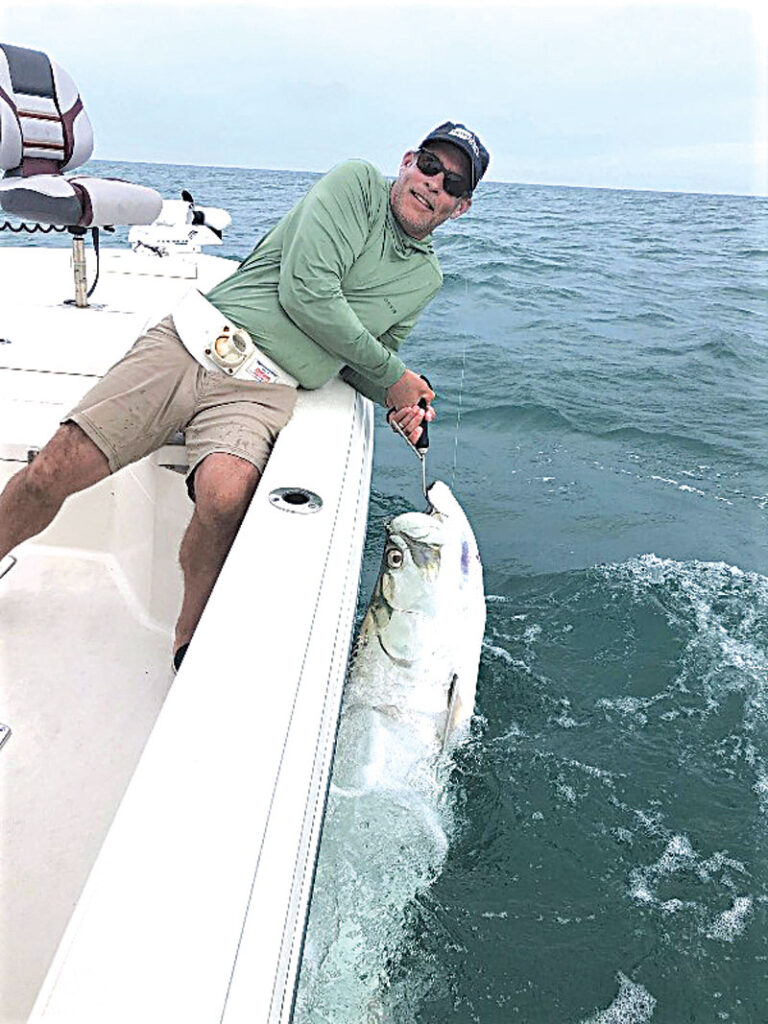
Once on the end of the line, the tarpon is one of the most fierce adversaries to encounter on spinning or conventional gear. The term tackle-buster was created for them, as only the finest gear can withstand the abuse a tarpon can impose.
With acrobatic leaps and runs that can exceed 100 yards, the thrill of catching a tarpon is unmatched for many anglers. An abundance of strength and endurance is required of the angler attempting to tango with one of these large predators, as sometimes a single fish can take more than an hour to bring boat side.
Make no mistake, tarpon fishing is not for the weak at heart. The fish will put even the saltiest angler in their place as they display their strength and power on the hook. And to add to the challenge, the tarpon is artfully skillful in spitting the hook as it jumps erratically through the air, shaking its head from side to side before splashing back into the water, creating a loud, splashing eruption.
And amid all this chaos, the weary angler must keep an eye out for other predators eyeing up their catch in hopes of an easy meal.
Sharks.
Oh, the sharks.
These majestic giants are on the lookout for a hooked tarpon, which makes the whole affair doubly nerve-racking for the angler and any spectators.
Hammerhead, bull and tiger sharks — reaching lengths of 15 feet or more — are capable of biting a 100-pound tarpon in half with little effort. This is always on the mind of the captain maneuvering the boat around the tarpon and especially when reaching into the water to grab the lower jaw, subduing the great fish before attempting to remove the hook. When all is said and done, the silver king is carefully released to swim away to live on in the clear waters of the Gulf of Mexico. And the angler, fatigued and dehydrated, feeling a sense of satisfaction for success against one of the strongest fish that swims in our waters, can set down the rod and recoup until the next bite.
And, with great anticipation, it begins all over again.
On my Just Reel charters, I’m staying within the safety of the shallow grass flats, targeting snook, redfish and spotted seatrout. Many snook are being caught and released during my morning charters. The same applies for the spotted seatrout, although some of them are finding their way into the cooler for anglers who want to feast on a fresh-caught fish dinner. Redfish are in the mix while targeting snook, which adds a nice variety to the bite.
Capt. Warren Girle is working the nearshore reefs, resulting in a few different species. Mangrove snapper are being caught while bottom fishing in these areas. When targeting the snappers and using live shiners as bait, Girle is reporting a cobia here and there — and a good fight for his angler.
Switching over to live crabs as bait and free-lining them over reefs is resulting in permit.
On most days, Girle is patrolling the waters just off the beaches of Longboat Key and Anna Maria Island in search of tarpon. He reports that casting live crabs or threadfin herring is attracting silver kings weighing 75-100 pounds.
Capt. David White is targeting tarpon from Egmont Key south to Longboat Key and everywhere in between. Casting live crabs or threadfin herring as bait is luring the silver torpedoes to the hook. Most catches are in the 100-pound class, with bigger fish mixed in.
Moving offshore, White is putting anglers on red grouper around ledges and hard bottom. Live shiners or pinfish are working as bait when combined with a bottom rig consisting of 3-4 ounces of lead.
Switching to a lighter weight and smaller hook is resulting in mangrove and yellowtail snapper.
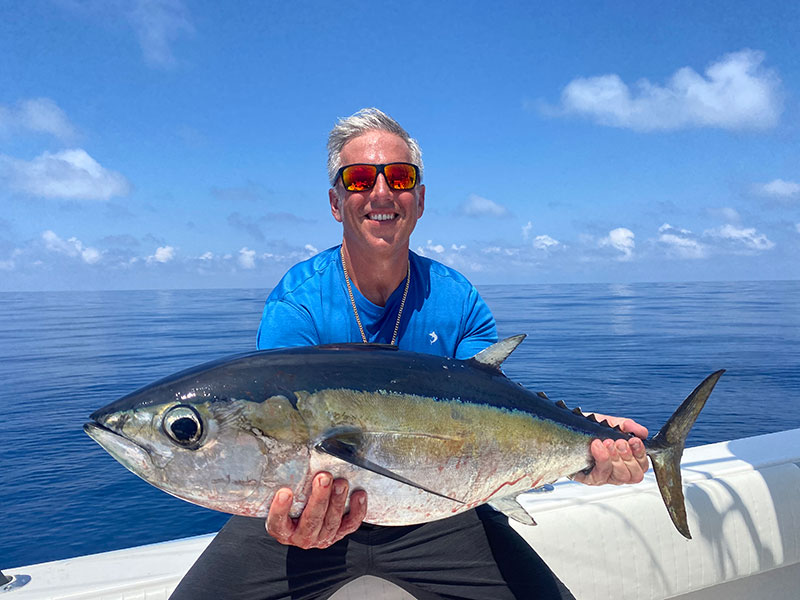
Lastly, free-lining live shiners around offshore wrecks is attracting some blackfin tuna for White’s clients.
Capt. Jason Stock is working offshore on calmer days with smooth waters and light winds. While working ledges and hard bottom areas offshore, Stock is finding plenty of yellowtail snapper. Wreck fishing is producing action on amberjack and blackfin tuna. Targeting the tuna is tougher, due to an abundance of sharks patrolling the wrecks. Stock said many of the tuna they hooked this week are bitten in half by bull or tiger sharks before they’re pulled into the boat.
Moving inshore, Stock is in pursuit of tarpon. Casting live crabs or threadfin herring as bait near the beaches of Anna Maria Island and Longboat Key is working well. He says most catches are 80-120 pounds.
Targeting large sharks in the same areas also is producing action — the hammerheads, tigers and bulls are hungry, according to Stock.
Jim Malfese at the Rod & Reel Pier is seeing catch-and-release snook being caught with more frequency. Pier fishers using live bait such as pinfish or large shrimp are hooking into snook measuring 20-40 inches.
Stout gear and a little luck are required when trying to wrestle a big snook out from under the pier before it has a chance to run your line against the razor-sharp barnacles encrusting the pilings. Snook are savvy like that.
Large over-slot redfish are present under the pier and are prone to taking live shrimp offerings. Other catches at the R&R include mangrove snapper, jack crevalle and ladyfish.
Send high-resolution photos and fishing reports to fish@islander.org.