





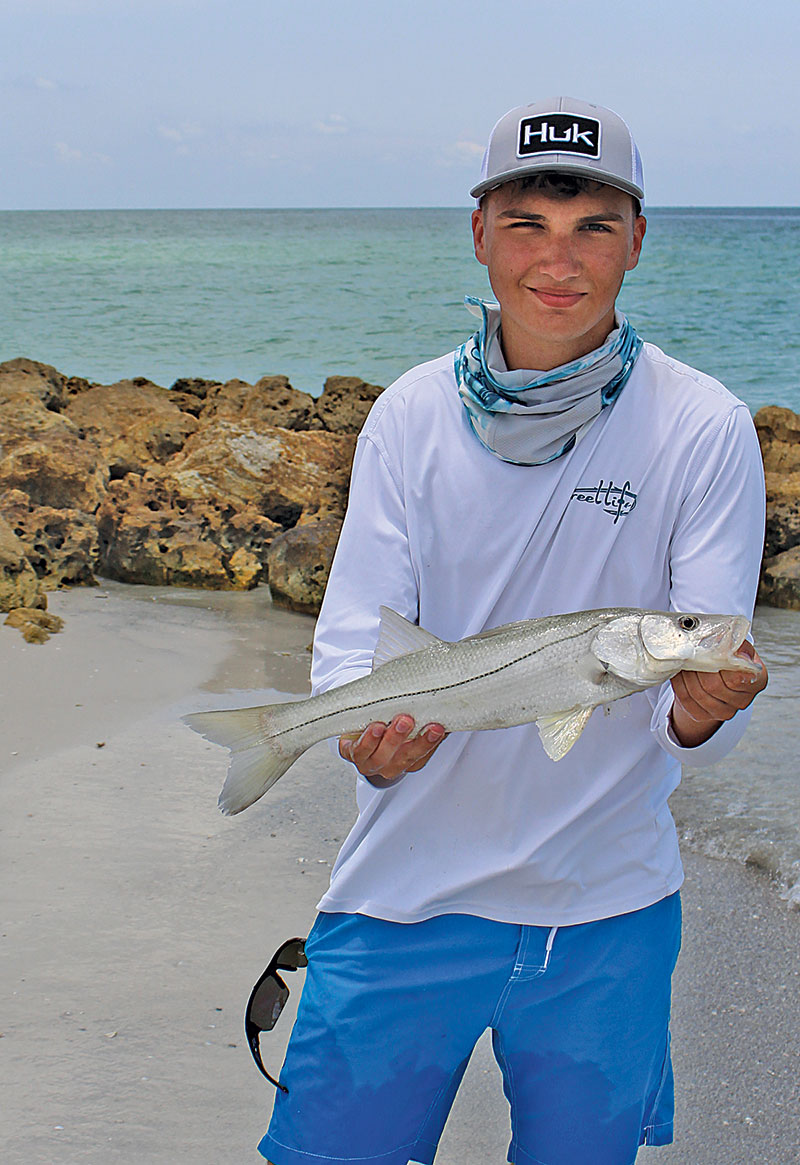
Offshore fishing is where it’s at for Anna Maria Island anglers wanting to get out on the water and pull on some big fish.
American red snapper season is in full swing, with limits of the tasty fish being caught daily. And, with light breezes and calm seas, now is the time to seize the moment and venture into the Gulf of Mexico.
Once a limit of red snapper is caught, there are many other options. Bottom fishing is yielding red and gag grouper, as well as various types of snapper — mangrove, yellowtail and vermilion.
And, if you’re hunting for pelagic species, the amberjack, blackfin tuna and wahoo bite is firing up.
Moving inshore, the bite is slightly more challenging as morning tides during the half-moon phase are resulting in slow tidal flow. Most inshore species, such as snook, redfish and trout, bite during swift-moving tides. So you want to target the peak currents of the tide to find success.
During the slower tides, you might try anchoring over your favorite wreck or reef to target mangrove snapper. Chumming is helpful in this scenario, but not necessary. If you’re chumming, try freelining baits with the chum. If you don’t chum, try working baits on a weighted rig on the bottom.
Tarpon fishing is another option while inshore fishing. Schools of tarpon are being found around the passes of Longboat Key and Anna Maria’s Bean Point as well as along the beaches. Live crabs as bait are working well during afternoon outgoing tides or early in the morning before sunrise. In between, try using threadfin herring.
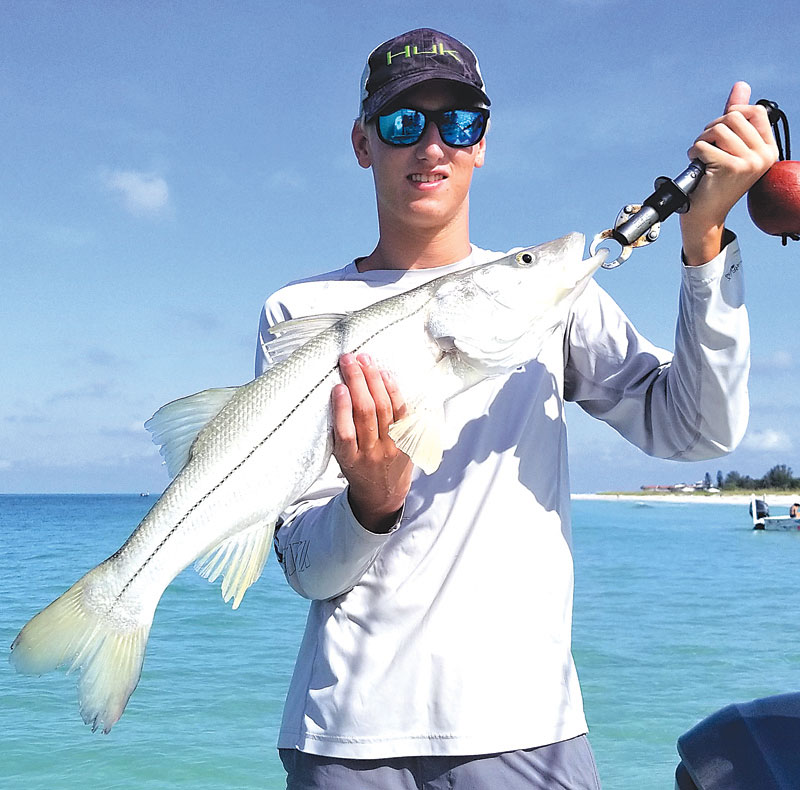
On my Just Reel charters, I am still putting clients on snook during swift morning tides. On slower tides, we’re managing to hook up with the snook, but the bite is not as abundant as when the tide is strong.
The same applies when trout fishing. Smaller shiners as bait are working better than larger baits when targeting trout. The smaller shiners also attract attention from mangrove snapper, which are always welcome additions to the cooler.
Capt. David White is fired up on American red snapper while working offshore in the Gulf of Mexico. With the waters being calm and clear, White is chumming the red snapper up from the bottom, then rigging clients with free-lined chunks of frozen-cut sardines to attract a bite. Once on the hook, the enormous snapper are quickly swimming toward the bottom — 100 feet down — where they feel safe among the limestone ledges. With a rod bent over double and the drag screaming, it takes every bit of strength the angler can muster to turn these powerful snappers.
Also while offshore, White is boating some red grouper on a rig consisting of 8 ounces of lead on a leader combined with a circle hook. Live pinfish as bait are working best for this technique.
Another option for White is producing wahoo and blackfin tuna while high-speed trolling.
On days when White is not offshore, he’s working the inshore waters with sport-fishing clients along the beaches for silver kings.
Capt. Jason Stock is working the offshore wahoo bite in the Gulf. Trolling live baits and artificial lures are working to intrigue these high-speed predators to hit. Bottom fishing while offshore is yielding some prize catches for clients, such as American red snapper, red grouper, mangrove snapper and yellowtail snapper.
Moving inshore, Stock is pursuing tarpon and large sharks along the Gulf beaches of Egmont Key, Anna Maria Island and Longboat Key. Tarpon catches are averaging 100 pounds.
As for jaws, bull sharks and hammerheads are the targeted species.
Capt. Warren Girle is catching his share of tarpon while working along the beaches of Longboat Key. Girle is finding the best action for clients before daylight, casting live crabs into schooling fish. Once the sun rises, he’s switching to live threadfin herring as bait.
When the tarpon fishing cools off, Girle is working the flats of Sarasota Bay. Snook are the most abundant bite and they’re taking live shiners. He says spotted seatrout also are taking their bait on the flats, as well as a handful of mangrove snapper and jack crevalle.
Jim Malfese at the Rod & Reel Pier reports observing plenty of snook lurking around the deck and under the pier. Unsuspecting anglers leisurely fishing with light tackle are frequently shocked when they hook into a 30-inch plus snook that burns out their drag and cuts their line on the barnacle-encrusted pilings.
Anglers in the know are using stout gear with heavy line and leader in preparation for the large fish. Soaking baits such as pinfish, ladyfish and mojarras are working well when targeting these large inshore predators. And even then, some still get away.
Other catches at the R&R this week include mangrove snapper, Spanish mackerel and jack crevalle.
Send high-resolution photos and fishing reports to fish@islander.org.