




Tarpon are in the spotlight for another week among the anglers around Anna Maria Island.
Schools of silver kings are being found on the beaches of Anna Maria Island, as well as to the north and south at Egmont and Longboat keys.
Tarpon are making a showing in the passes of Longboat Key and Anna Maria’s Bean Point during swift outgoing tides in the afternoons and evenings. Most catches are 60-120 pounds, with larger fish mixed in for the lucky among us.
For bait, live crabs are working well in the passes, while casting live threadfin herring along the beaches seems to be the preferred offering.
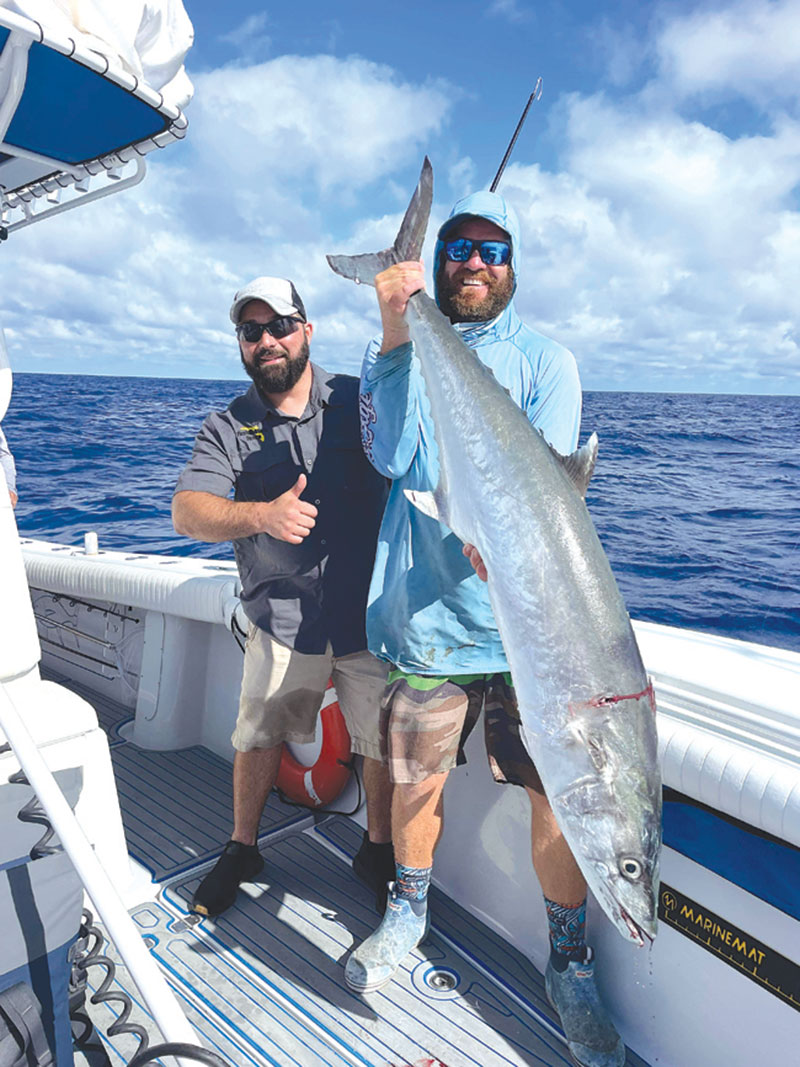
Moving offshore, pelagic species — amberjack, blackfin tuna and wahoo — are being caught on free-lined live baits and slow-trolling bait. Bottom fishing offshore is plentiful, with catches of gag and red grouper, as well as a variety of snappers, including mangrove, yellowtail, American red and vermilion.
As for the inshore bite, targeting snook throughout the grass flats and in the passes is proving to be the best bet. Snook are out of season, but these fish put up a good fight on light tackle and are ripe for catch-and-release sport fishers.
For those wanting a fish dinner, spotted seatrout are the go-to species. Fishing deep grass flats is producing large quantities of the popular “fry” fish, although many are falling short of the 15-inch minimum size limit. So determination is required to catch the limit, which is three fish.
Gag grouper season is open and the fish are taking the bait in Tampa Bay, where live pinfish and shiners on a bottom rig are working well.
On my Just Reel charters, I’m finding plenty of action on catch-and-release snook. Casting live shiners along mangrove shorelines is resulting in numerous catches. Most fish are 20-26 inches although some fish exceeding 30 inches are taking a hook.
Spotted seatrout are next on the list and are being caught over deeper grass flats. Mixed in are mangrove snapper, Spanish mackerel, jack crevalle and ladyfish, adding variety to the bite.
I’m also seeing quite a few sharks hunting in the shallows. In many instances, the sharks are swimming up and biting spotted seatrout in half as they’re being reeled to the boat. Most of the sharks are black tips measuring 4-6 feet, although a few bull sharks have been spotted, too.
Capt. David White is working the tarpon bite along the beaches of Longboat Key, Anna Maria Island and Egmont Key. During slower tides, White is finding schools working and casting live threadfin herring in their path is getting the bite.
During faster moving tides, tarpon are gathering in the passes, where they’re feeding on live pass crabs. When this is occurring, White is casting live crabs and letting them drift in the current to attract a bite to the hook.
When he is not tarpon fishing, White is running offshore for American red snapper. These are fish are readily taking offerings of live pinfish as bait.
Moving inshore, White is working the gag grouper bite, as well as catch-and-release snook and trout.
Capt. Jason Stock is working offshore for pelagic and reef species for his charters. Fishing around rocks, reefs and springs is working well for pelagics. Blackfin tuna, amberjack and wahoo are being caught in these areas by free-lining live baits or slow trolling.
In other spots, such as areas of hard bottom and ledges, Stock has his clients bottom fishing for a variety of species, including gag and red grouper as well as all sorts of snapper — American red, yellowtail and mangrove.
On days when Stock works near shore, he’s cruising the beaches with his clients in search of tarpon and sharks — but not together.
Capt. Warren Girle is spending most of his days catching tarpon. Casting live crabs and live threadfin herring at schooling fish along the beaches and in the passes is working well to get a bite for his clients. These catches are running 60-100 pounds.
On breaks from the tarpon, he’s working the backcountry waters of Sarasota Bay north to Tampa Bay. On deeper grass flats, spotted sea trout are the most apparent, although on several occasions, Girle’s anglers have hooked into tarpon while targeting trout. Most of the tarpon battles are short-lived due to the light tackle he uses for trout. The trout gear is not stable enough to handle the overwhelming power of a tarpon.
On one occasion this past week, Girle reports this mix-match occurred and the angler was lucky enough to land a 40-pound tarpon on 8-pound test line with a 20-pound leader. Some folks are just lucky, I guess.
Lastly, Girle’s finding good catch-and-release snook action on shallow flats where mangroves shorelines exist.
Jim Malfese at the Rod & Reel Pier reports catch-and-release snook are the most abundant bite at the pier.
Pier fishers using live shrimp and live pinfish are hooking into schooley-sized snook measuring 18-24 inches. Larger snook are mixed in but not as apparent as the smaller ones.
Mangrove snapper also are taking an interest in live shrimp offerings at the R&R. Although not as abundant in Tampa Bay as they will be in the weeks to come, the snapper are targetable and a few anglers are catching their limit of five fish.
Finally, fishers casting small jigs or silver spoons out from the pier are hooking into Spanish mackerel, as well as ladyfish and jack crevalle.
Send high-resolution photos and fishing reports to fish@islander.org.