






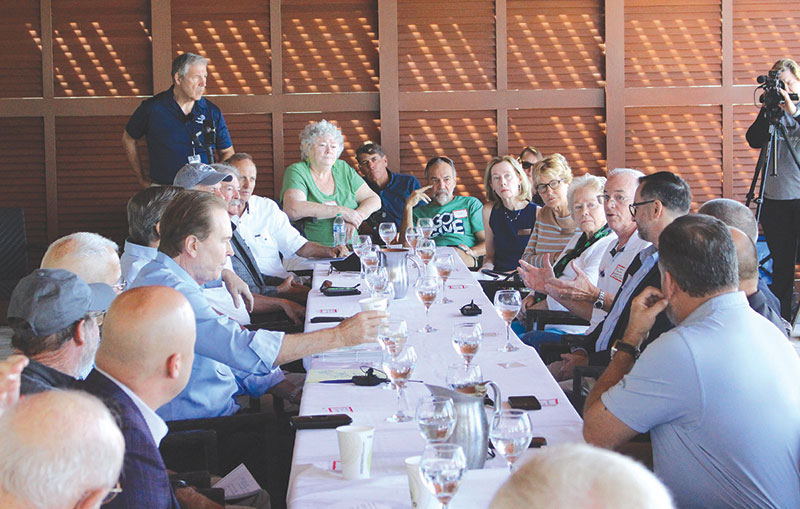
Red tide table talk
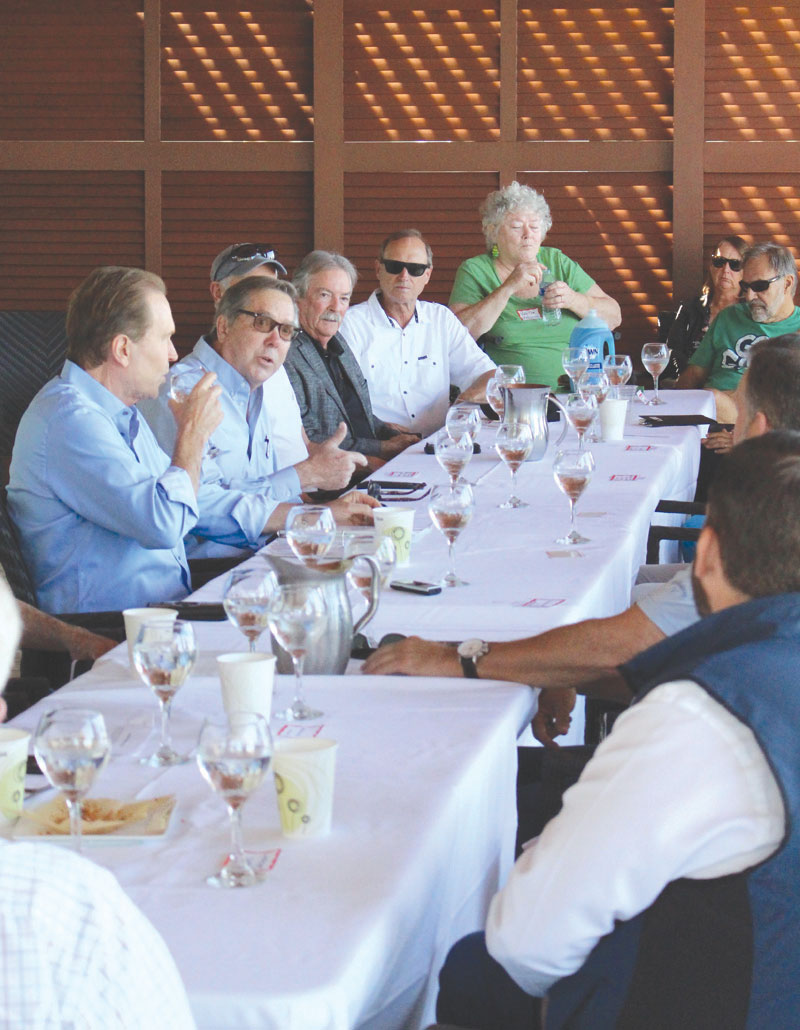
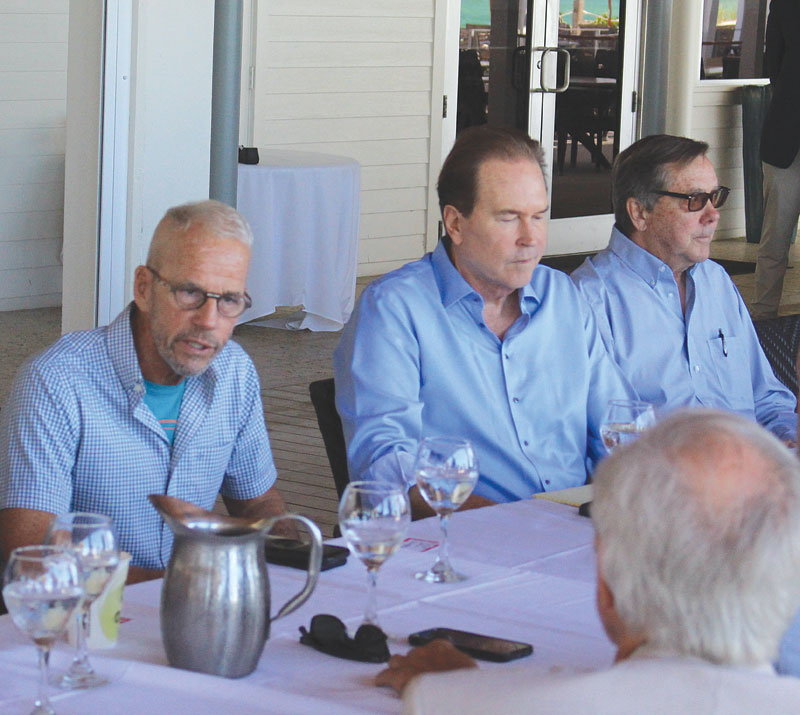
Politicians and policymakers, business leaders and conservationists gathered March 17 at a waterfront restaurant on Anna Maria Island to address the plight of repeated red tide blooms in the Gulf.
U.S. Rep. Vern Buchanan, R-Longboat Key, hosted the forum at the Beach House Restaurant in Bradenton Beach, to promote the conversation on red tide and its impact on human health, the economy and marine life,” according to a news release.
Those on the roundtable also discussed government solutions for mitigating harmful algal blooms, including Buchanan’s bill, the Protecting Local Communities from Harmful Algal Blooms Act, which would amend the Stafford Disaster Relief and Emergency Assistance Act to include harmful algal blooms in the definition of a “major disaster.”
Attendees included Beach House owner Ed Chiles, Bradenton Beach Mayor John Chappie, Manatee County Commission Chair Kevin Van Ostenbridge and others on the county board, several Longboat Key town commissioners, Holmes Beach Commission Chair Carol Soustek and Commissioner Dan Diggins and Holmes Beach Clean Water Committee Chair Ron Huibers.
— Lisa Neff
State officials review coastal red tide on chopper flyover
Two top state officials March 14 boarded a chopper for a first-hand observation of a persistent red tide bloom in the region.
Florida Fish and Wildlife Conservation Commission acting executive director Thomas Eason and Florida Department of Environmental Protection Secretary Shawn Hamilton participated in a flyover.
A goal was to signal that the state is taking an “all-hands-on-deck” approach to red tide and to coordinate with local governments to monitor the situation.
“Red tide blooms can cause significant impacts to our local communities,” Eason said in a news release.
Hamilton said, “Our coordinated state approach includes getting out to these impacted communities, speaking directly to stakeholders and local leadership and ensuring the state is providing them with the critical assistance they need to enhance response efforts.”
The FWC and DEP said they are closely monitoring the impact of red tide in Manatee, Collier, Lee, Charlotte, Sarasota, Pinellas and Pasco counties.
Red tide is naturally occurring and has been documented along Florida’s Gulf coast since the 1840s.
In response to the most recent blooms, the DEP signed and executed funding agreements with Lee, Pinellas and Sarasota counties to assist with cleanups, and as a result, more than 45 tons of biological debris has been removed.
Agreements also have been drafted for Manatee, Charlotte, Collier and Pasco counties, and conversations are ongoing with Hillsborough County, according to the DEP.
— Lisa Neff