






Superlatives and exclamation points heralded the marking of the first nests of the 2023 sea turtle nesting season.
Monitoring groups reported the first marked nests for Manatee and Sarasota counties the same day — April 18 — in news releases and social media posts.
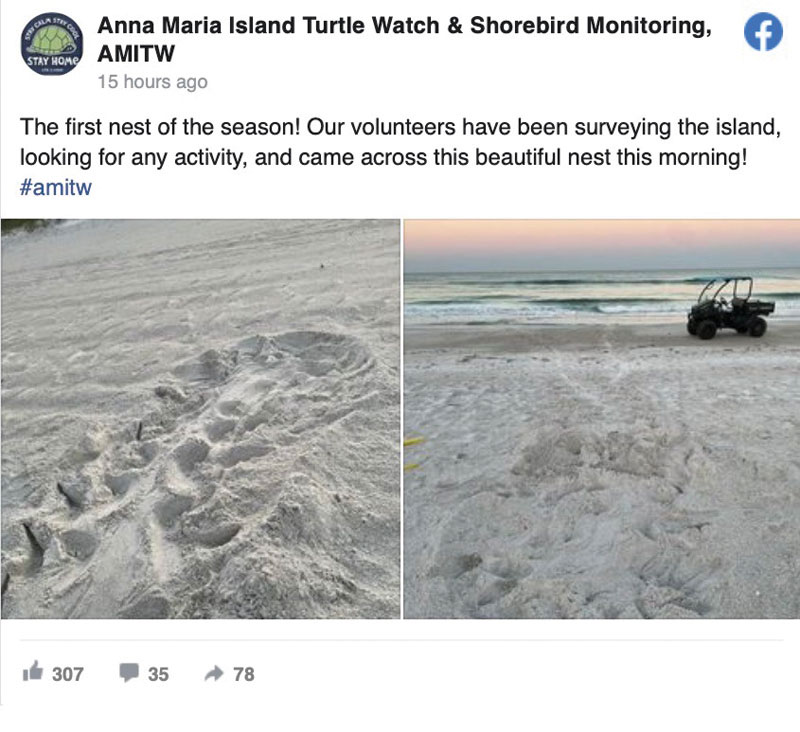
“The first nest of the season!” Anna Maria Island Turtle Watch and Shorebird Monitoring announced April 18 on its Facebook page, which included post-dawn photographs of a loggerhead turtle’s tractor-like tracks from the Gulf of Mexico to the nest — and back to the Gulf.
The post continued, “Our volunteers have been surveying the island, looking for any activity and came across this beautiful nest this morning!”
Within 15 hours of going live, 307 Facebookers had liked the announcement and 78 shared the news.
Volunteers Carla Boehme and Gail Rehkugler identified the first nest, which also was the first crawl documented for the season on AMI, AMITW director Kristen Mazzarella told The Islander April 18.
“We are excited to start the nesting season on Anna Maria Island and look forward to a productive season protecting nests and educating the public,” Mazzarella said in a news release.
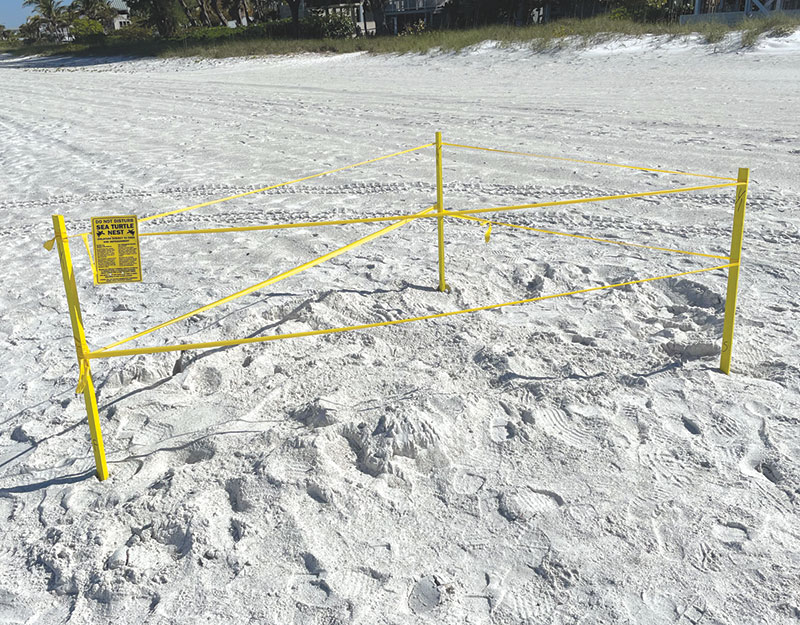
AMITW, which began patrolling the beaches April 15, said the nest, marked in the sand near 30th Street in Holmes Beach, is likely the earliest nest in the history of AMITW.
Meanwhile, to the south of AMI, Sarasota-based Mote Marine Laboratory reported its turtle watch team documented its first nest — also by a loggerhead — of the season on Casey Key.
“Exciting news!” Mote posted to Facebook.
Melissa Macksey, a senior biologist with Mote’s Sea Turtle Conservation and Research Program, said April 18, “Today marks the earliest documented nest in our program’s history, which might mean we’re in for a busy season and it is more important than ever before that we do as much as we can to keep our beaches turtle-friendly.”
Mote’s team of supervisors, interns and volunteers also began monitoring beaches April 15. Their territory is Longboat Key-Venice.
The nesting season on Florida’s Gulf Coast officially begins May 1 and continues through Oct. 31.
But sea turtles don’t keep the Gregorian calendar.
“We typically start patrolling a few weeks before the official season and we’re glad we do, otherwise, we might not have found this nest today,” Macksey said.
Loggerheads are the species most common on southwest Florida nesting beaches, followed by green sea turtles and then Kemp’s ridleys, among the smallest and rarest sea turtles.
During the season, sea turtles are swimming just offshore to mate, females are coming ashore to nest, juvenile turtles are feeding along the coast and, by early summer, the first hatchlings are venturing into the Gulf waters.
Both Mote and AMITW offered tips for people to help ensure a successful season.
Do:
- If there’s an encounter with a nesting turtle or hatchling, remain quiet and observe from a distance;
- Shield or turn off outdoor lights that are visible from the beach through October;
- Close drapes after dark and remove furniture from the beach;
- Fill in holes that can entrap turtles.
Do not:
- Approach nesting turtles or hatchlings, make noise or shine lights at turtles.
- Encourage a turtle to move while nesting or pick up hatchlings;
- Use fireworks on the beach.
For more information about AMITW, go online to islandturtles.com.
To contact AMITW, call 941-232-1405 or email annamariaturtlewatch@gmail.com.
For more information about Mote’s program, go online to mote.org.
To report a sick, injured, entangled or dead sea turtle, call the Florida Fish and Wildlife Conservation Commission alert hotline at 1-888-404-3922, #fwc or *fwc on a cellphone or text tip@myfwc.com.
For the record
In 2022, AMITW documented 490 false crawls, 531 nests, 490 false crawls, 466 hatched nests and 37,081 hatchlings to the sea.