







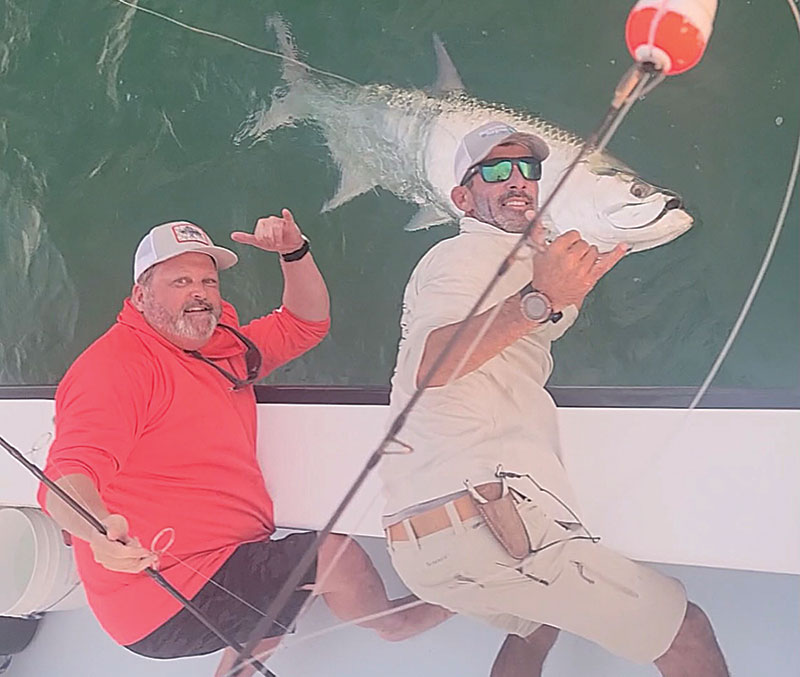

With a sudden vacancy of tarpon along the beaches due to the June 4 full moon, anglers bent on hunting the trophy fish are having to travel to find targetable schools.
As a result, the fish still around are receiving less pressure, creating better bites.
You’ll be lucky if you can locate the silver kings around Anna Maria Island but don’t fret.
We should see tarpon return soon, as they make their way back from their offshore spawn. And with the spawning areas being 70-80 miles offshore, you can bet they will be hungry when they get here.
So be ready for a second wave of big game fishing when the tarpon return and enjoy the hiatus and the chance to catch other species — some for dinner, too.
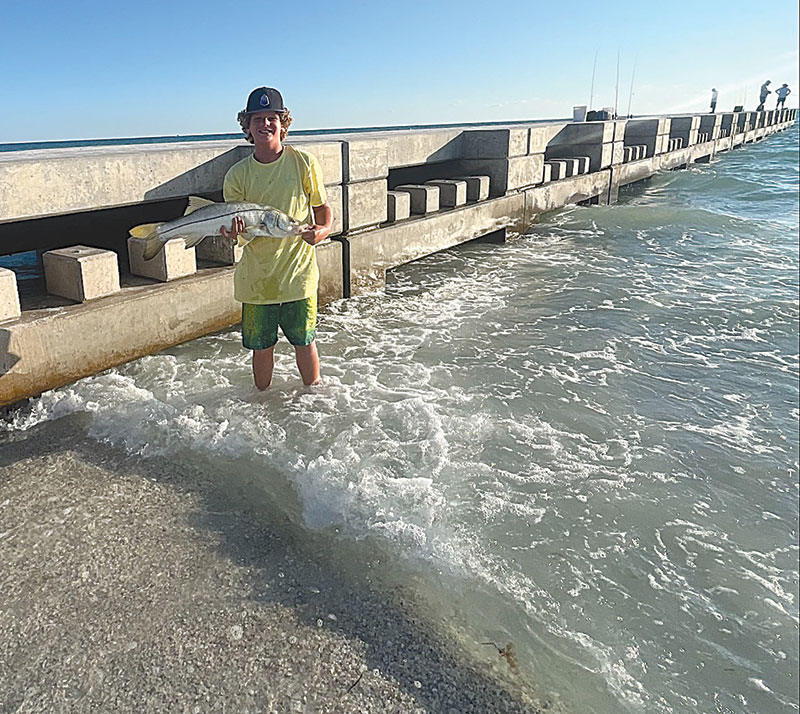
In the back country, catch-and-release snook are producing action despite the drawn-out incoming tides that last most of the day. In many instances, the slower tides result in a slower bite, although the snook seem to be active. Look for areas where good tidal flow exist even on the slowest tides, to find the best action.
Spotted seatrout are targetable during these tides. They may require patience, as the slower water movement seems detrimental to their urgency to feed, but they’re still worth a shot, especially if want to take fish home. You may encounter bluefish and Spanish mackerel in the same areas as the trout, which adds some “reel” thrills.
Lastly, mangrove snapper are finding their way into Tampa Bay as the influx of hatch bait becomes more apparent. I’m not seeing an invasion on the flats, but snapper are congregating around structure and in the passes.
On my Just Reel charters, catch-and-release snook fishing remains a crowd-pleaser. Free-lining baits along mangrove shorelines, sandy beaches and rocky areas is producing decent numbers of strikes.
After snook fishing, I’m finding a variety of fish on the deeper grass flats of Tampa Bay, where spotted seatrout, macks and bluefish are making up the bite. Redfish are being caught at random along oyster bars and mangroves. Lastly, mangrove snapper are being found in the passes during slow-moving tides.
Capt. Warren Girle is fishing for a variety of species — from catch-and-release snook in the backcountry to permit on the reefs in the Gulf of Mexico.
On the flats of Sarasota Bay, targeting catch-and-release snook is working well for Girle. Casting live shiners among mangrove shorelines is producing good action. On deeper flats in Sarasota Bay, spotted seatrout are available, as well as bluefish and mackerel.
Moving out to the Gulf beaches, Girle is in pursuit of tarpon. According to Girle, the bite around sunrise is best. Fish up to 100 pounds are being caught.
Finally, moving offshore to the artificial reefs, Girle is finding a variety of species, including mangrove snapper, juvenile grouper and permit.
Fishing at the Rod & Reel Pier remains steady for yet another week, where anglers using live shrimp as bait are frequently hooking into mangrove snapper, with some anglers catching their limit of five fish in a morning session.
Redfish and catch-and-release snook are being caught on shrimp as bait. Anglers using artificials are hooking up with mackerel, ladyfish and an occasional jack crevalle
Finally, casting fresh-cut chunks of mackerel and ladyfish is resulting in blacktip sharks.
Capt. David White is working offshore in the Gulf of Mexico, working the late tarpon bite and also getting in some bottom fishing at depths of 100 feet or more, yielding good action on American red snapper.
Live bait such as pinfish is working well, although frozen baits such as sardines are also working. Red grouper are included in this bite when the aggressive red snapper will let them near the bait. Smaller snappers — yellowtails and mangroves — also are being taking the bait.
Moving inshore, White says tarpon fishing is still a worthwhile pursuit during evening outgoing tides.
During morning incoming tides, the primary bite is redfish and catch-and-release snook.
Send high-resolution photos and fishing reports to fish@islander.org.