




One thing I can say with certainty about fishing around Anna Maria Island in July: It’s hot out there.
With air temps in the 90s and water temps in the upper 80s, you’d better be prepared to deal with the heat.
If you have access to shade, you’ll want to utilize that as much as possible. If not, make sure you cover up by wearing long sleeves, a hat and polarized sunglasses.
Some potent sunscreen isn’t a bad idea, either.
And don’t forget to carry along plenty of liquid to rehydrate. This is important. Drink frequently. And no, alcohol doesn’t count.
Lastly, when fishing in scorching temperatures, don’t forget to pack some patience — especially if fishing the flats.
Water temperatures are reaching 90 degrees and up on the flats and you can believe the fish are feeling the heat. You might find species such as snook, reds and trout not as motivated to take bait in the heat of the day. Your best bet is to fish low-light conditions. Early morning tides can be productive, as well as night fishing.
As far as productivity goes, catch-and-release snook are being caught — if the snook are in the mood — around the beaches and passes and they will take an artificial.
Redfish are targetable, with most being found where oyster bars exist around mangrove shorelines. Casting live baits such as shiners or pinfish works well, although don’t rule out casting a piece of chunk-bait in the mix. A fresh-cut chunk of fish will have the added scent to entice a redfish when they snub their noses at a live bait.
Lastly, spotted seatrout can be had on the deeper grass flats of Tampa Bay. Grassy areas in 8-10 feet of water are a good place to look. Free-lined live shiners with the addition of a split shot to the rig will aid in getting the bait down in the strike zone.
While targeting trout on the deeper flats, you can encounter Spanish mackerel, jack crevalle and even some mangrove snapper.
On my Just Reel charters, I’m seeing catch-and-release snook along the mangrove shorelines and beaches. Free-lined live shiners are working best as bait during moving tides. I’m also catching reds along the mangroves.
Spotted seatrout are being caught on deeper flats with a mix of mackerel, jacks and ladyfish.
On days with slower tides, I’m working in the Gulf around reefs and ledges. In these areas, I’m seeing mangrove snapper, porgies, Key West grunts, triggerfish and plenty of juvenile red grouper — and good results for the cooler.
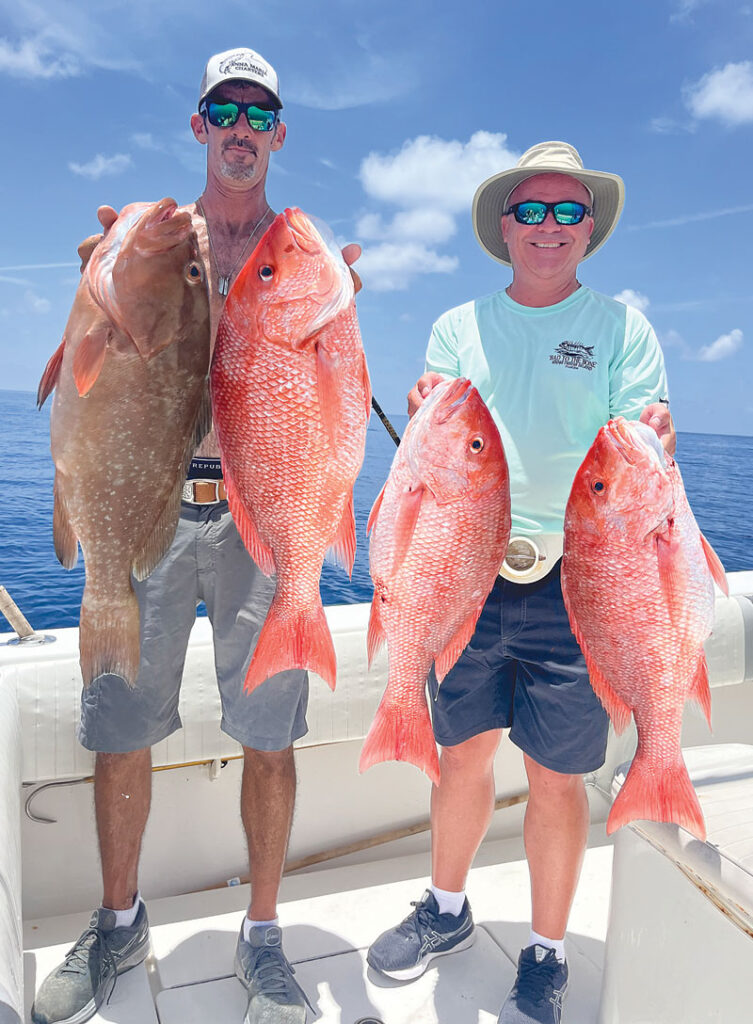
Capt. David White is finding good action while working offshore in the Gulf of Mexico. Using live pinfish or shiners as bait, White is leading clients to a variety of catches, including red grouper and American red snapper. These species are being caught around depths of 100 feet or more. Offerings of frozen baits such as sardines or threadfin herring are working to lure the fish to the hook.
In slightly shallower depths of 75-80 feet, White is catching mangrove and yellowtail snapper. These tasty fish are readily taking small live shiners as bait.
Moving inshore, catch-and-release snook are being caught around the mangrove shorelines.
White reports finding some juvenile tarpon on slightly deeper flats.
Lastly, targeting sharks along the beaches is adding a thrill for clients looking to hook into a big fish.
Jim Malfese at the Rod & Reel Pier says he’s seeing mangrove snapper being caught by anglers using live shrimp as bait. Light leaders and small hooks combined with a split shot and a live shrimp are resulting in near limits of the popular snappers.
While targeting snapper with live shrimp, anglers are hooking into an occasional redfish, as well as some catch-and-release snook.
With the abundance of hatch bait around the pier, migratory species such as jack crevalle and Spanish mackerel are stopping in for a quick bite. To catch these fish, try using artificials such as a silver spoon or a speck rig. A quick retrieval of either lure is a great way to get hooked up.
Send high-resolution photos and fishing reports to fish@islander.org.