






More test results are on tap for an island committee raising concerns about harmful forever chemicals in drinking water.
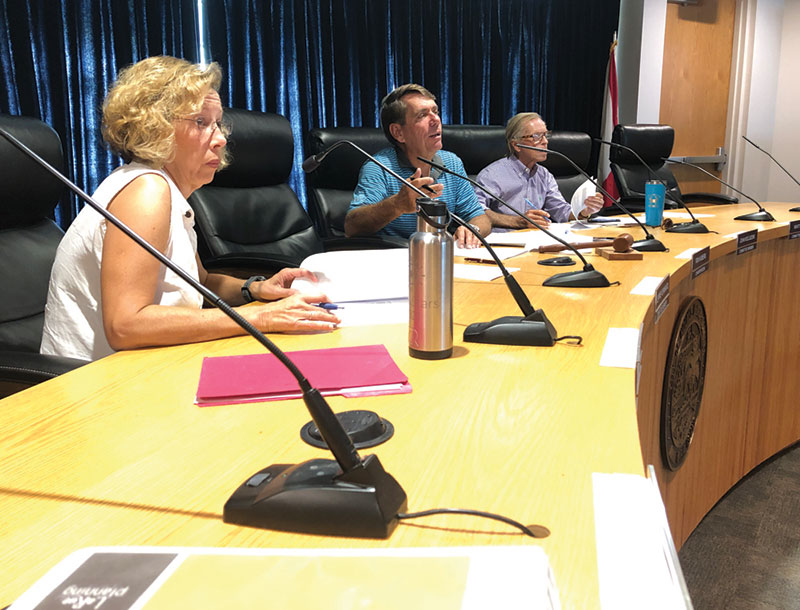
The Holmes Beach Clean Water Ad Hoc Committee assembled Sept. 13 at city hall for its first meeting following a summer break. Committee members took up a range of issues, including testing drinking water in Manatee County for PFAS.
PFAs are synthetic, potentially harmful chemicals used in a variety of household products and industrial processes.
PFAS, which can affect growth and development, reproduction, thyroid function, the immune system in humans and wildlife, have been found increasingly in ground and surface waters.
The federal government does not regulate PFAS in drinking water but some states are developing limits.
The Holmes Beach committee has collaborated with scientists at the University of Florida to sample and test county tap water for the forever chemicals.
“We found with one exception … PFAS in their drinking water,” Kolojeski said, adding that the exception was water from a tap where the homeowner had installed a reverse osmosis system.
“The dangers are out there,” he said.
With a reference to a pioneer in environmental science, he added, “Rachel Carson would absolutely have nightmares if she saw the long-range effects of forever chemicals in this environment.”
To follow up on the initial tests, Kolojeski collected samples from water fountains in the county, including the fountain in the Holmes Beach City Hall lobby.
As of Sept. 13, he was awaiting test results.
“Let’s get those results,” said Chair Ron Huibers, and take them to Manatee County, which provides drinking water to AMI.
The committee transitioned into the discussion on PFAS in water from a conversation on encouraging signatures on a petition to propose a clean water constitutional amendment to Florida voters in 2024.
The amendment would create a right to clean and healthy waters and would allow for suing agencies that harm or threaten harm to Florida waters.
Waters, the proposed amendment reads, “sustain all forms of life.”
“I’ll tell you, this is my passion,” Kolojeski said of the effort.
Organizing for the petition drive on the “Right to Clean and Healthy Waters” amendment is based at floridarighttocleanwater.org.
Huibers suggested posting a link to the site on the committee’s webpage.
He also suggested, “We should get five of our friends to sign.”
Holmes Beach Mayor Judy Titsworth, speaking from the gallery, said the city might encourage even more than that, as she plans to draft a resolution on the amendment effort for city commissioners to consider.
In other business, committee members:
- Reviewed the status of the Islanders 4 Clean Water Campaign launched earlier this year with a website, social media marketing, swag and educational materials.
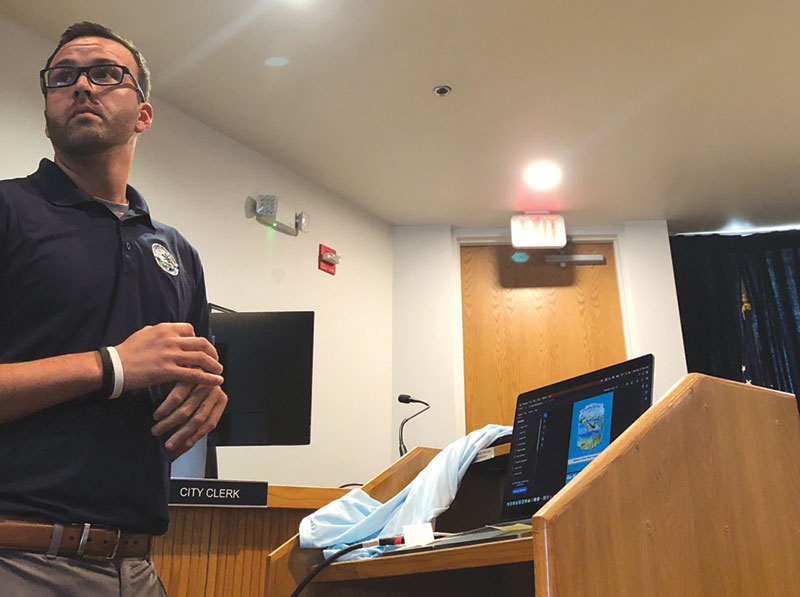
Matt McDonough, public works administrator for the city of Holmes Beach, said the website — islanders4cleanwater.com — was improved, the logo is getting a redesign and plans to promote the campaign include a 2024 calendar featuring artwork by Jean Blackburn, an artist with island ties known for her waterscape studies.
- Discussed purchasing equipment to clean lyngbya and other vegetation from local waters and possibly sharing the expense with other municipalities.
“The lyngbya, it’s been here all summer long,” Titsworth said. “It’s been thick in the bay.”
The committee recommended the city try out two aquatic harvesters — an Aquamarine H5-200 and an Eco Harvester — to help decide the best option for skimming and clearing out the matts.
“It’s a mitigation piece,” Huibers said.
Both cost less than $100,000 and can be operated by one person but the Aquamarine has an edge for two reasons — it operates in saltwater and costs about $10,000 less.
The next meeting for the committee, which is seeking new members, will be at 9 a.m. Wednesday, Oct. 11, at city hall, 5801 Marina Drive.