





Anna Maria Island anglers are confined to fishing the back country in order to find a bite due to chilly weather and chilling winds.
A weekend series of storms with heavy rain really put a damper on fishing.
Before the rains, migrating to the Manatee River or the far east sides of the bays to the north and south proved an effective way to find action and take shelter from the wind.
Also, a transition from using shiners as bait to live shrimp is taking place as cooler water temperatures cause the species we target to change their feeding habits to more opportunistic methods, as opposed to vigorously chasing down a bait. Anglers must adopt a patient approach and some changes in location to find the best bite.
Finding areas where water temps are slightly higher is a good place to start. The more comfortable the fish, the more apt they are to bite. Targeting snook and spotted seatrout during the chilling conditions can be challenging, as these fish tend to slow down their metabolism during stretches of cold weather.
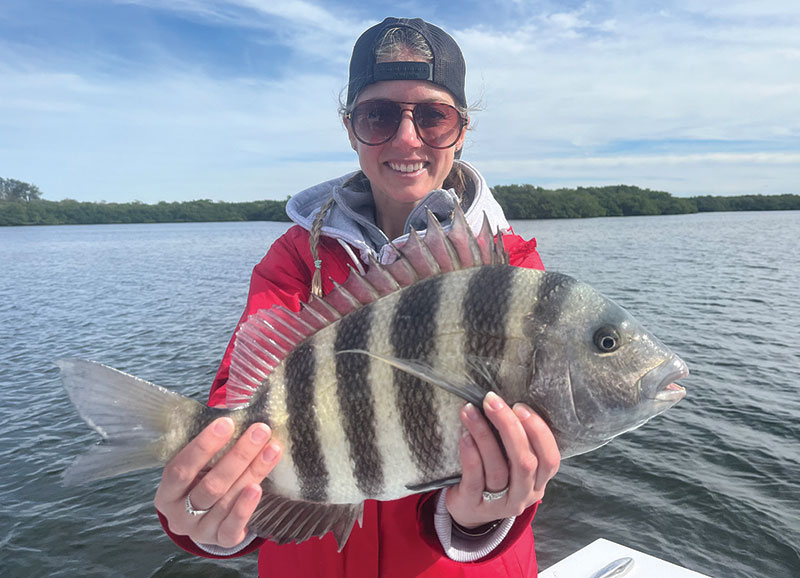
A good option is to target species more tolerant to the cold, including redfish, black drum and pompano, but especially sheepshead. Plus, these fish enjoy feeding on crustaceans such as live shrimp. Fiddler crabs and sand fleas as bait also entice the convict fish, although they require slightly more dedication by the angler as the bait typically needs to be caught instead of being bought.
The time of day plays a factor on the water. Many winter days in Florida start cold but through the day will shape up nicely, warming into the mid-70s and even low 80s. The warmer afternoons —just a couple of degrees — can trigger a bite from the hungrier species. The “late start” angler can be surprised as they might find the bite quite good during the warmer period of the day.
To recap: Finding success on the water during the winter can be achieved by observing a few guidelines. Try to find warmer water, use baits the species you’re targeting can easily acquire and go fishing during the warmest parts of the day. And, of course, pack a little patience and know-how.
Jim Malfese at the Rod & Reel Pier says fishers there using live shrimp as bait are getting the best action. Casting live shrimp under the pier on a bottom rig is resulting in sheepshead, black drum and redfish. All three species are being caught during the stronger morning tides. This is a great bite for anglers looking to take home fish for dinner, as most catches are falling in the legal-size limits.
The migratory species bite from mackerel, jacks and ladyfish has tapered off as most of the bait schools have left the pier. When the schools of bait are present, it’s good to cast small jigs tipped with shrimp to get a bite.
Capt. Johnny Mattay is finding good action for his Anna Maria Charter clients on spotted seatrout while fishing deep canals with live shrimp as bait. The areas are host to other species, such as redfish, black drum and sheepshead, as well as a few mangrove snapper, which are taking refuge from the cooler temperatures.
Also, while working canals, Mattay is finding an occasional snook, although with falling water temps, the linesiders can be a little finicky.
Capt. David White, also of Anna Maria Charters, is working inshore due to strong winds and rough seas. Fishing the back country is resulting in catches for his clients of redfish, black drum and sheepshead. Live shrimp as bait produces the best action, especially around docks, rocks and other structure.
With temperatures on the chilly side, most action is occurring later in the day when the sun has been out long enough to slightly warm the waters.
Casting live shrimp along the seawalls and docks is leading to a bite on windier days — and it also provides shelter from the wind — while fishing rock piles and reefs in Tampa Bay is better on calmer days.
Send high-resolution photos and fishing reports to fish@islander.org.