







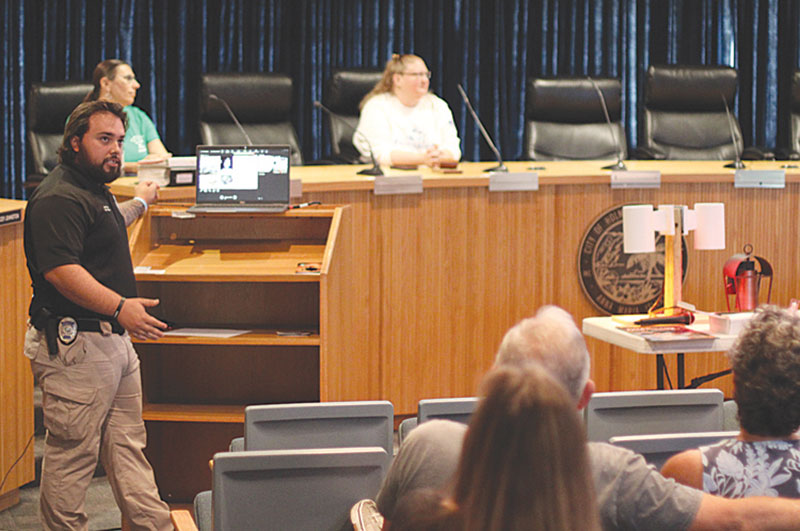
The Holmes Beach code compliance division hosted a sea turtle workshop on April 2, with less than a month to go before nesting season on AMI beaches.
Nesting season generally is May 1-Oct. 31, but the first nest in 2023 was documented on April 18.
During the season, sea turtles come ashore to lay eggs and, later in the cycle, hatchlings emerge to make their way to the water.
The city hall workshop, open to the public, featured the voices of several local authorities on what people can do to prepare for the season and through the season — keep the beaches clear at night of light and obstacles.
Mayor Judy Titsworth opened the talk, saying a balance must exist between encouraging tourism and protecting wildlife.
“Because,” she said, “if we lose all the resources we have here, we have nothing.”
City code compliance officer Jayson Clayton presented a slideshow on beach etiquette and turtle-friendly lighting.
He identified three rules for lighting along the beach: “Keep it low, keep it shielded and keep it long.”
The rules refer to limiting the projection of light by keeping it close to the ground and under cover, as well as limiting the wavelength of light.
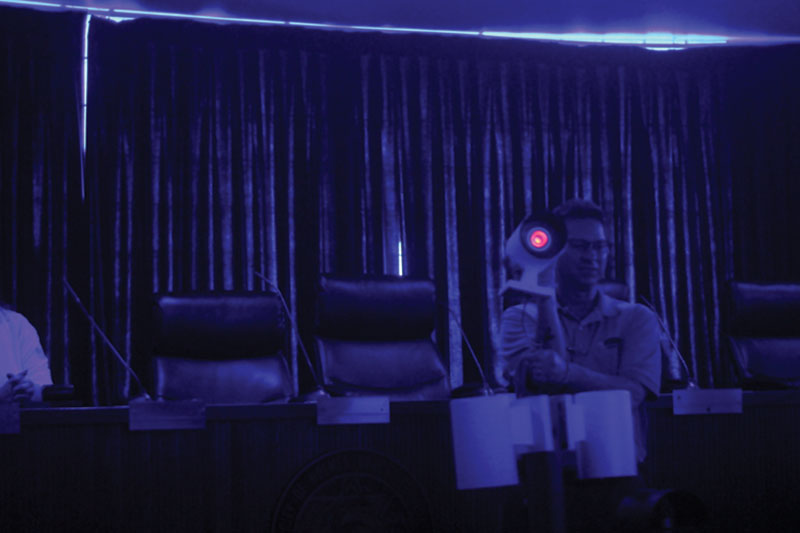
Scientists have determined that sea turtles are sensitive to wavelengths under 560 nanometers. So, it’s best to use amber, orange or red lighting, Clayton said.
The officer also talked about human behavior on the sand, such as digging and leaving holes, which can disorientate adult sea turtles and trap hatchlings, leading to predation and death.
A panel of other experts provided additional insight, including Kristen Mazzarella, director of Anna Maria Island Turtle Watch and Shorebird Monitoring; Jennifer Hoffman, executive director of Keep Manatee Beautiful; CJ Hahn, sales manager with Synergy Lighting USA; city building official Neal Schwartz;
and Emily Wooley, senior lighting project specialist at the Sea Turtle Conservancy. Wooley joined via Zoom.
About 30 people were in attendance in the commission chambers and participated in a question-and-answer session.
One audience member posed a question about safety when removing and limiting lighting during nesting season.
The city officials responded by saying that there are many ways to keep lights off the beach without compromising safety.
“Get some blinds, change out these lights, move the lights away from the window,” Clayton said. “You can do stuff to mitigate it.”