






As we settle into the second week of May, you can bet Anna Maria Island anglers have one thing on their mind.
They are suffering from a fever that can be cured by long hours in the sun scanning the waters of the Gulf of Mexico through polarized sunglasses in hopes of seeing a fish roll or, at the very least, a flash of silver.
They are suffering from tarpon fever.
This ailment has many side effects —
- Lack of focus at work;
- Fatigue;
- Sunburn from hours of gathering bait
- Dehydration;
- In severe cases, diminished bank accounts from spending vast amounts on tackle among their delirium.
But then comes the moment, the payoff. To look into that big tarpon eye, to study the fish as it studies you.
At this moment, the angler is at peace.
Aside from sore arms, the angler displays normalcy again.
But for the true tarpon junkie, the moment can be short-lived, as they bait another rod, preparing to cast again.
During the next six weeks, if you see any characters showing signs of this tarpon fever, stay back. It’s easy to fall under the spell after only a few fish stories.
And once you’re hooked, it’s all over.
Kiss the family goodbye during the weeks before that full moon in June, as the urge to be on the water in search of a silver king will be uncontrollable.
On my Just Reel charters, spotted seatrout are proving to be the most consistent bite. I’m seeing many fish just under the slot, but we’re managing to catch limits of keeper fish.
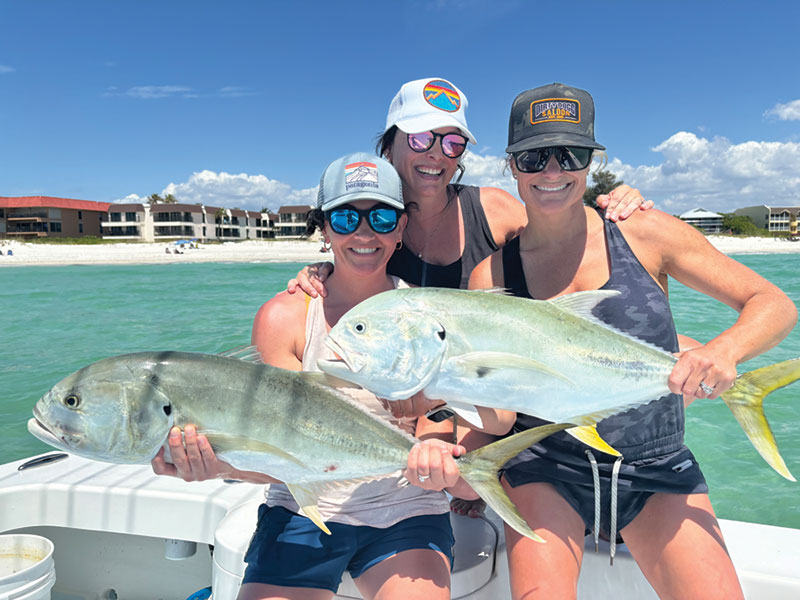
Big Spanish mackerel are mixed in, which provides exceptional action on medium-spinning gear. I’m also seeing ladyfish and jack crevalle when the bite is active.
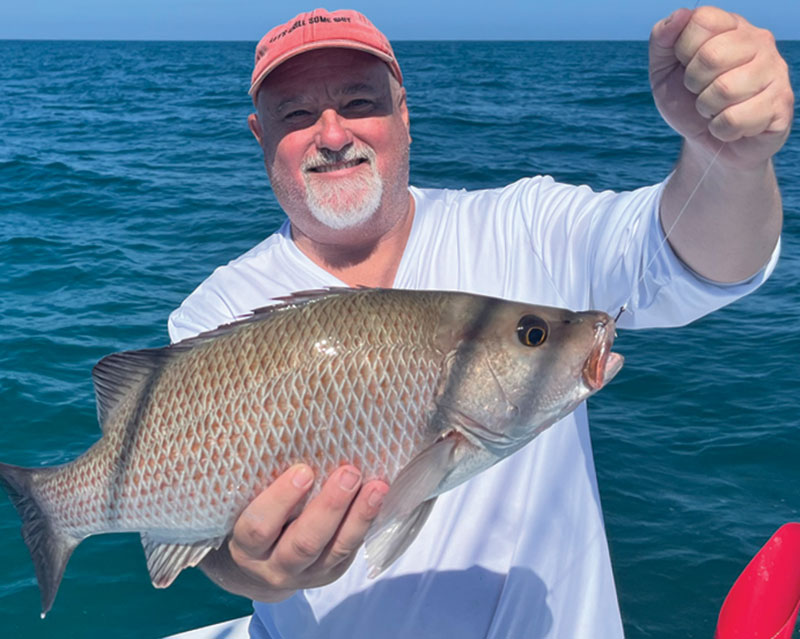
Fishing deeper areas in the Gulf of Mexico is entertaining as my anglers are reeling up all sorts of reef fish, including mangrove snapper, flounder, lane snapper, Key West grunts and juvenile grouper.
Also, black tip sharks are frequently seen along beaches and are great targets for anglers who want to pull on a big fish.
Capt. David White is getting some quality time offshore in the Gulf of Mexico now that the winds have subsided.
In depths of 80-100 feet of water, White is bottom fishing around ledges and hard-bottom areas. Species such as red grouper, mangrove snapper and yellowtail snapper are the most predominant catches for White’s anglers.
Pelagic species also come to the boat while offshore, especially around wrecks. Blackfin tuna are being caught on free-lined live shiners and White is happy to say he hooked two sailfish in the past week in the same areas as the tuna.
Moving inshore, White is targeting snook, redfish and spotted seatrout. Working oyster bars and mangrove shorelines are working well for the snook and reds. For the trout, deeper grass flats are the place to be. Some larger macks are mixed in, too.
Capt. Connor Kesten of Anna Maria Boat Co. says he’s finding some tarpon action while drifting baits around the Sunshine Skyway Bridge.
Anchoring and chumming for these “early season” tarpon can be rewarding, especially when the fish are not yet abundant along the beaches.
Threadfin herring is the bait of choice and is attracting multiple hookups for anglers on a morning charter.
On other days, Kesten is working the flats of Tampa Bay southbound to Sarasota Bay, where spotted seatrout are frequently being caught.
On deeper flats, Kesten is putting clients on numerous trout of 14- to 16-inches as well as a mix of macks and ladyfish.
On the shallower flats in 3-4 feet of water, Kesten is putting anglers on larger trout, ranging 18-22 inches. Kesten said he likes to add a popping cork to the rig while working the shallower flats to keep the bait from getting tangled in seagrass.
While inshore, Kesten’s crews are hooking up catch-and-release snook around the passes, with most snook running 20-30 inches.
Moving into the Gulf of Mexico, Kesten is finding a variety of action on pelagics and reef species.
For the pelagics, kingfish, macks and bonito are turning up around the artificial reefs and hard-bottom areas.
And bottom fishing for reef species is producing mangrove snapper, Key West grunts and numerous juvenile grouper.
Lastly, Kesten says switching over to some shrimp as bait is leading to some hookups for his anglers on hogfish.
Send high-resolution photos and fishing reports to fish@islander.org.