




Anna Maria Island anglers fishing the inland waters of Tampa Bay southward to Sarasota Bay are plagued by floating mats of Lyngbya.
Also known as gumbo, the floating algae is limiting the options on where to fish.
Lyngbya wollei is a filamentous cyanobacteria, a blue-green algae that grows in tropical and subtropical waters and is capable of producing secondary metabolites that act as feeding deterrents to crabs, shorebirds and fish.
Changes in temperature and increases in nutrients such as nitrogen and phosphorus can cause Lyngbya to grow exponentially, which results in the floating mats we now see in local waters.
Increased human populations around our watershed cause increases in nutrients from sewage, septic tanks, agricultural fields and fertilized lawns. This combined with an increase in paved surfaces impacts the natural filtration of vegetation, which in turn releases nutrients into waterways via drainage ditches, groundwater, rivers, runoff and storms, triggering mass blooms of Lyngbya.
Once the Lyngbya has surfaced, it ebbs and flows with tides, eventually washing up on shorelines and choking canal systems, causing a void in sea life, as well as emitting a pungent odor.
The large mats also pose a threat to intakes on boat engines, causing them to overheat or malfunction.
And Lyngbya can cause a mild skin irritation and asthma-like symptoms for some people.
Now that you have a general understanding of Lyngbya, I guess the real question is what can we do to prevent it or at least minimize it?
Limit development. While the horse is out of the barn in Manatee County and running fast and far down the road … we can see this will never happen, as has been proven by the expansions east of Interstate 75. With many developments, golf courses and communities lining the Manatee River, it’s safe to say we can expect to see more Lyngbya in the years to come.
And with the addition of the development on the eastern shore of Sarasota Bay by Long Bar, it is only a matter of time before we see a decline in water quality in Sarasota Bay.
As individuals, we can minimize the amount of fertilizer we use on lawns. This is especially important the closer you live to the water.
Maintaining septic tanks — which still exist in a large swath of NW Bradenton — to ensure they function properly is advantageous, although the elimination of them altogether is the best scenario.
Also, educating each other on measures we can take to ensure quality standards for future generations.
On a positive note, the Manatee County commissioners unanimously voted 5–0 May 14 that the north Coquina boat ramp will be renamed the Capt. Scott Moore Boat Ramp. Congratulations to Moore, a true pioneer on the Gulf coast of Florida when it comes to fishing and the preservation of local resources. Thanks, Scott, for being there for all of us.
On my Just Reel charters, I’m seeing plenty of spotted seatrout being caught in areas where there’s no Lyngbya.
Deep flats with good tidal flow are producing the best action for trout and free-lined shiners are working as bait.
Other species, such as mackerel, jack crevalle, ladyfish and bluefish, are being caught in the mix.
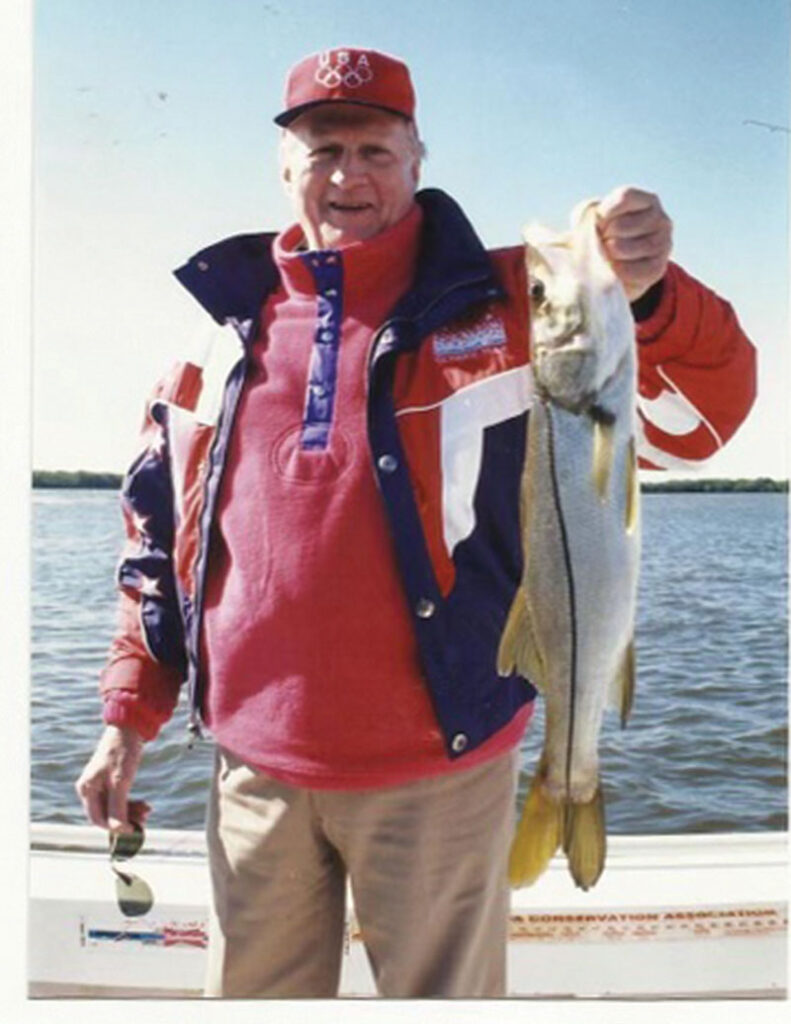
Fishing along mangrove shorelines is yielding snook and redfish. This bite is best on higher parts of the tide.
Also, blacktip sharks are on the prowl — on the flats and along the beaches — which is making them targetable for anglers who wish to hook into a large fish.
Capt. Johnny Mattay is working the backcountry as strong winds and rough seas are keeping him from the Gulf. Targeting redfish along mangrove shorelines and around oyster bars is yielding some good action.
Casting live shiners in these areas results in redfish 22-30 inches. Snook are in the same areas. Again, live shiners as bait are leading to many hookups with linesiders. Most are 20-30 inches. Both the reds and snook are found during the higher stages of the tide.
Spotted trout are another species Mattay is targeting. Fishing deeper grass flats in depths of 4-8 feet is resulting in plenty of trout, as well as ladyfish, jacks and mackerel. Most trout catches are in the slot of 15-19 inches, with a few larger examples mixed in.
On days when Capt. David White can venture offshore into the Gulf of Mexico, he’s finding good action for his clients by fishing over ledges and reefs. Red grouper are being caught while using pinfish as bait and limits of fish are being caught on most days. Mangrove snapper are being caught while fishing offshore. Snapper are reacting better to offerings of live shiners as bait.
Migratory fish such as jack crevalle and blackfin tuna are being found around offshore wrecks, where free-lined live shiners are working best as bait.
Moving inshore, White says spotted seatrout and Spanish mackerel are keeping him busy.
Lastly, while fishing along the beaches, White is catching blacktip sharks while using fresh-cut pieces of mackerel for bait.
Send high-resolution photos and fishing reports to fish@islander.org.