





After a week or so of mediocre tides due to the half moon, Anna Maria Island anglers are looking forward to the new moon tides the first week of June.
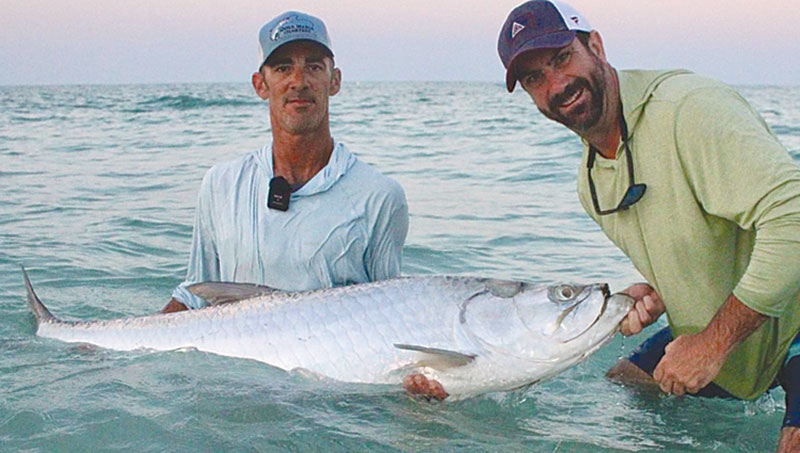
With extreme high tides peaking in the mid-afternoon, followed by aggressive outgoing tides stretching into the evening, tarpon anglers are anticipating some great action while drifting and casting live crabs as bait.
As tarpon stage in the passes, they’re on the feed during the outgoing tides because strong currents wash thousands of small blue and pass crabs into the Gulf of Mexico. The silver dollar-sized crabs are a delicacy for tarpon and are easily preyed upon as they swim along the surface of the water hitching a ride on the tide.
Anglers can catch the crabs for bait with a long-handled dip net by nosing the boat inside the current and waiting for the crabs to drift by. Once a couple of dozen crabs are caught, it’s time to fish.
And you can start fishing in the same areas where you caught your bait.
Once baited up, anglers are casting into the current as the boat drifts out of the pass toward the Gulf. Once a drift is completed, it’s time to pull out of the lineup, motor back to the beginning of the drift and start again.
When fishing is good and the tarpon are biting, getting a bite every couple of drifts is attainable.
Determination, patience and keeping a bait in the water are factors in finding success.
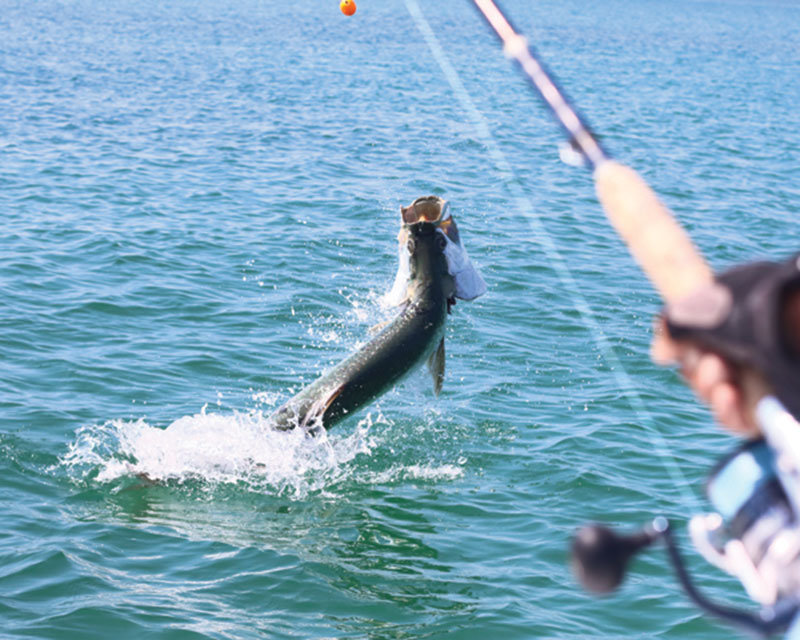
And once a fish is hooked, it’s game on. The battle runs anywhere from 20 minutes to an hour, depending on the skill of the angler and the attitude of the fish.
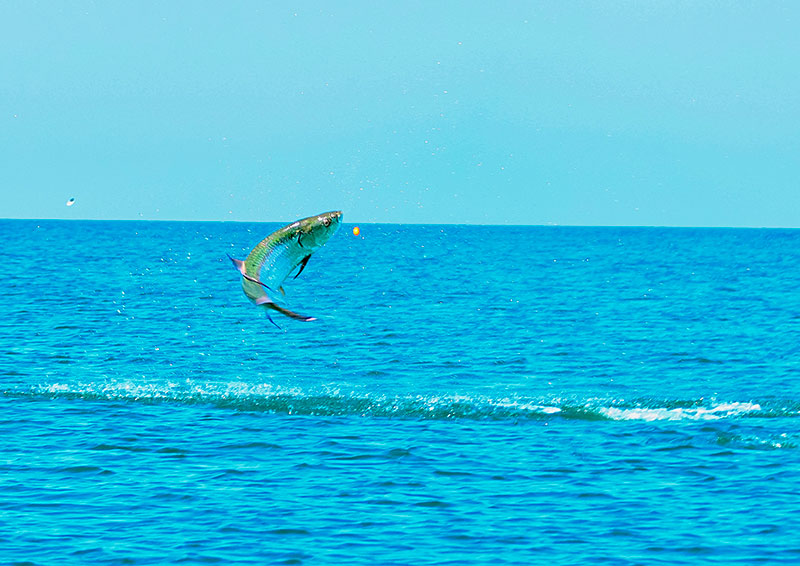
Some fish just don’t want to give in, while others will come to the boat after a couple of jumps. Once the fight is over and the fish is released, it’s time to bait up and do it all over again — if you dare.
If tarpon fishing isn’t your thing, you should see some good flats fishing during the new moon tides. The outgoing tides should have the snook on the feed, especially in the passes and around the beaches.
Live free-lined shiners are the go-to bait, although a variety of artificials will work, too. Casting small jigs, lipped plugs or soft plastics to snook can be deadly during a swift outgoing tide.
So be prepared to nearly get the rod ripped out of your hands. If you hook into a big linesider, remember, snook season is closed. So handle with care as we want these fish to live to be caught another day.
On the legal side, make a note that the harvest of gray triggerfish and greater amberjack is closed through July 31 and snook season is closed until Sept. 1.
On my Just Reel charters, I am seeing plenty of spotted seatrout being caught over deeper grass flats in Tampa Bay. Free-lined live shiners are quickly being devoured by hungry trout. If the trout aren’t quick enough to snatch the bait, other predators — including Spanish mackerel, ladyfish, jack crevalle and silver trout — will take it.
Sand sharks are present in these areas, resulting in a handful of hooked fish being bitten in half as they are being reeled in, adding a thrill as well as a sense of urgency to bring your fish to the boat.
Snook fishing is heating up with numerous fish being hooked in the passes as well as on the flats.
Capt. David White of Anna Maria Charters is suffering from tarpon fever. He is taking charters on dedicated patrol, scanning the waters for a fish to roll or even a flash from a silver king.
During incoming tides, White is using live threadfin herring as bait, which seems to be attracting the most action and quite a few morning hookups.
During the evening outgoing tides, White is switching to live crabs as bait and it’s working. He reports that drifting the passes and casting live crabs is attracting numerous fish to the hook, with some of the silver kings reaching 150 pounds.
White says he’s had no trouble with sharks attacking his hooked tarpon and he hopes to keep it that way.
Capt. Johnny Mattay also of Anna Maria Charters, is putting in time with clients offshore in the Gulf of Mexico, catching larger mangrove snapper. Using live shiners as bait combined with a bottom rig, Mattay is seeing mangrove snapper running 8-10 pounds. Red grouper are present too, readily taking the live bait.
After bottom fishing, Mattay is switching over to flat-lining baits on the surface, which is yielding explosive action on amberjack. The reef donkeys are quickly scarfing cast baits.
Moving inshore, Mattay is hunting snook and redfish on the shallow grass flats during the high stages of the tide, where he’s finding casting free-lined live shiners against mangrove shorelines works best.
Spotted trout are being caught while inshore fishing, although they are located slightly deeper on flats in depths of 6-8 feet.
Lastly, Mattay and crew are chasing tarpon along the beaches when the seas are calm and clear.
Send photos to fish@islander.org.