





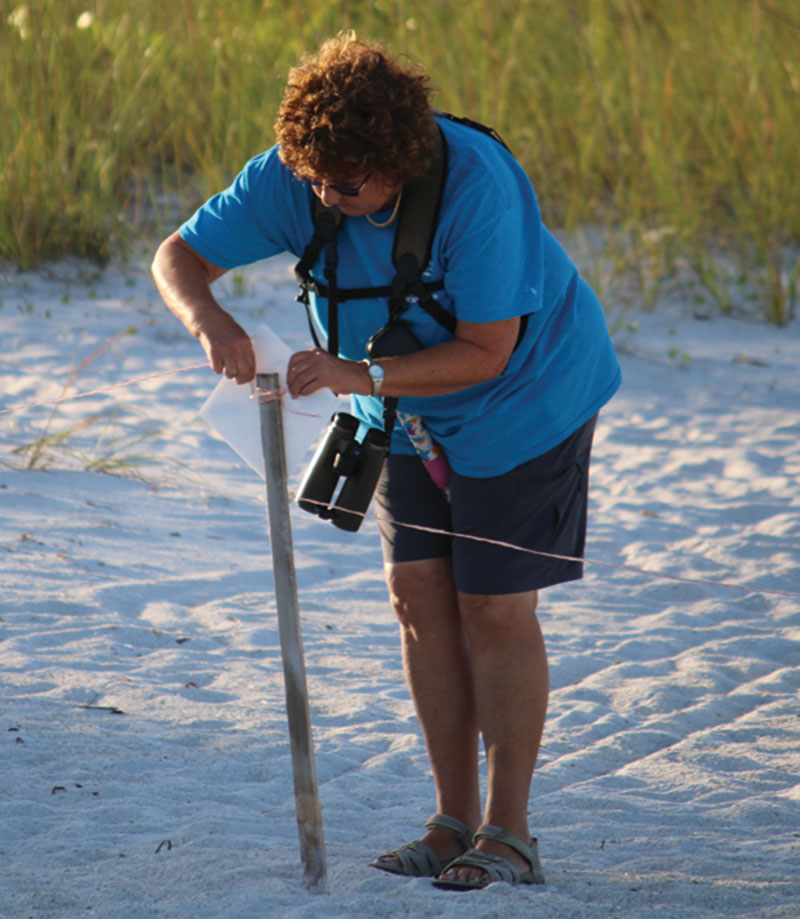
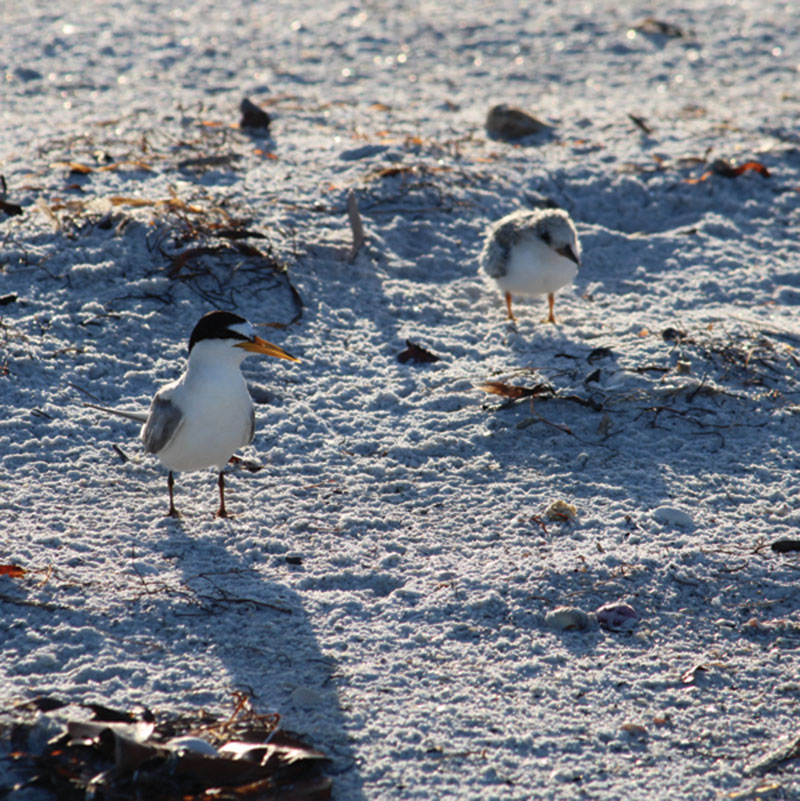
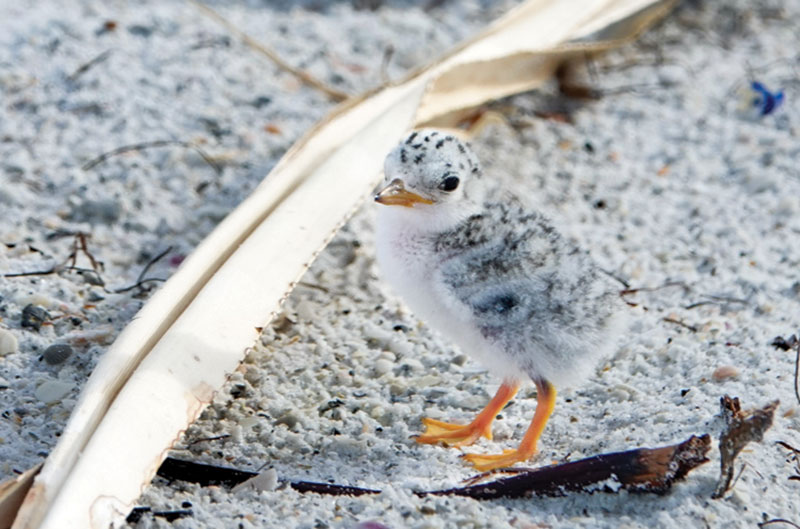
A least tern colony in Bradenton Beach near the 27th Street North beach access since May 9 had seen 22 nests total, with eight chicks and at least six birds nesting in scrapes near the dunes as of July 3.
Kathy Doddridge, shorebird coordinator for Anna Maria Island Turtle Watch and Shorebird Monitoring, discovered the colony in May.
And she’s at the site daily, in the mornings, to check on the birds’ activity and educate passersby.
“Look at these guys,” Doddridge said July 3, when The Islander paid her a visit on the shoreline. “How can you not smile?”
Doddridge joined turtle watch in 2013, the same year she joined the Audubon Society’s Manatee County chapter, where she took a course on how to identify birds.
Doddridge began as a “walker” with turtle watch, which back then patrolled the beach on foot to look for nesting activity.
Anna Maria Island’s beaches provide a habitat for sea turtles, especially loggerheads, as well as shorebirds. Sea turtle and shorebird nesting mostly overlap, ending in the mid-fall.
Doddridge eventually became a turtle watch section leader until in 2021, when she stumbled across some least tern eggs on the beach. Least terns are listed as a threatened species in the state.
“Suzi Fox, our executive director at the time, was not available,” Doddridge recalled. “So it was baptism by fire.”
With the help of other volunteers, she took over the shorebird side of the organization.
There were 26 least tern chicks but only two survived because of a cat predation problem. The colony was the last on the island until now.
“When a fellow birder had indicated that she had seen least terns out here, I hurriedly came out to the island,” Doddridge said about monitoring this year’s colony. “I watched the birds and, of course, they were a little chummy.”
Courting behavior is one of the first signs a colony is forming.
Least tern eggs take about 21 days to hatch and the birds fly 19-20 days after hatching.
Doddridge said her favorite part of her task is watching the chicks grow.
“It’s been an amazing process,” she said about the chicks’ behavior. For example, least terns will put their beaks in their chick’s mouth and open up their bill to teach them how to fish.
“They don’t know that, they’ve been stuck in an egg for 30 days,” Doddridge said.
On July 3, the chicks were stretching their wings and learning to preen.
Doddridge said everyone responds well to the colony, although occasionally someone runs into the enclosure to retrieve a beach ball or umbrella.
Seeing people’s reaction to the chicks is another part of the duties that Doddridge enjoys.
“To see their joy is very special,” she said.
People who have questions about shorebird nesting can talk to volunteer bird stewards who watch over the the colony Thursday-Sunday.
Hatchlings emerge, record for nests already set
Sea turtle nesting on Anna Maria Island hit a seasonal milestone with the emergence of the first nest of hatchlings and hit a record in the number of nests.
Anna Maria Island Turtle Watch and Shorebird Monitoring recorded 546 nests in total July 2, just halfway through the 2024 season. The number broke the record of loggerhead nests on AMI during a season that was set in 2019, with 543.
“We are excited that so many sea turtles have decided to nest on Anna Maria,” Kristen Mazzarella, turtle watch’s executive director, said July 3 in a news release. “We can thank the conservation efforts of patrollers that protected nests 25 years ago for producing the hatchlings that are coming ashore to nest in such high numbers this year.”
Loggerheads take 25-35 years to reach maturity.
Sea turtles will continue to lay nests into the fall, so turtle watch expects “many more nests,” according to Mazzarella.
Also, turtle watch recorded the first hatch June 29, and, by July 2, there was a second hatch.
“In order to ensure that this incredible number of nests results in a record number of hatchlings making it to the water, we need to do our best to provide a turtle-friendly beach.” Mazzarella said.
For more on nesting, go to islandturtlewatch.com. If a sea turtle is in distress, call AMITW at 941-301-8434 or the Florida Fish and Wildlife Conservation Commission at 888-404-3922.
For the record
As of July 5, AMITW recorded 564 sea turtle nests, 694 false crawls, seven hatched nests and 176 hatchlings to the sea.