





With the water temps in the Gulf of Mexico and the bays pushing beyond 90 degrees, Anna Maria Island anglers are fishing early to beat the heat and find fish that will bite. Targeting and hooking spotted seatrout, redfish and catch-and-release snook requires a little patience — to say the least.
Timing fishing trips during early mornings to correspond with moving tides is advantageous as we move into August. If that doesn’t fit your schedule, plan on fishing deeper water, where cooler temperatures exist on the bottom.
Fishing structure in depths of 30-50 feet is an option. And snapper are infesting our nearshore waters, which provides anglers with some good action on medium-spinning gear, as well as tasty fillets for the fry pan.
Other species, such as lane snapper, Key West grunts and juvenile grouper can be found in these depths, adding some variety to the bite.
Fishing baits toward the surface might also entice Spanish mackerel if you’re looking for more action. Chumming with live shiners is effective to see if any macks are in the vicinity.
Offshore, mangrove snapper and yellowtail snapper are the main focus now that American red snapper season has ended. Both species are being caught with frequency. In fact, limits of both are being reported. And, with the opening of amberjack season in the Gulf, you can bet it’ll be time to start breaking out the heavy spinning gear to commence battle with these bruisers as they patrol the reefs and wrecks in search of a meal.
On my Just Reel charters, I’m seeing action on a variety of species. Spotted seatrout are cooperating during the faster run of the tides, with all sizes of trout being caught by my clients. Deeper grass flats are holding the better concentrations of fish, although most are 13-16 inches. Larger examples are being found on structure in depths of up to 20 feet.
We also are finding decent numbers of mangrove snapper, with most catches 12-14 inches, although some up to 18 inches are taking our bait.
Fishing mangrove shorelines for snook and redfish is requiring patience as water temps are on the high side for these species. In fact, the better snook bite is occurring along the beaches and passes. As for the reds, mangrove shorelines have fish hiding in the shade under the bushes.
Capt. David White is reporting good action offshore in the Gulf of Mexico, where snapper and yellowtail snapper are being caught daily. Using medium-heavy fishing gear to target these species is most enjoyable as both species turn feisty on the hook. A variety of live and frozen baits are working to lure the tasty fish to the hook.
Moving inshore, White is finding mangrove snapper while working structure in Tampa Bay and in the Gulf of Mexico, with limits of snapper being caught most days. White next turns to the beaches where his sport anglers are taking on catch-and-release snook. Sight-casting live shiners to these fish is enjoyable as the strike is visible in the clear water.
Finally, White is targeting blacktip sharks around Egmont Key, where most shark catches are 4-6 feet.
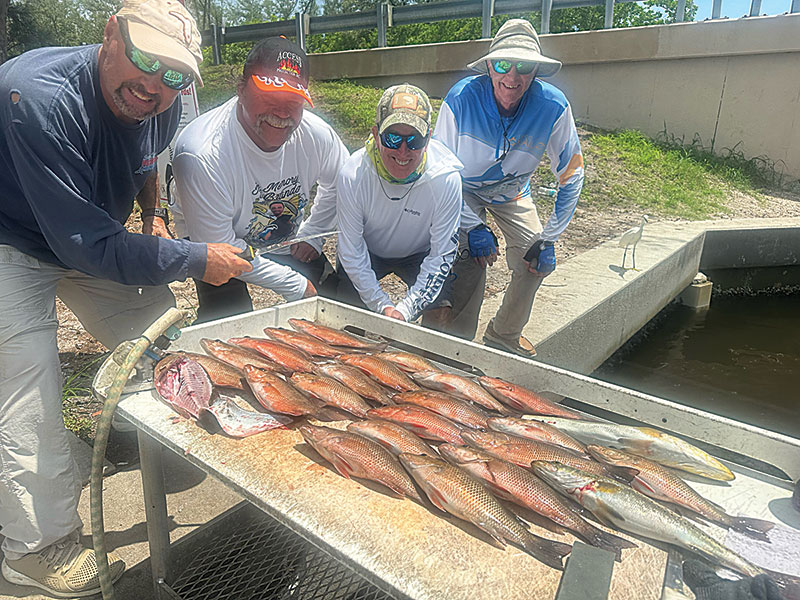
Capt. Johnny Mattay of Anna Maria Charters is working offshore in the Gulf of Mexico for mangrove and yellowtail snapper over reefs, wrecks and hard-bottom areas. After wrapping up with American red snapper season, Mattay has his sights on limits of mangrove and yellowtail snapper, which is resulting in long sessions at the fillet table and coolers full of fish for clients.
Moving inshore, Mattay is chasing schools of redfish on the shallow flats of Tampa Bay south to Sarasota Bay. Both live and dead baits are working as the copper-colored herds of fish move across the flat devouring everything that resembles a meal. Fishing deeper areas for spotted seatrout is keeping Mattay’s clients busy reeling up trout of all sizes.
Fishing over wrecks and reefs also is yielding action, especially on Spanish mackerel and mangrove snapper. Both are being caught on hatch bait.
Capt. Wes Wildman of Wildman Adventures says fishing is tricky due to the warm water temperatures. On some days, he’s seeing water temps as high as 90 degrees while working the flats.
Wildman says he’s starting his days by targeting snapper around structure in Tampa Bay and the Gulf of Mexico. With slower tides during the early morning, Wildman is seizing the moment, as the conditions are ideal for clients to target snapper. Using small live shiners as bait is yielding snapper up to 17 inches.
As the sun gets higher and the tide starts moving, Wildman is migrating to the flats to target redfish from Tampa Bay south to Sarasota Bay. Most of the schooling fish are slot-size, but they’re providing great action on medium spinning gear. Both live shiners and dead baits are working.
Lastly, Wildman is putting clients on catch-and-release snook both around mangrove shorelines and along the beaches.
Send high-resolution photos and fishing reports to fish@islander.org.