






With water temperatures in the upper 80s and lower 90s on some days, Anna Maria Island anglers are migrating to deeper water to find bites.
Fishing nearshore wrecks, reefs and hardbottom areas in the Gulf of Mexico is leading to action on a variety of species.
Mangrove snapper are the most frequent bite when fishing in depths of 30-50 feet. Using live shiners as bait combined with a knocker rig — a 1-ounce egg sinker and a circle hook — is yielding limits of mangrove snapper, as well as a variety of other species, including lane snapper, yellowtail snapper, Key West grunts and plenty of juvenile grouper.
Free-lining shiners over wrecks and reefs is working to attract migratory fish, such as Spanish mackerel and bonito.
Anglers willing to venture to depths of 80-120 feet are being rewarded with limits of American red snapper, large red grouper and an occasional cobia.
For anglers who prefer inshore fishing, the high temperatures are definitely playing a role in the success of a fishing trip. Getting out early is key to beat the heat.
Fishing the flats for snook and redfish can be successful during the first couple of hours after sunrise, especially if timed to correspond with good moving tides.
Live shiners as bait are your best bet although in many instances, you might find the redfish will prefer dead bait.
In either scenario, some patience is required because the warm waters have the fish kind of sluggish, less motivated than normal.
As the water heats up, many anglers are fishing deeper grass flats, which can hold spotted seatrout, mackerel, ladyfish and mangrove snapper.
Using hatch bait or small live shiners works best to get the fish to bite. Swift-moving tides are best and will yield the most action.
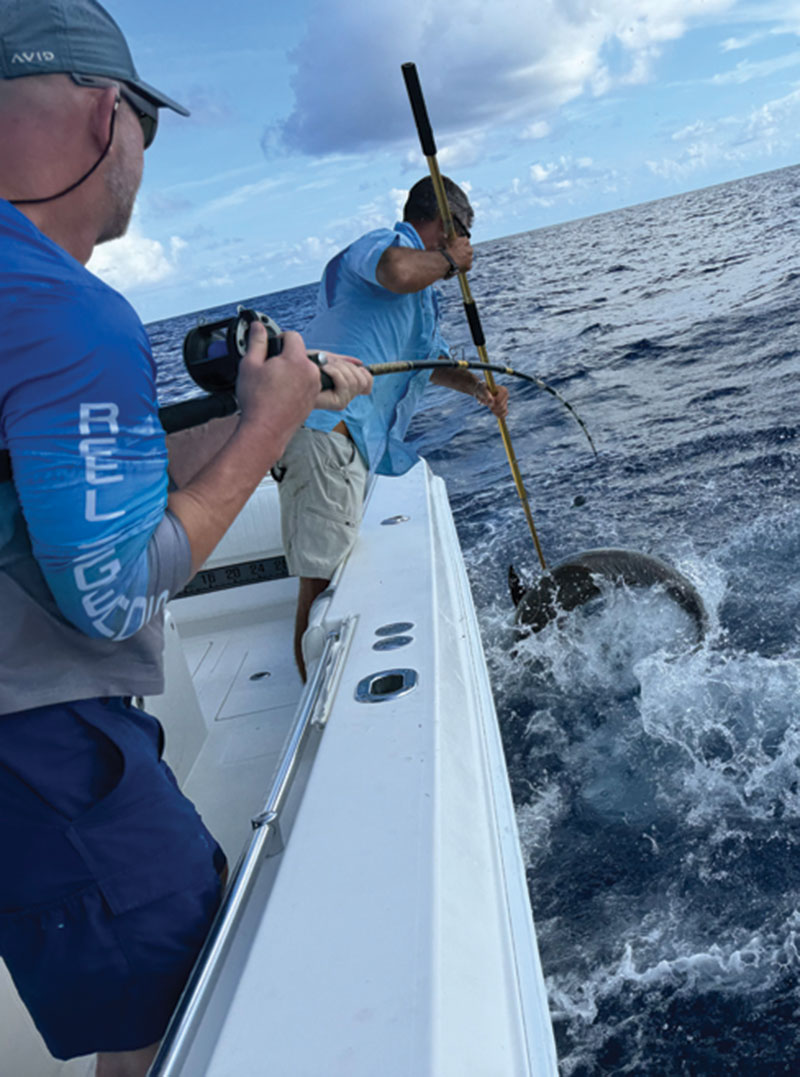
Finally, if nothing else works, try targeting sharks along the beaches and in the passes. Small blacktip sharks put up a great fight and can save the day if the bite is slow.
On my Just Reel charters, I’m working in the Gulf of Mexico to find a consistent bite. Bottom fishing around wrecks, reefs and hard bottom is leading to limits of mangrove snapper. Mixed in with that bite are lane and yellowtail snappers and juvenile grouper.
Migratory fish — the macks and bonito — are lurking in the same areas and are being caught by free-lining baits on the surface rather than bottom fishing.
Moving inshore, spotted seatrout and macks are being found over deep grass flats in Tampa Bay. Ladyfish and jack crevalle are in the mix, which adds variety to the bite.
Lastly, blacktip sharks are being caught on fresh-cut pieces of bonito and mackerel. The sharks are measuring 4-5 feet and are feisty once on the hook.
Capt. David White is working offshore in the Gulf of Mexico on the calmer days. American red snapper are the highlight while fishing offshore with limits being caught daily. Live pinfish or frozen bait offerings are being eaten on every drop by the aggressive snapper.
After catching a limit of red snapper, White is targeting yellowtail snapper, which are cooperating nicely. Small live shiners are leading to numerous hookups on the tasty snapper. While wreck fishing offshore, White is hooking into an occasional cobia.
Moving inshore, White is catching numerous species despite the warm water. Mangrove snapper are being found around inshore wrecks and reefs, as well as in the passes. Spotted seatrout are being caught in areas where deep grass flats exist.
Fishing shallow flats in the early morning is resulting in catch-and-release snook.
Finally, White also is targeting blacktip sharks at the mouth of Tampa Bay is providing action when the waters heat up and the flats bite slows down.
Capt. Johnny Mattay says the offshore bite has been good for charters looking for action on American red snapper and yellowtail snapper and free-lining chunks of squid or sardines is working for either species. Mattay says live pinfish as bait are getting attention from the red snapper.
Mangrove snapper, lane snapper and red grouper are in the mix while fishing offshore, as is bonito and amberjack.
Moving inshore, mangrove snapper and Spanish mackerel have been the most consistent bite for Mattay’s anglers. Using small shiners as bait is leading to action on both.
On the higher stages of the tide, Mattay is putting clients on redfish and catch-and-release snook along the mangrove shorelines during early morning tides.
Lastly, spotted seatrout are available, although the bite on them is hit or miss, according to Mattay.
Send high-resolution photos and fishing reports to fish@islander.org.