







There was record-breaking rainfall and prolonged effects of Tropical Storm Debby as it passed Manatee County on its trek to becoming a category 1 hurricane with landfall near Steinhatchee at the Big Bend region at 7 a.m. Aug 5.
Post-storm, Anna Maria Island anglers were sporadically making their way back on the water to find a bite.
With mass volumes of freshwater pouring out of the Manatee River into Anna Maria Sound, you can bet the patterns we were working before Debby dramatically changed.
For most anglers, the day begins with catching bait but when extreme conditions, such as tropical storms and hurricanes, occur offshore of AMI, finding bait can become a dilemma.
The mass schools of bait typically move offshore in such instances, making them tough to find and tougher to catch.
Of course, there are always alternatives, such as buying live shrimp or using artificials, but we all know that live bait fishing with shiners is as good as it gets.
So, let’s be optimistic about finding bait and say that the process of elimination begins with where to find the fish. Most anglers will probably re-run their last pattern of spots they fished before the blow, which is a logical choice. You always want to go where you caught fish the last time you were out. If these spots work, good for you. But if they don’t, it’s back to the old post-storm drawing board.
This is where the angler’s “know-how” is put to the test. Trying to find fish starting with a blank slate isn’t always easy but, with determination and luck, you may get some action.
If you don’t find anything, don’t be discouraged because the fishing and bait should rebound, the waters will get back to normal and a pattern will be found, resulting in successful days on the water.
And, being anglers, we are skilled at adapting to the surroundings and at taking the good with the bad.
Capt. David White was one of the few managing to get out on the water soon after the blow. White showed his angling savvy by switching tactics to find success for his clients.
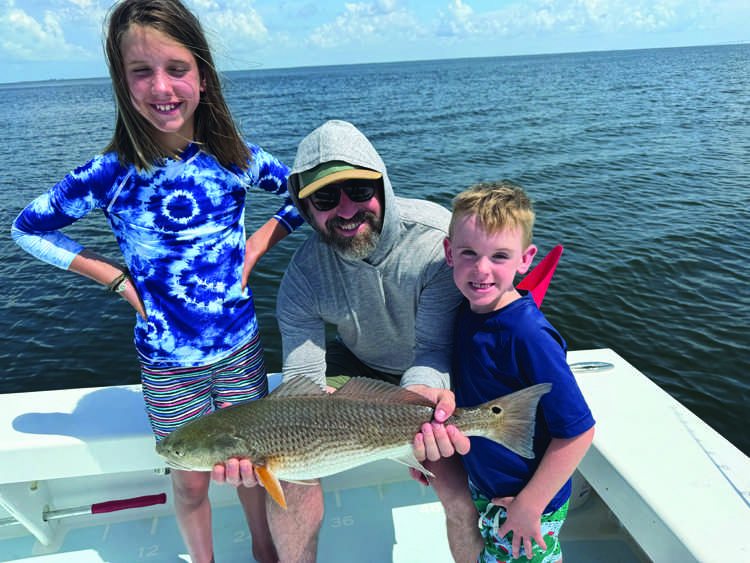
He was taking charters night fishing around residential docks and canals, resulting in hookups with catch-and-release snook and juvenile tarpon, as well as a few redfish.
White was fly fishing, which is by far the stealthiest way to target the fish and it also eliminates the dilemma of having to get bait.
Before the storm, Capt. Johnny Mattay said mangrove snapper and Spanish mackerel were being caught frequently while fishing the passes and the artificial reefs. A variety of other species, such as juvenile groupers and grunts, were also prevalent in the areas.
Fishing deep grass flats for spotted seatrout was also pretty good, reported Mattay, and free-lined shiners were his bait of choice. Lastly, targeting snook along the beaches and passes was fairly good on moving tides.
He was hoping things would get back to normal for this week’s charters.
Send high-resolution photos and fishing reports to fish@islander.org.