






As we settle in for winter, you can bet your bait that the inshore fishing patterns are going to change.
Switching over to live shrimp as bait is probably in your best interest as shrimp will work for most of the inshore species that we target throughout the Anna Maria Island waters.
The main suspects — snook, redfish and trout — will readily take an offering of live shrimp, especially when water temps drop into the mid to lower 60s.
Carrying a few live shiners on the warmer days between cold fronts isn’t a bad idea, although live shrimp will become a go-to bait for the winter months ahead. Plus, using live shrimp opens the door to a variety of species, such as black drum, pompano and especially sheepshead, so there’s no reason to be discouraged over the use of live shrimp.
Yes, live shiner fishing is exciting and they work excellent for bait, but as the fish prefer a slower target when the waters cool down, then the live shrimp is what you want.
The same applies while fishing nearshore structure in the Gulf of Mexico. While live shiners are like candy for grouper and snapper, substituting live shrimp will get the job done.
A lot of fish out there — mangrove snapper, Key West, grunts and porgies — prefer live shrimp as the water temps drop. And best of all, hogfish will take a live shrimp when it crosses their nose, which is always an added bonus.
If you’re venturing well offshore in depths of 100 feet or more, don’t hesitate to break out the frozen bait. Sardines and squid are adequate for catching most bottom dwellers out there, including groupers and snappers.
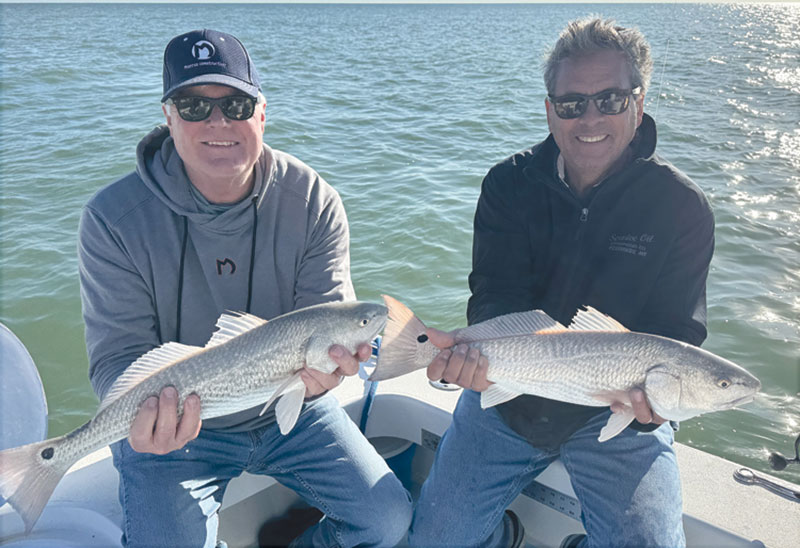
On my Just Reel charters, I’m finding plenty of inshore action on live shrimp. Redfish seem to be the most receptive to the shrimp and they’re taking the bait around rocks, docks and oyster beds. Spotted seatrout also are being caught on shrimp and most of the time, a piece of fresh-cut shrimp on the tip of a small jig is working for my clients. As for the snook, the cooler water temps have shut them down temporarily, although in between the fronts they should be targetable.
The sheepshead are starting to gather and I’ve found a few areas where they are schooling. Many are barely legal, but that should change in the weeks to come. Nearshore fishing around ledges is resulting in mangrove snapper, Key West grunts, porgies and hogfish here and there. There’s also plenty of juvenile grouper to fill in the gaps between catches for the cooler.
Capt. David White says before the cold front, fishing the flats was exceptional for snook, redfish and spotted seatrout. Using live shiners as bait was attracting all three species mentioned and in great quantities, too.
Now that the cold front has passed, White is switching tactics, which means using live shrimp for bait, which adds some species to his “hit list” — sheepshead, pompano and black drum.
White is putting his charter fishing clients of redfish and trout as the cooler waters have not affected them as drastically as the snook.
On warmer days, between the fronts, White says he’ll still target snook, but he is waiting for the ideal conditions — and so are the fish.
Capt. Johnny Mattay is working nearshore structure which is resulting in a variety of species for his charter clients. Using live shrimp as bait is leading to catches of mangrove and yellowtail snapper as well as some hogfish and Key West grunts.
As the cold front settles in, Mattay plans on spending more days on the nearshore action until temperatures get warm enough to fish inshore again. On the warmer days, Mattay is putting anglers on redfish and spotted seatrout in Tampa Bay as well as a few pompano. Again, live shrimp as bait is working well.
Send high-resolution catch photos and fishing reports to fish@islander.org.